1. Home
  2. Space
  3. News

Watch the story so far of NASA’s Perseverance Mars rover

Add as a preferred source on Google

NASA’s Perseverance rover has been incredibly busy exploring the surface of Mars since its arrival in February.

A newly released video from the space agency highlights key moments from its mission so far, from its spectacular landing (shown in breathtaking footage) and collection of rock samples to the capture of sublime imagery and a few clever selfies.

Recommended Videos

And we mustn’t forget the Ingenuity helicopter, either, which traveled to Mars with Perseverance and in April became the first aircraft to perform powered, controlled flight on another planet.

NASA's Perseverance Mars Rover Milestones - 2021 Year in Review

According to NASA, Perseverance’s main achievements to date include:

  • More than 1.8 miles (2.9 km) driven
  • A new record for the longest drive in a Martian day (548 feet/167 meters)
  • Six samples and counting of Martian rock and atmosphere that could eventually be brought to Earth for further study
  • More than 50GB of science data gathered
  • More than 100,000 images returned, including two selfies
  • 18 flights by NASA’s Ingenuity Mars helicopter, which hitched a ride and coordinates flights with the Perseverance rover

It hasn’t all been smooth sailing, however, with the team having to face a series of challenges that included issues with Perseverance’s sample collection process, and problems during several of Ingenuity’s flights. But even from so far away, the crack team at NASA managed to overcome these hurdles and keep both Perseverance and Ingenuity fully operational.

The mission has many goals, including to confirm whether microbial life ever existed on the planet. Learning more about Mars’ atmosphere and structure could also help to pave the way for the first crewed missions to the distant location.

“What motivates us as engineers and scientists exploring another planet is the opportunity to continuously learn more,” surface operations mission manager Jessica Samuels says in the video.

Looking ahead to next year, Samuels added: “Now that we’ve toured the floor of Jezero Crater, we look forward to investigating the delta, a part of the crater where a river fed into a lake in the distant past. It’s almost as if we’re starting a new mission because we’ll start to cover new ground and make new scientific discoveries.”

Trevor Mogg
Contributing Editor
Not so many moons ago, Trevor moved from one tea-loving island nation that drives on the left (Britain) to another (Japan)…
SpaceX Starship reaches orbit for the first time but its historic flight ends early
Starship reaches orbit for the first time and deploys 26 Starlink satellites before an early splashdown.
spacex-starship

After 13 suborbital test flights and more than $15 billion in development costs, SpaceX's Starship has finally reached orbit. The 407-foot megarocket, the most powerful ever built, lifted off from Starbase, Texas, on Monday and delivered its first real payload on it's 14th attempt. The celebration came with an asterisk, though, since SpaceX had to cut the planned 10-hour mission to roughly three hours.

https://twitter.com/SpaceX/status/2104601695711904180

Read more
Starship is finally going orbital, and SpaceX has picked September 22
Flight 14 is aiming for orbit, Starlink V3 deployment and a very long day in space.
Starship rocket.

SpaceX is finally ready to give Starship its biggest test yet. The company says the massive rocket's 14th test flight is scheduled for September 22, when it will attempt to put the upper stage into Earth orbit for the first time. The launch is currently pending regulatory approval, with a 75-minute window opening at 7:15 a.m. CT.

Starship has 26 Starlink satellites to deliver

Read more
Want a city on the Moon? Scientists say there’s not enough water
A billion tons still comes up short
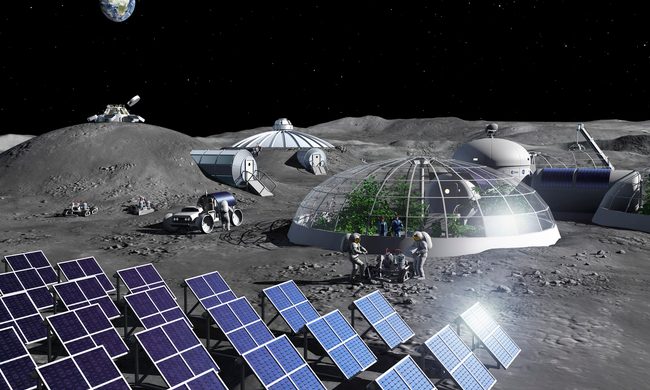
Artist impression of activities in a Moon Base.

For decades, humanity has looked up at the Moon and wondered what it would be like to live on it. Think sprawling cities, factories, research centers, and permanent human settlements. Unfortunately, there is one fairly fundamental problem with that vision.

A new study published in Frontiers in Space Technologies argues that even the Moon's potentially enormous reserves of frozen water may be nowhere near enough to support city-sized populations sustainably. Researchers Martin Elvis and Jonathan McDowell estimate that the permanently shadowed regions near the lunar poles could contain roughly one billion tons of water. It sounds like an extraordinary amount until you put a million thirsty humans next to it.

Read more