The Asus ZenPad 3S 10 was first formally unveiled at a press event in Taiwan in August, after which it was shown off at a press conference at IFA in Berlin, Germany.
Now, a new version of the tablet has been unveiled, called the ZenPad 3S 10 LTE, meaning that customers have a few options for the tablet they want to buy, if they want to buy a ZenPad.
Asus launches the ZenPad 3S 10 LTE
The new variant of the tablet offers quite a few different specs compared to the original tablet. As the name suggests, the device boasts LTE support, and it has the model number Z500KL. Apart from that, however, the tablet packs a new Snapdragon 650 processor, along with a 9.7-inch display and a pixel resolution of 1,536 x 2,048. The tablet also boasts 4GB of RAM and 32GB of internal storage.
The tablet offers an 8MP rear-facing camera and a 5MP front-facing shooter. On top of that it boasts a whopping 7,800mAh battery, which really improves on the original, and it runs Android 6.0 Marshmallow. The Asus ZenPad 3S 10 LTE comes in Slate Grey, and is available in Malaysia with a price tag of RM1,799, or $405.
Of course, the new ZenPad 3S 10 LTE isn’t the only version of the ZenPad 3S 10.
The original Asus ZenPad 3S 10
Asus reintroduced the ZenPad 3S 10, an Android-based tablet which the firm formally unveiled at an event in Taiwan in early August, but it also showed the tablet off at IFA in September. The specifications, as you might expect, didn’t change in the intervening weeks.
The Asus ZenPad 3S 10 leans somewhat toward the larger end of the Android tablet spectrum at 9.7 inches. But unlike some of the plastic competition (I’m looking at you, Samsung Galaxy Tab S2), it features a unibody of sandblasted aluminum, curved edges, a matte texture, and diamond-cut chamfered sides. All the more impressive? It’s a mere 5.8mm thick — thinner than both Apple’s iPad Pro 9.7 (6.1mm) and Google’s Pixel C (7mm). Asus’s is targeting the premium market, and it shows.
On the hardware end of things, the ZenPad 10 doesn’t disappoint. It sports a high-resolution, 9.7-inch QXGA 2,048 x 1,536-pixel screen with a wraparound, 5.3 mm-thin bezel that Asus claims is the “thinnest” and “most compact” on a tablet of the ZenPad 10’s size. Internally, a MediaTek processor and 4GB of RAM juggle all the software tasks and 64GB of onboard memory handles storage. There’s a MicroSD Card in tow that supports cards up to 128GB in capacity, and a fingerprint sensor, too — an Asus tablet first.
The ZenPad 10’s other highlight is high-end audio. The tablet’s stereo system packs two five-magnet speakers paired with a built-in NXP amplifier that Asus said provides protection against the “distortion” and “long-term … damage” that sometimes occurs at high volumes. A separate Hi-Res Audio (HRA) component supports 24-bit, 192kHz audio — “4x the quality of CD audio,” Asus said — and, when you’re using headphones, delivers optional virtual surround sound (courtesy DTS Headphone:X) that mimics a 7.1 setup.
Powering the ZenPad 10 is a 5,900mAh battery that Asus said last around 10 hours if you watch movies and shows all day, or 12 if you limit usage to browsing the web on Wi-Fi. And it supports Qualcomm’s Quick Charge 3.0 — the electronics maker said you can expect a full recharge in about three hours, give or take a few minutes.


- 1. ZenPad 3S 10 Glacier Silver
- 2. ZenPad 3S 10 Glacier Silver
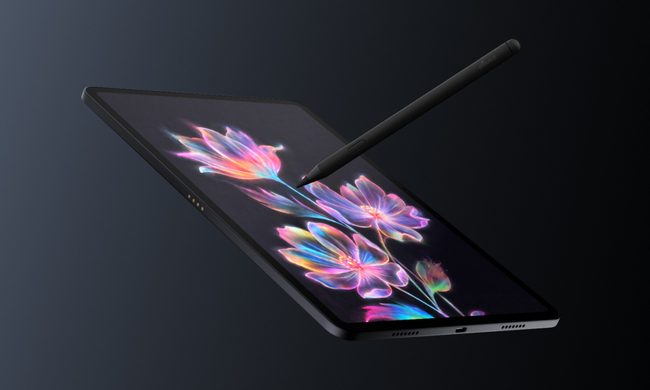
The ZenPad 3S 10 ships running Android Marshmallow 6.0 — no word on when to expect Nougat, unfortunately. One facet of software worth mentioning, though, is system-level stylus support: the ZenPad 10 works with the Asus’s Z Stylus. Another is Asus’s Tru2Life, proprietary tech that the firm said automatically optimizes the “sharpness,” “color,” “brightness,” and “contrast” of video content by analyzing each frame. It’s not new, per say — it’s been a staple on Asus’s Android tablets since at least last year — but the company claims it’s been improved substantially since then. We’ll put that to the test when we manage to get our hands on a test unit.
Asus has yet to announce global availability or pricing, but if the latter is in line with the sticker price in Asus’ home market of Taiwan (TWD 11,000), we’re expecting somewhere around $350. That’s put it within striking distance of Samsung’s Tab S2 — the 9.7-inch model starts at $400.
We do know, though, that the ZenPad 10 will ship in two color configurations: silver and grey. We’ve reached out to Asus for all the juicy additional details.
Updated on 01-26-2017 by Christian de Looper: Added news of ZenPad 3S 10 LTE launch.