  1. Home
  2. Wearables
  3. News

Digital Trends may earn a commission when you buy through links on our site. Why trust us?

Apple’s XR headset plans are supposedly on life support, as it experiments with new design ideas

Apple is testing four new Vision headset concepts, including one with an external computing puck.

Add as a preferred source on Google
An Apple Vision Pro headset on a side table.
Zeke Jones / Digital Trends

Apple’s attempt at making an XR wearable device has been underwhelming, if I’m being modest. The Vision Pro was a showcase of engineering, and it still stands out as one of the most technically advanced XR hardware devices of its kind out there. An outrageously high price tag, coupled with a lack of compelling immersive content, kept it from becoming the roaring success that Apple may have expected.

Over the past few months, reports have emerged that Apple has canceled plans for a more affordable successor and has now turned its attention towards smart glasses. But it seems the company has not entirely given up on the idea, though the development is said to be on life support, according to a report by Bloomberg.

Recommended Videos

“Apple’s Vision team is now working on a completely revamped headset under the code name N224. Company engineers are exploring about four concepts for the device, including designs that offload internal components in the same way as Meta’s new product,” says the report.
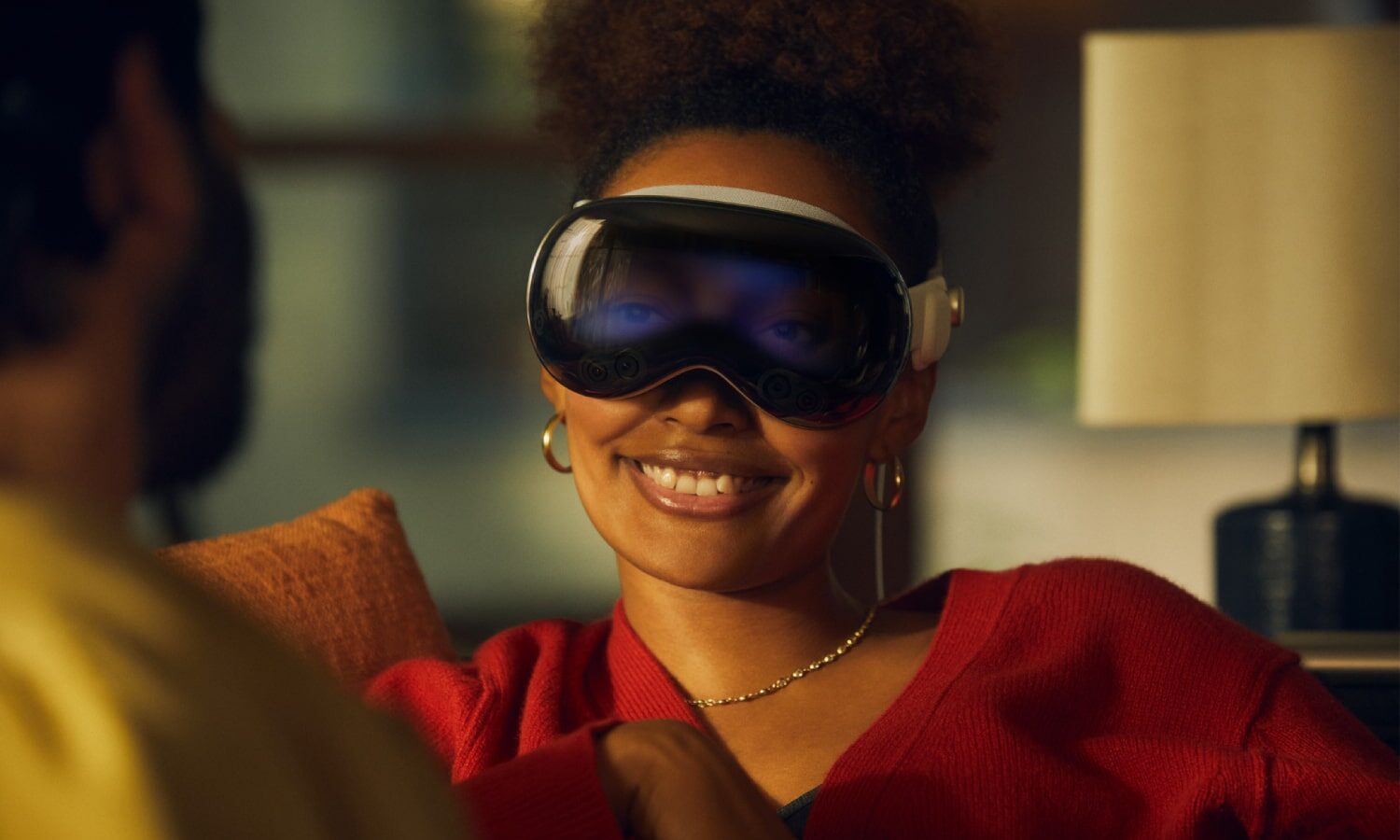
Apple is trying to solve the Vision Pro’s weight problem

One of the design ideas that is currently under consideration at Apple essentially keeps the same aesthetics as the Vision Pro, but the company is trying to solve one of its biggest problems, which is the sheer weight. When Digital Trends first tried out the Vision Pro, one of our experts commented that it’s a stunning piece of XR wearable with unmatched optics, but it’s extremely bulky and uncomfortable.

To solve the bulk problem, Apple is reportedly experimenting with lighter materials like plastic and titanium to bring down the weight. Another idea that is currently on the design table is developing a standalone companion device that looks like a puck, something that Meta now offers with its sleek VR glasses that were announced earlier this month.

A separate puck could make the next headset much lighter

On the current Vision Pro, all the computing is fitted inside the headset, which contributes to its weight problem. With a standalone puck, Apple could cram the chipset and the battery into a package, opening the doors to making a lighter XR headset. The plans, however, are still very much in flux, and the product just might be canceled. The report, however, notes that if Apple eventually decides to move ahead with the idea, the earliest that this device could make its way to the market is 2028 or 2029.

Sudhanshu Kumar Mangalam
I’ve got about 4 years of experience, mostly covering gaming, PC hardware, and smartphones. In my free time, I like…
Nothing might be taking on Meta with its own smart glasses
Viture Pro 2 smart glasses

Nothing has already made a name for itself with smartphones, earbuds, and other accessories that look a little different from everything else on the market. Now, the company may be preparing to add another product category to its lineup: smart glasses.

According to Roland Quandt, who shared the details on Bluesky, Nothing is working on two different types of smart glasses. One will reportedly focus on audio, letting you listen to music and take calls, while the other could offer a built-in camera, ChatGPT integration, and translation features. While Nothing hasn't officially confirmed either product, the leak gives us an early idea of what the company might be planning.

Read more
Samsung Health now needs just 3 days of sleep data to coach you toward better sleep
Samsung is making its Sleep Coaching feature easier to access while adding more personalized advice and clearer sleep reports.
Samsung health sleep tracking

Samsung is making it much easier to get started with Sleep Coaching in the Samsung Health app. With its latest update, you only need three days of sleep data from the past two weeks to begin, down from seven days in a month.

I think that’s a welcome change. Sleep Tracking only tells you how you slept, while Sleep Coaching tries to help you build better sleep habits. Lowering the requirement means you reach the more useful feature much sooner.

Read more
Fitbit Edge gives me more features, but my money’s still on the Fitbit Air
Fitbit Edge vs Fitbit Air: Sometimes, less really is more
Google Fitbit Edge launched

I'll admit, Google's new Fitbit Edge looks on par with some of the great fitness bands coming out of China. It takes everything I appreciate about traditional Fitbit trackers and wraps it in a sleek design and better polish. You get a 1.34-inch Hybrid OLED display, built-in GPS, ECG support, and a physical button. Google has even made the battery replaceable, something I genuinely appreciate in an era when most wearables become disposable once their batteries deteriorate.

For $179.99, the Edge seems to be reasonably priced too. However, the more I think about what I'd actually want from a fitness tracker, the more I lean towards Google's $99.99 Fitbit Air. Believe it or not, the lack of a display is also the Air's biggest strength.

Read more