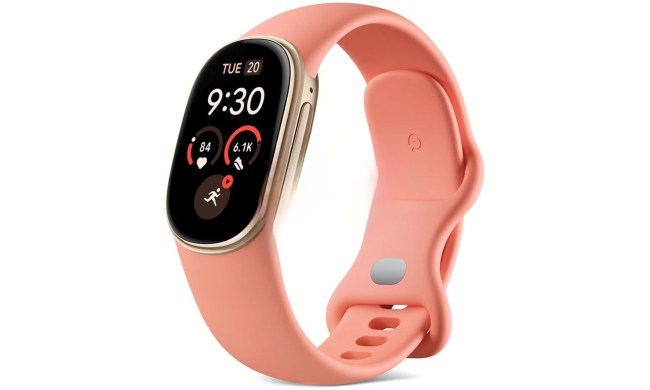
Long distance backpacking is a famously grueling activity. Weather, blisters, bugs, and mile after mile of mountains are enough to wear down even the most hardcore athletes. Enter wearable tech — your new best friend on the trail. Fitness watches can help you dial in caloric intake, control your music, and get you out of your tent for sunrise with a silent vibrating alarm, and that’s just the basics. With an ever expanding market driving cost down and battery life up, this is the year to throw a wearable on your gear list. Here are a few of your options.
The best
Garmin Fēnix 3 HR ($600)

At six hundred dollars, this is a watch for the backpacker who has it all. Check out these features: GPS/GLONASS, two weeks of battery life (in 24/7 HR mode), and a sunlight readable 1.2-inch color screen with a bomber sapphire crystal. The Fēnix is water-rated to 100 meters, so storms and pond dips are no problem. We also like the rugged, reinforced construction and classic watch styling.
You get all the basics like sleep tracking, HR, steps, music control, and calories burned; but it’s the extras that really put the Fēnix ahead of the field. Want to go exploring off the trail? The Fēnix can guide you back to your camp, creating a map as you walk with GPS. Interested in geeky body metrics? Garmin gives you more data that you can possibly use, including VO2Max.
The Connect IQ store lets you personalize the watch faces and download extra widgets. Finally, our favorite part — a slew of hiker friendly features like an altimeter, a barometer, a compass, a calendar, and sunrise/sunset data. You can even purchase an external sensor that links with the watch to give you temperature readings. Read our full review here.
- Pros: Massively useful tools, long battery life, hard to kill.
- Cons: You could buy a new sleeping bag and tent for the same price. Also, sometimes it’s better not to know how exhausted you are.
The rest
Garmin Vívoactive HR ($250)

The Vívoactive gives you some of the same features as the Fēnix at under half the cost, most notably the customization of watch faces. Water rated to 5ATM, with an eight-day battery life and a “find my phone” feature, the Vívoactive is tough enough to stand up to the rigors of trail life. It has all the functionality you’d expect from the genre, plus some perks: The color screen is bright and easy to navigate, with plenty of data available immediately available at your wrist as opposed to in the app.
The most useful feature is that when it’s paired with MyFitnessPal, the watch displays calories burned vs. calories consumed. In a long distance, high burn activity like backpacking it is frighteningly easy to bonk. The Vívoactive ensures you are always noshing that Snicker’s bar at just the right moment. Read our full review here.
- Pros: Lots of data on your wrist without having to pull out your phone to look at the app. Tough and nice looking.
- Cons: A little pricey for what you get, but a lot of users find it worth the cost.
Fitbit Blaze ($179+)

Fitbit continues its industry leading run with the Blaze, a watch that manages to be both stylish and functional. Slim and trim, the Blaze is a good choice for the ounce-counting ultra-lighter. The heart rate and biometric tracking are much improved from previous models, as is the accelerometer. Everyday users enjoyed the colorful, intuitive interface, while backwoodsmen will likely gush over the five-day battery life.
The features are fairly standard and will appeal to previous Fitbit users or anyone looking for a more bare bones approach. One major problem is that the Blaze is “sweat, rain, and splash proof, but is not swim proof.” Fitbit recommends taking it off before getting in the shower. A water-fried watch could be a deal breaker for a hiker looking for something more rugged. Read more here.
- Pros: Light, classy, and comes with a proven pedigree. Functional features, but nothing fancy.
- Cons: Might be a problem while fording swollen creeks in Maine.
TomTom Spark Cardio + Music ($243+)

The Spark goes in a slightly different direction than the other devices listed here. With a crisp black-and-white screen, all the standard metrics, waterproofing up to 5ATM, and an astounding three-week battery (in activity tracking mode); the Spark has the chops to thru-hike the PCT or ramble down the Long Trail for a few weeks. But the real draw? Three GB of storage lets you play up to 500 songs directly from the watch itself. This could come in handy on those days when the phone battery is going down but the trail keeps going up and up.
To make things even nicer, the Spark can pair with Bluetooth enabled headphones. If you’ve ever flung your iPod into the woods while taking off your backpack because the cable gets snagged on your hip belt (trust us, it happens!), you’ll know just how thoughtful this little feature can be. Read our hands-on review here.
- Pros: Trail music made simple, allowing you to save phone battery for emergencies or mountain top facetime sessions with mom.
- Cons: Black-and-white screen, simplified metrics.
Microsoft Band 2 ($175+)

Eleven sensors on the Microsoft Band 2 work together to give you super accurate metrics. The band charges quickly, which will save you time in town, but the battery only lasts two days. Expect less than that if you have the GPS enabled. Like the Blaze, the the Band 2 tracks all the normal metrics and isn’t waterproof past a few splashes. So why is it on our list? One of those 11 sensors we mentioned can actually help you monitor your exposure to ultraviolet rays. This could be a very handy metric on high-altitude days above treeline. The price is right at under $200, but some users have found the construction lacking, especially in the wristband. Read our full review here.
- Pros: UV sensor can help remind you when it’s time to slather on some more sunscreen.
- Cons: Watch out for rain, rivers, creeks, and puddles.