


It wasn’t that long ago that if you wanted to monitor your heart rate during a jog or bike ride, it required shimmying into a bulky chest strap. Nowadays, however, optical heart rate technology exists that’s capable of making calculations directly from your wrist. The system works by measuring the amount of blood pulsing through your veins to estimate the rate at which it’s pumping to your heart.
Many fitness trackers have begun integrating the technology into their devices so you no longer have to strap on bulky chest accessories. Although each company brands their HR technology differently, most are essentially the same. The differentiating factors when choosing a device largely come down to what else it offers. For instance, do you want a simple, unimposing band, or a flashier, watch-style device? Perhaps you want it to send you text alerts or perform similar functions as your smartphone. There are even options that are waterproof and feature built-in GPS functions.
Considering the sea of available options, it’s hard to even know where to start. To help you out, we’ve put together a list of the best fitness trackers with heart rate monitors and explained why each particularly stands out.
Garmin Vivoactive HR $249

Garmin’s Vivoactive HR has all the bells and whistles you’d ever want to see in a crossover watch while still offering reliable, straightforward tracking of basic fitness metrics. Its top-of-the-line Elevate HR is capable of tracking your heart rate during every non-water sports activity imaginable, integrating the data to crunch numbers including calories burned and intensity of the workout. The color touchscreen is not only crisp and clear but sunlight-readable so if you’re jogging on a bright day, you won’t have to duck under a tree to see your time or distance.
It’s also one hundred percent waterproof, meaning you can swim with it anywhere — it’s even capable of handling chlorinated pools and salty oceans. Perhaps its best feature is the built-in GPS function which internally tracks your routes. This means you’re able to leave your phone at home and still track everything remotely. A whopping 8-day battery life rounds out the features of this impressive tracker.
Polar A370 $149

Polar’s A370 blends comprehensive, easy-to-use features with a reasonable price point, making it a fantastic combination of quality and value. The device is built with a smart heart-monitoring sensor that works around the clock with its 3D accelerometer to determine if you’re active or at rest. When you’re running or working out, it records high-resolution heart rate numbers but when you’re hanging out on the couch watching Netflix, it tamps it down to preserve battery life.
The amassed data syncs with its companion app, Polar Flow, which offers smart coaching, fitness tests, activity guides, and tips on how to meet your targets. The fitness tracker is fully waterproof with advanced sleep tracking capability and a lightweight, interchangeable band.
Apple Watch Series 3 $329

More than just a fitness tracker, the Apple Watch Series 3 is an all-inclusive device that brings nearly the entire functionality of your phone directly to your wrist. It makes calls, sends texts, talks to Siri, streams music, and, with the right apps, surfs the internet. Additionally, its optical heart rate sensor connects to its Heart Rate app to show you HR-based calculations including calories burned, active minutes, resting heart rate, and average rates during specific workouts.
It’s also salt- and waterproof, equipped to track laps and yards while swimming in the open ocean, as well as pool sessions. It features intelligent activity tracking to automatically detect what you’re doing without you having to manually set it into sports mode. You can use it for biking, hiking, running, climbing, skiing, and a host of other activities. The device also offers motivational coaching, achievement alerts, and social features to share your metrics with friends.
Fitbit Charge 2 $149

With a slick, minimalist design, the Fitbit Charge 2 uses a heart rate technology it calls PurePulse to provide continuous heart rate monitoring 24 hours a day, seven days a week. It takes your resting heart rate and combines it with your fitness data to give you a heart score it refers to as your Cardio Fitness Score. You can then see how your heart health compares to other people of your age and gender.
It also has a number of sports-specific modes including running, walking, hiking, biking, elliptical, and interval mode — the latter of which sends you wrist vibrations when it’s time to start or stop a set. Additionally, the Charge 2 syncs with your phone to track GPS and records typical fitness metrics such as calories, distance, speed, and sleep.
Suunto 3 Fitness $199
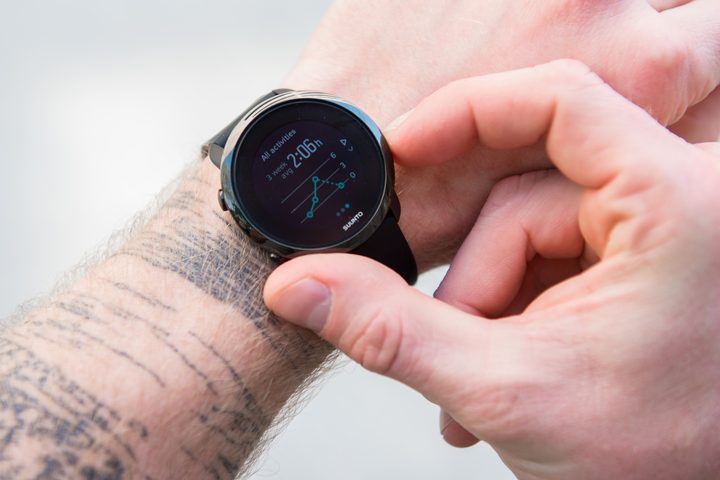
Designed with an elegant, lifestyle-focused aesthetic, the brand-new Suunto 3 Fitness watch — which launched April 25 alongside its new companion app — is loaded with goal-crushing tools. One of its best is a feature called Adaptive Training Guidance. This assesses your current fitness level and automatically creates a seven-day training plan. It works in tandem with other smart features to adapt the program according to your activity which means if you get lazy and miss a workout — or go overboard and do more than required — the app adjusts your training plan accordingly.
The smartwatch showcases heart rate monitoring, 24/7 activity tracking (with steps, calories, and sleep), 80 different sport modes with sport-specific data, as well as call-text notifications.


