  1. Home
  2. Wearables
  3. News

DuckDuckGo’s new smart glasses come with zero AI and 100% shade

No camera, no mic, no AI, just glass that blocks the sun the way sunglasses always have.

Add as a preferred source on Google
DuckDuckGo smart glasses
DuckDuckGo

Smart glasses have quietly morphed into tiny surveillance cameras that people willingly wear on their faces. Every other week, a new pair promises to record video, listen to conversations, and feed it to an AI model somewhere in the cloud. They are causing such havoc that they have earned a new name: “pervert glasses.”

Not only are these glasses a privacy nightmare for people being recorded but also for people using them. A recent investigation by Swedish newspaper Svenska Dagbladet showed that Meta Ray-Ban glasses were uploading intimate and private recordings for training its AI. 

No camera. No AI. Just Normal Sunglasses.

From DuckDuckGo x @Knockaround.

(Yes, these are actually real. Get a pair here: https://t.co/97UNAZMDCZ) pic.twitter.com/TUu5C81ls2

— DuckDuckGo (@DuckDuckGo) July 30, 2026

DuckDuckGo, the search engine that built its entire reputation on staying out of your business, decided to poke fun at that trend the best way it knows how, by launching sunglasses that do nothing at all.

Recommended Videos

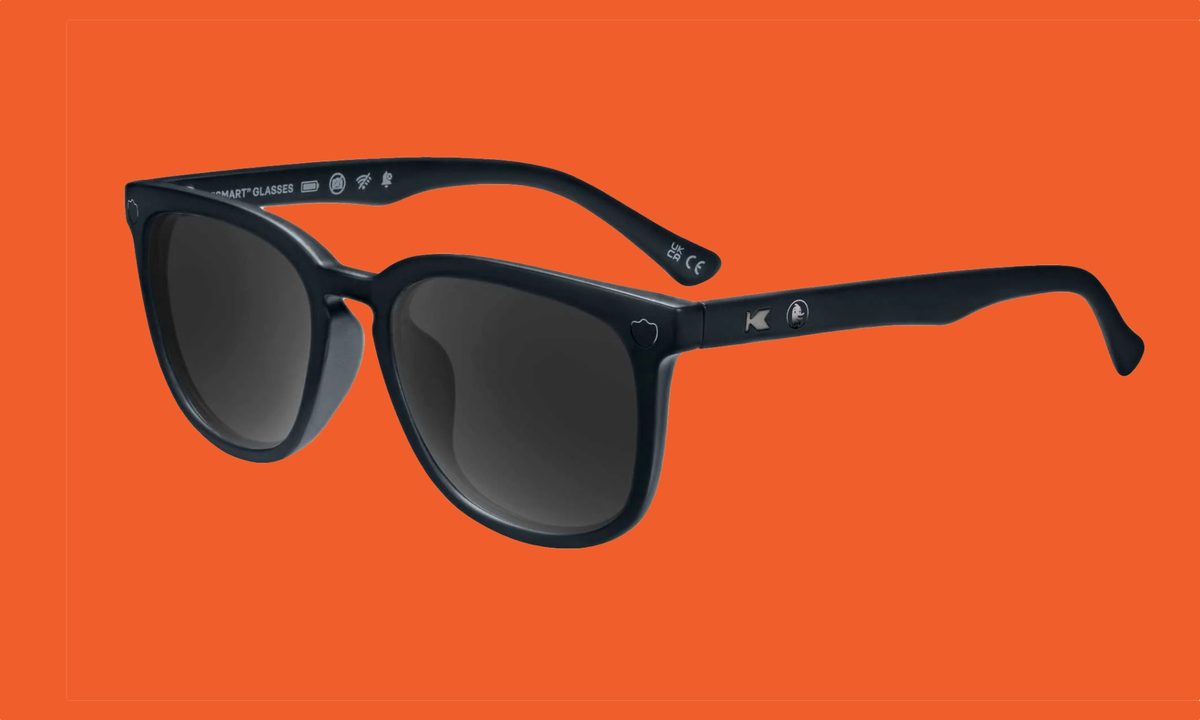
Teaming up with sunglasses brand Knockaround, DuckDuckGo has released the Paso Robles frame in a matte black finish with a glossy DuckDuckGo logo on the side. The company even had to clarify online that yes, these are real and you can buy a pair right now.

What do you get for $35?

You get a proper pair of sunglasses, nothing more and nothing less. Polarized lenses, full UV400 protection, and FDA-compliant impact-resistant lenses, all packed inside a custom hard case for storage. There is no battery, no charging port, and no chip hiding inside the frame. They are just a normal pair of glasses, and that’s the point.
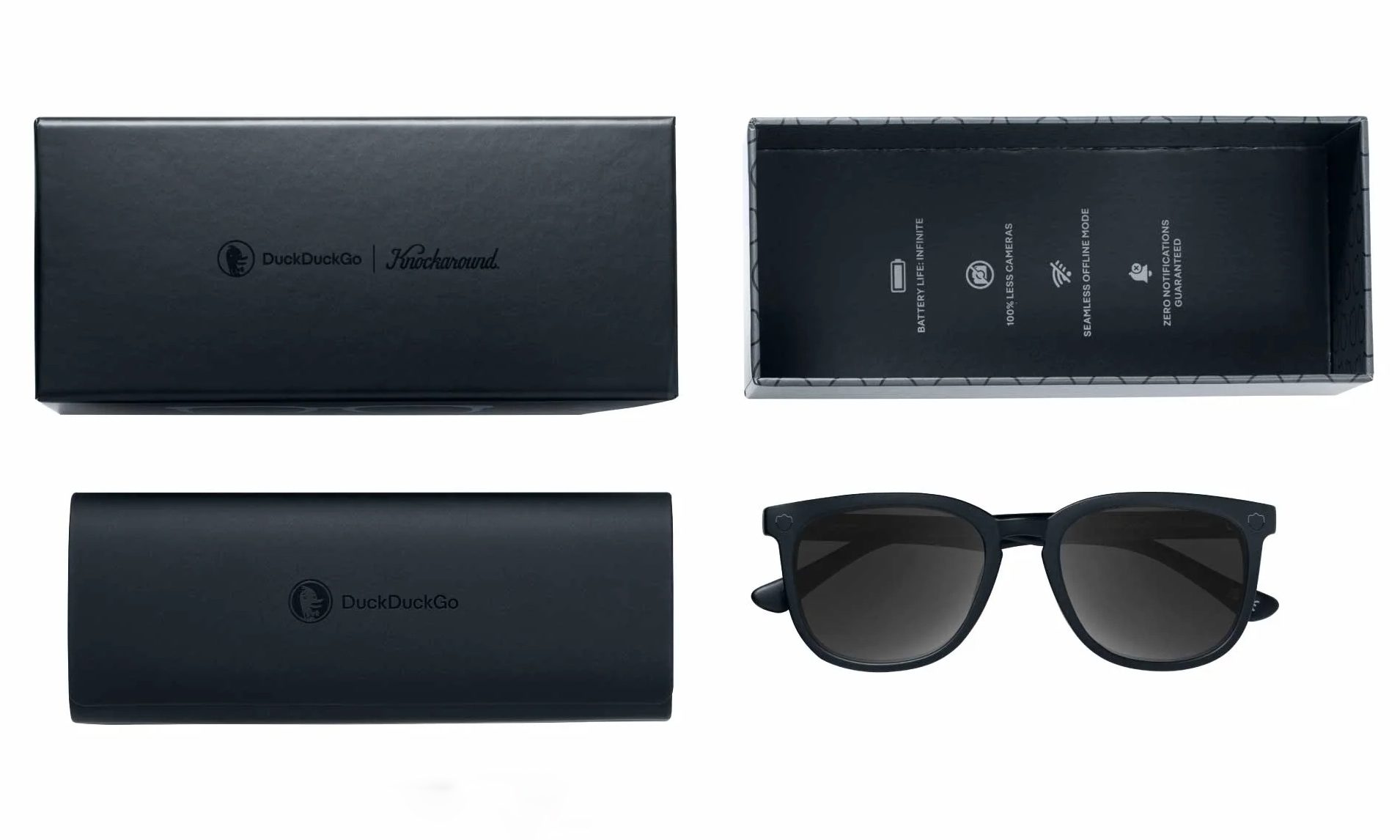
Knockaround even lists the charge life as infinite, the camera count as zero, and the notification count as zero, which might be the most honest spec sheet on the market right now.

Why would anyone want glasses that do less?

Because doing less is the entire joke, and also the entire feature. You can wear these to the beach, a coffee shop, or a family dinner, and nobody has to wonder whether you are quietly filming them or feeding their conversation to an AI. 

DuckDuckGo is calling it the world’s most innovative anti-surveillance eyewear. No camera, no microphone, no AI, just a pair of sunglasses doing the one job sunglasses were always meant to do.

If you want a pair, they are currently listed on Knockaround’s website for $35. It is a small, funny product, but it makes a real point about where wearable tech is headed, and clearly, not everyone is comfortable with that direction.

Rachit Agarwal
Rachit is a seasoned tech journalist with over ten years of experience covering the consumer technology landscape.
Nothing might be taking on Meta with its own smart glasses
Viture Pro 2 smart glasses

Nothing has already made a name for itself with smartphones, earbuds, and other accessories that look a little different from everything else on the market. Now, the company may be preparing to add another product category to its lineup: smart glasses.

According to Roland Quandt, who shared the details on Bluesky, Nothing is working on two different types of smart glasses. One will reportedly focus on audio, letting you listen to music and take calls, while the other could offer a built-in camera, ChatGPT integration, and translation features. While Nothing hasn't officially confirmed either product, the leak gives us an early idea of what the company might be planning.

Read more
Samsung Health now needs just 3 days of sleep data to coach you toward better sleep
Samsung is making its Sleep Coaching feature easier to access while adding more personalized advice and clearer sleep reports.
Samsung health sleep tracking

Samsung is making it much easier to get started with Sleep Coaching in the Samsung Health app. With its latest update, you only need three days of sleep data from the past two weeks to begin, down from seven days in a month.

I think that’s a welcome change. Sleep Tracking only tells you how you slept, while Sleep Coaching tries to help you build better sleep habits. Lowering the requirement means you reach the more useful feature much sooner.

Read more
Fitbit Edge gives me more features, but my money’s still on the Fitbit Air
Fitbit Edge vs Fitbit Air: Sometimes, less really is more
Google Fitbit Edge launched

I'll admit, Google's new Fitbit Edge looks on par with some of the great fitness bands coming out of China. It takes everything I appreciate about traditional Fitbit trackers and wraps it in a sleek design and better polish. You get a 1.34-inch Hybrid OLED display, built-in GPS, ECG support, and a physical button. Google has even made the battery replaceable, something I genuinely appreciate in an era when most wearables become disposable once their batteries deteriorate.

For $179.99, the Edge seems to be reasonably priced too. However, the more I think about what I'd actually want from a fitness tracker, the more I lean towards Google's $99.99 Fitbit Air. Believe it or not, the lack of a display is also the Air's biggest strength.

Read more