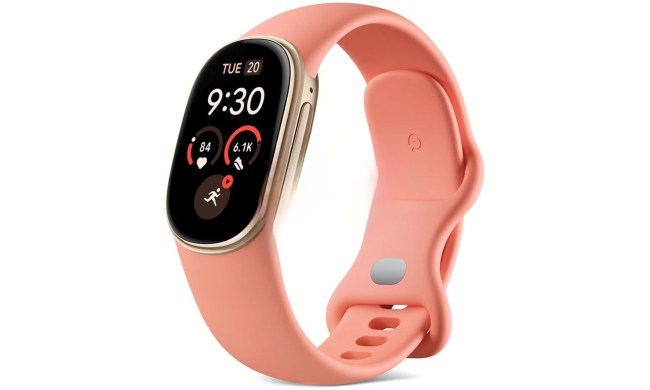
CES is over and the 2016 Detroit Auto Show is underway, but Ford is still talking about how it plans to integrate mobile devices into future cars. Amid a slew of press releases put out by the car maker through both shows was the announcement of a “wearables lab,” where researchers test how these devices can interact with vehicles.
At the new “Automotive Wearables Experience” lab at Ford’s Dearborn, Michigan, research center, researchers are testing ways to incorporate wearables into a car’s onboard safety system to help deal with, for example, a driver who is tired or stressed. That could allow for a driver’s health information to be linked to features like lane-keep assist and blind-spot monitoring in future cars, Ford says.
As more semi-autonomous driving features are developed, Ford believes linking cars to wearables could become more important. On the one hand, measuring things like blood pressure, blood glucose, and heart rate via a wearable device could signal a car to dial up the level of assistance if it feels the driver isn’t up to it. A wrist vibration or chime could also be used to signal a driver to take back control in situations autonomous systems can’t handle, like construction zones.
Of course, Ford already has some experience with wearables. It currently offers a smartwatch version of its MyFord Mobile app, which allows owners to monitor their cars and do things like lock and unlock the doors remotely. Researchers at the Ford wearables lab are currently testing voice control for that app.
Researchers are also experimenting with augmented-reality tech as a way to make the dealer experience more pleasant and informative. It could be used to give customers detailed information about vehicles as they walk past them in a showroom, Ford says. Volvo demonstrated something along these lines last year, using Microsoft’s HoloLens to show off its new S90 sedan.
The company is also running an app-development challenge, encouraging its own employees and those of Henry Ford Health System to devise apps that rely on both cars and wearables, and create some sort of health benefit. Submissions open January 20, and $10,000 in prizes is on the line. The investigation into wearables is part of Ford’s Smart Mobility initiative, which involves a wide range of technologies and trends, including autonomous cars, ride sharing, and data analysis.