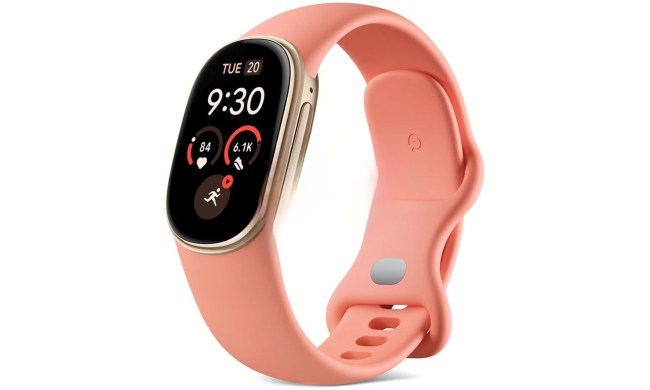
A cardiologist from New York filed a patent infringement lawsuit over a lifesaving Apple Watch feature that’s capable of detecting if the wearer has an irregular heartbeat.
Dr. Joseph Wiesel, who teaches at the New York University School of Medicine, was awarded a patent in March 28, 2006 for detecting atrial fibrillation, an irregular heartbeat that may lead to blood clots, a stroke, or heart failure. Dr. Wiesel’s technique uses photoplethysmography, a method used by the Apple Watch with its green light and associated sensors. (Curious? Here’s how to set up irregular heartbeat detection.)
According to Dr. Wiesel, he notified Apple about the existence of his patent on September 20, 2017, after the launch of the Apple Watch Series 3. The lawsuit claims that Apple refused negotiations in good faith with Dr. Wiesel, even after he provided “detailed claim charts” that showed how the Apple Watch infringed on his patents.
Dr. Wiesel also claims that his patent, described as “pioneering steps in atrial fibrillation detection,” is a “critical part” of the wearable device, as its ability to detect irregular heartbeats is one aspect of Apple’s marketing initiatives for the product.
In the lawsuit, Dr. Wiesel demands royalties, legal fees, and recovery of past damages, as Apple’s alleged patent infringement was described as “willful, intentional, and deliberate.”
The electrocardiogram functionality first appeared on the Apple Watch Series 4; it utilizes the electrodes at the back of the wearable devices and is activated by using the finger to touch the Digital Crown for 30 seconds. Dr. Nicholas Tullo, a cardiac electrophysiologist, told Digital Trends last year that the Apple Watch Series 4 was equivalent to single-lead ECG, which makes it not as accurate as some other ECG devices, but useful enough in flagging possible problems and prompting its wearer to visit the hospital for a more thorough check-up.
The Apple Watch was never intended to become one of the very best wearable health devices on the market, but the opportunity presented itself when Apple started receiving letters that the product was saving lives.
Apple has not yet responded to Dr. Wiesel’s lawsuit, so it remains to be seen how the company reacts to the patent infringement allegations.