  1. Home
  2. Wearables
  3. Health & Fitness
  4. Mobile
  5. Reviews

HTC Grip Hands-on impressions

HTC's first wearable is for fitness freaks, but you may like it too

Add as a preferred source on Google
htc grip summer release delayed version 1437062907 20
Andy Boxall/Digital Trends
“Withonboard GPS and a robust app, hardcore fitness folks may find a lot to love in the HTC Grip fitness band.”
Pros
  • Good build quality
  • Comes with extender bars for bigger wrists
  • Works with any recent Android phone
  • Under Armour's online portal is robust
  • It's waterproof
  • It has GPS built-in
Cons
  • Finding the right size may be tough
  • Menus can feel overcomplicated
  • No onboard heart-rate monitoring
  • $200 price tag is steep
MWC 2026
Read our complete coverage of Mobile World Congress

“Why you can trust Digital Trends – We have a 20-year history of testing, reviewing, and rating products, services and apps to help you make a sound buying decision. Find out more about how we test and score products.“

Withonboard GPS and a robust app, hardcore fitness folks may find a lot to love in the HTC Grip fitness band.

Recommended Videos

HTC’s making a further effort to diversify from only making smartphones, and the occasional tablet, with the launch of the HTC Grip, its first smart wearable device. The Grip is a high-end fitness band aimed at serious fitness fans, not a smartwatch. It’s less Nike FuelBand and more Adidas Fit Smart in its approach to monitoring activity, but its design is more influenced by Nike’s entry into the genre.

It does the usual step and sleep tracking, but the individual workout plans that gears the Grip towards athletes.

It’s also the first product to come out of HTC and sports brand Under Armour’s new partnership. The Grip makes use of UA Record, a cloud based network where all the band’s data is stored and collated. Under Armour is as motivated as HTC when it comes to getting into fitness tech, and has recently acquired the MyFitnessPal and Endomondo health apps.

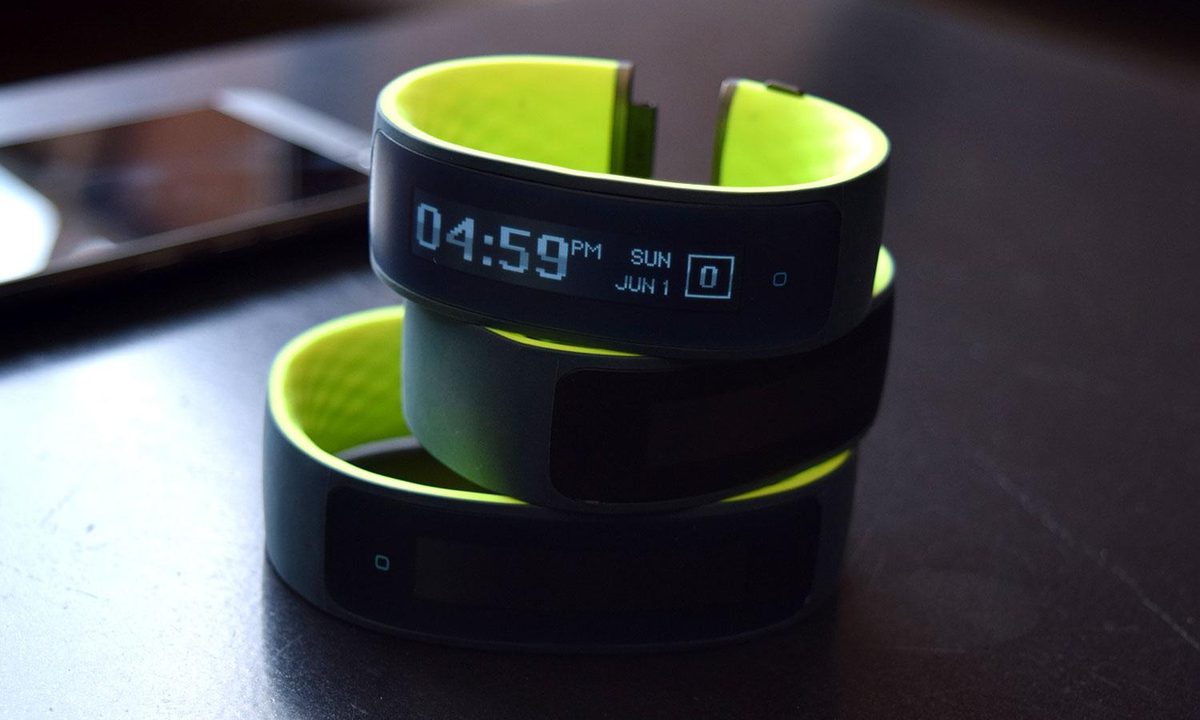
The Grip is a single, moulded band made from a waterproof, tough material, It’s not solid like the FuelBand, but not as pliant as the Jawbone Up24. It clips together like a bracelet, and comes in three sizes, although HTC appreciates now everyone’s wrists are so easily classified, and includes a pair of spacers to further tailor the fit. We had an easy enough time clasping it together, but if you choose to buy it, make sure you get the right size, because there isn’t a lot of give to these. It’s better for it to be too small than too big, is what we’re trying to say. You can add spacers to make a small band fit, but a big band will always be too big.

HTC-Grip-16
Andy Boxall/Digital Trends

On the top of the bracelet is a 1.8-inch curved PMOLED screen, which is slim like Samsung’s Gear Fit, only monochrome instead of color. It’s touch controlled, and you swipe through a series of menus to access individual functions. It’s a “four-way” swipe system, where an up or down gesture digs deeper into the band’s functionality. It’s a little awkward to use on the wrist, but the information is clear, and the e-paper style screen is easy to read in sunlight.

Onboard GPS functionality lets you track your location without the help of a phone.

What can it track? It does the usual step and sleep tracking, but it’s the individual workout plans that gears the Grip towards athletes. Workout, cycling, walking, and running programs can all be tracked separately, and are accessed on the band itself, rather than a smartphone. Onboard GPS functionality lets you track your location without the help of a phone, either. Sadly, there’s no heart rate monitor — neatly avoiding a product clash with Under Armour’s own chest wearable heart rate monitor, with which it will integrate — and although you can select a weights-based workout program, it doesn’t count repetitions.

The focus is on the UA Record website, an online health and fitness community, where the Grip’s data is recorded. This is where everything gets collated, challenges made, stats shared, and performance analyzed. You’ll need to buy into Under Armour’s community to get the most out of the Grip, just like with Adidas Fit Smart, and associated MiCoach apps and products.

The band’s waterproof body is light and comfortable, and the cool teal and lime color scheme really stands out. Other colors will be produced in the future, but this is all that will be available at launch. It’s compatible with both Android and iOS devices, and HTC’s going to charge $200 for the Grip, with sales expected to begin in the U.S. during the spring.

Andy Boxall
Andy has written about mobile technology for almost a decade. From 2G to 5G and smartphone to smartwatch, Andy knows tech.
Nothing might be taking on Meta with its own smart glasses
Viture Pro 2 smart glasses

Nothing has already made a name for itself with smartphones, earbuds, and other accessories that look a little different from everything else on the market. Now, the company may be preparing to add another product category to its lineup: smart glasses.

According to Roland Quandt, who shared the details on Bluesky, Nothing is working on two different types of smart glasses. One will reportedly focus on audio, letting you listen to music and take calls, while the other could offer a built-in camera, ChatGPT integration, and translation features. While Nothing hasn't officially confirmed either product, the leak gives us an early idea of what the company might be planning.

Read more
Samsung Health now needs just 3 days of sleep data to coach you toward better sleep
Samsung is making its Sleep Coaching feature easier to access while adding more personalized advice and clearer sleep reports.
Samsung health sleep tracking

Samsung is making it much easier to get started with Sleep Coaching in the Samsung Health app. With its latest update, you only need three days of sleep data from the past two weeks to begin, down from seven days in a month.

I think that’s a welcome change. Sleep Tracking only tells you how you slept, while Sleep Coaching tries to help you build better sleep habits. Lowering the requirement means you reach the more useful feature much sooner.

Read more
Fitbit Edge gives me more features, but my money’s still on the Fitbit Air
Fitbit Edge vs Fitbit Air: Sometimes, less really is more
Google Fitbit Edge launched

I'll admit, Google's new Fitbit Edge looks on par with some of the great fitness bands coming out of China. It takes everything I appreciate about traditional Fitbit trackers and wraps it in a sleek design and better polish. You get a 1.34-inch Hybrid OLED display, built-in GPS, ECG support, and a physical button. Google has even made the battery replaceable, something I genuinely appreciate in an era when most wearables become disposable once their batteries deteriorate.

For $179.99, the Edge seems to be reasonably priced too. However, the more I think about what I'd actually want from a fitness tracker, the more I lean towards Google's $99.99 Fitbit Air. Believe it or not, the lack of a display is also the Air's biggest strength.

Read more