  1. Home
  2. Wearables
  3. Mobile
  4. News

HTC’s new Vive VR Wrist Tracker tracks hands accurately — even when out of sight

Add as a preferred source on Google

There is nothing new about technology companies jumping on bandwagons just to claim a spot in an ongoing trend. This is exactly what we are seeing with the furor around virtual reality (VR) and the metaverse. But there are a handful of companies actually making a noticeable difference to the ecosystem, and HTC’s Vive division is one of them.

Vive offers some of the most popular VR headsets, including the Vive Focus 3 and the more recent and peculiar Vive Flow. At CES 2022, the company announced a new Wrist Tracker that helps track hand gestures and movements accurately without solely relying on time-of-flight cameras in the VR headset.
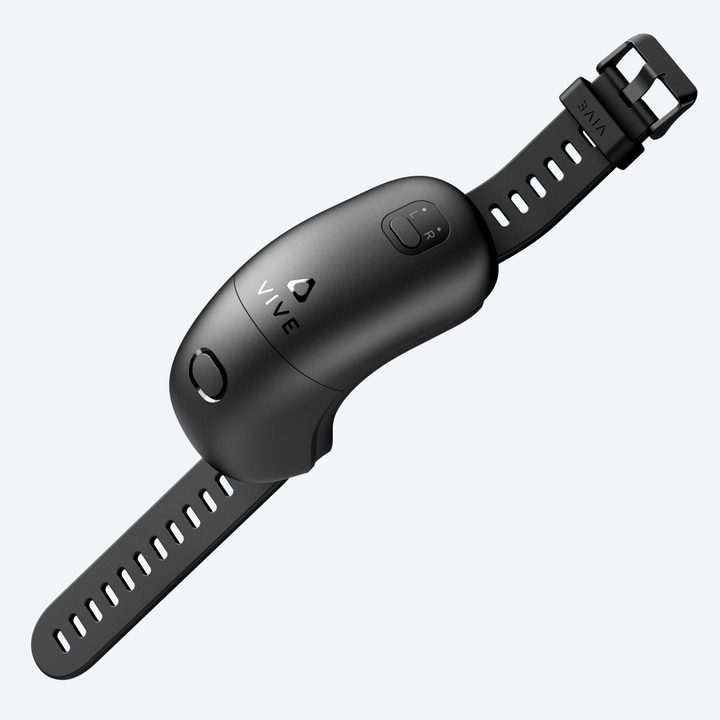
HTC Vive VR Wrist Tracker
Image used with permission by copyright holder

While most other VR headset brands such as Oculus by Meta (Facebook’s newly institutionalized parent company) are targeting end users, HTC Vive is promoting enterprise use cases. The Vive Focus 3 is also marketed as a VR headset for business, with applications ranging from training medical and emergency response staff to optimizing mechanical designing to learning- and health-related uses. Vive’s newly announced Wrist Tracker augments the uses by capturing more data around hand movements than what existing Vive headsets can capture from the handheld controllers.

Recommended Videos

A VR headset typically uses time-of-flight or infrared cameras to detect any movement of the handheld controllers, and because of vision-based detection, a user’s hands are only visible when they are in the field of vision for the VR headset. HTC Vive’s solution to this limitation is its Wrist Tracker that can be worn on both hands like a bracelet or a wristwatch. The Vive Wrist Tracker connects wirelessly to the Vive Focus 3 and can be used either along with or in place of handheld controllers. It features an inbuilt gyroscope to detect wrist movements more accurately than the trackers and its biggest benefit lies in the fact that it can work even when it is out of the VR headset’s line of sight.
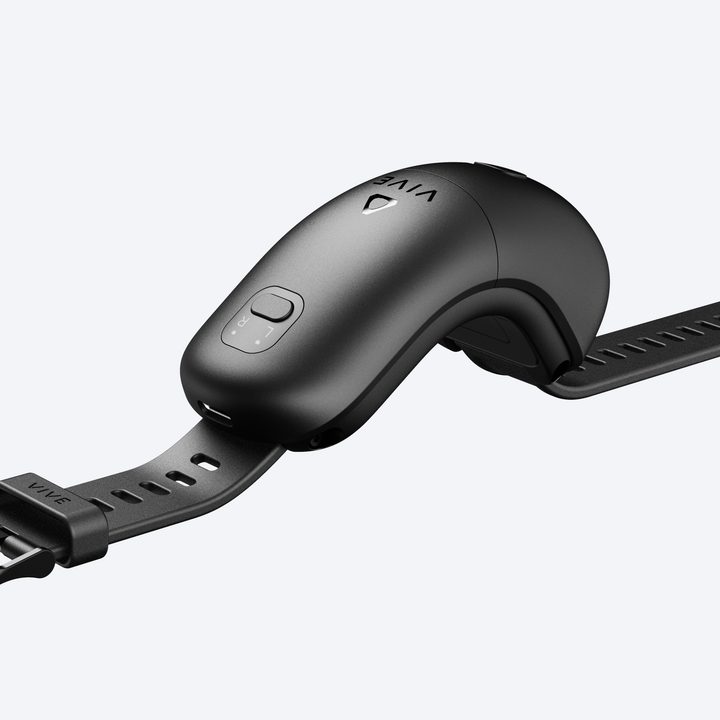
HTC Vive VR Wrist Tracker
Image used with permission by copyright holder

The Vive Wrist Tracker can also be mounted on top of objects like arcade rifles or a firefighting hose to help emergency response teams train in virtual environments instead of solely relying on and learning from firsthand experiences. HTC says the Wrist Tracker combined with the VR headset can result in highly accurate tracking with six degrees of freedom. Needless to say, the accessory can also be quite useful for more common VR-based entertainment scenarios like playing a first-person shooter  game.

HTC has not yet announced details like the price and availability of the Vive Wrist Tracker. It is already working with companies like Axon to improve training of security forces and Flaim on VR-based hazard and emergency response training. The company has also announced a multi-battery charger and a charging case so that users can easily swap out drained batteries for new ones instead of wasting time charging them.

Tushar Mehta
Tushar is a freelance writer at Digital Trends and has been contributing to the Mobile Section for the past three years…
The camera on my smart glasses gives me the ick. The people around me feel the same.
Hey, stranger, you won't know it, but I just captured you in a picture and recorded you in a video!
Person wearing glasses with a camera

"Dude, I feel like a creep every time I press the camera button and the LED lights up." That was the blunt verdict from a friend who tried my camera-equipped smart glasses earlier today. My own feelings aren't too different. There's also a functional friction here, which I'll rant about soon enough.

I've used plenty of smart glasses. For the past four years or so, even before Meta flooded the market with its Ray-Ban-branded camera glasses, I've been playing around with another breed that lacked a camera but still offered plenty of fun. Brands like Rokid, XREAL, and Viture have been selling smart glasses with a built-in display unit, promising a private screen that sits right on your face. Immersive entertainment, or spatial computing on the go, all of it without a monitor in sight.

Read more
Nothing might be taking on Meta with its own smart glasses
Viture Pro 2 smart glasses

Nothing has already made a name for itself with smartphones, earbuds, and other accessories that look a little different from everything else on the market. Now, the company may be preparing to add another product category to its lineup: smart glasses.

According to Roland Quandt, who shared the details on Bluesky, Nothing is working on two different types of smart glasses. One will reportedly focus on audio, letting you listen to music and take calls, while the other could offer a built-in camera, ChatGPT integration, and translation features. While Nothing hasn't officially confirmed either product, the leak gives us an early idea of what the company might be planning.

Read more
Samsung Health now needs just 3 days of sleep data to coach you toward better sleep
Samsung is making its Sleep Coaching feature easier to access while adding more personalized advice and clearer sleep reports.
Samsung health sleep tracking

Samsung is making it much easier to get started with Sleep Coaching in the Samsung Health app. With its latest update, you only need three days of sleep data from the past two weeks to begin, down from seven days in a month.

I think that’s a welcome change. Sleep Tracking only tells you how you slept, while Sleep Coaching tries to help you build better sleep habits. Lowering the requirement means you reach the more useful feature much sooner.

Read more