According to the latest available stats from the National Highway Traffic Safety Administration (NHTSA), bicyclists and other pedal-powered vehicles accounted for two percent of traffic crashes in 2013. The number of deaths jumped 19 percent between 2010 and 2013, and 68 percent of those deaths occurred in urban areas. Causes vary, but one reason is that cyclists aren’t as visible, particularly at night. The Centers for Disease Control and Prevention recommends wearing reflective clothing and active lighting, but a line of apparel from a new startup, Lumenus, not only incorporates both recommended safety features, it’s also smarter in letting you customize the behavior of those lights for other functions.
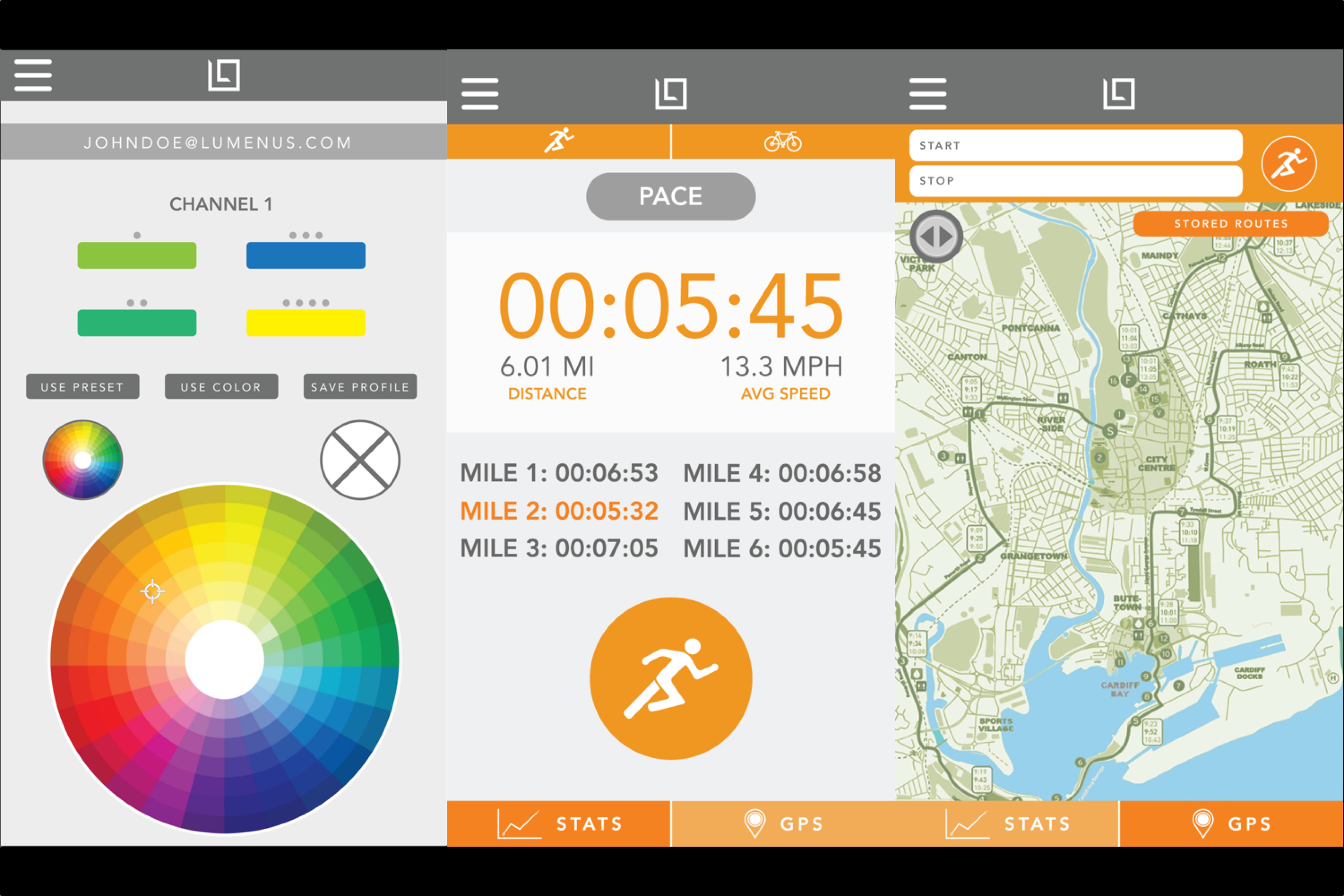
The pieces, which include two jackets (one heavyweight and one lightweight), a vest, and a backpack, are embedded with LEDs throughout, yet look like regular, fashionable apparel when the lights aren’t active. When paired with the Lumenus app (Android and iOS) and using GPS, mapping (Google Maps API), and gyros, the user can configure the LEDs to function based on a particular action. For example, when a cyclist comes to a stop, the LEDs on the back of jacket turn on to simulate a red brake light, or flash orange to signal a turn or a strobe mode when crossing an intersection (where 30 percent of accidents occur, according to one NHTSA study) — signals that not only warn nearby motorists of a cyclist’s presence, but also his or her next move.

But the lights go beyond safety. The Zero UI design (a term to describe non-touchscreen user interfaces) lets the cyclist use the lights as a notification system, such as turn-by-turn navigation, incoming text messages, or performance pace lighting (punch in your fitness goals, and the LEDs illuminate to indicate if you’re falling behind or overexerting yourself). Because the lights are customizable, a user can choose the colors to differentiate the different activities. Future app upgrades include support for Apple Watch. But the idea is to keep cyclists’ eyes on the road.

The apparel and backpack use batteries that last 24 hours before recharging, and are designed to be waterproof and wash-proof (sans battery, natch). Besides active lighting, the jackets have 3M Scotchlite reflective strips for extra visibility. It’s not just cyclists that will benefit; walkers, hikers, runners, motorcyclists, etc., can use the products too.

The Lumenus system is the brainchild of Jeremy Wall, who partnered with accessories maker Outdoor Tech to bring the product to life. The company just launched its Kickstarter campaign, but Wall tells us that the products, which took two-and-a-half years to develop, are 85-percent completed. Wall, a commuter cyclist himself, demoed the nearly completed Lumenus app for us, and the UI is straightforward and easy to use — although that will grow via app updates.
The ultimate goal for the products is to help save lives by making cyclists and pedestrians far more visible than the current products on the market, leveraging the smartphones that nearly everyone carries these days. “An ounce of prevention is a pound of cure,” Wall says.
The Kickstarter campaign, which runs until Dec. 29 and a modest goal of $54,000, will help fund the completion of the products and the first production run, but Wall stressed to us that this isn’t vaporware.
The pledges, which start at $100, will be up to $150 less than when it goes on sale at retail. First shipments are scheduled for June 2016.
Editors' Recommendations
- Google wants you to know Android apps aren’t just for phones anymore
- iPhone home screen widgets just aren’t very useful — here’s why
- Formula E races aren’t just exciting, they’re driving EV tech into the future