  1. Home
  2. Wearables
  3. News

Digital Trends may earn a commission when you buy through links on our site. Why trust us?

OpenAI’s poaching from Apple hints at ChatGPT-powered wearables coming for your face

Apple's Vision Pro hardware chief is joining OpenAI, adding more fuel to speculation that the ChatGPT maker is getting serious about AI wearables.

Add as a preferred source on Google
openai-wearable
Image only for representation Nadeem Sarwar / Digital Trends

OpenAI’s hardware ambitions just got a major boost, and it could be another clue that the company is preparing to take AI beyond smartphones and laptops. Paul Meade, Apple’s longtime engineering leader behind the Vision Pro headset and its upcoming smart glasses efforts, is leaving Cupertino to join OpenAI’s hardware division.

Another Apple hardware veteran joins OpenAI

According to Bloomberg, Meade spent seven years leading hardware engineering for the Vision Pro and also oversaw Apple’s display-free smart glasses project that’s expected to compete with Meta’s Ray-Ban smart glasses. His team was also involved in future augmented reality glasses and several AI-focused wearable projects, making him one of Apple’s most experienced hardware executives in the emerging wearables space.

At OpenAI, Meade will join an increasingly familiar cast of former Apple executives. He’ll work alongside legendary designer Jony Ive, former Apple design chief Evans Hankey, and former iPhone operations executive Tang Tan, all of whom are now helping build OpenAI’s next generation of AI hardware. That team came together after OpenAI acquired Ive’s startup, io, in a deal worth $6.5 billion, signaling that the company is investing heavily in dedicated AI devices rather than treating ChatGPT as just another app.
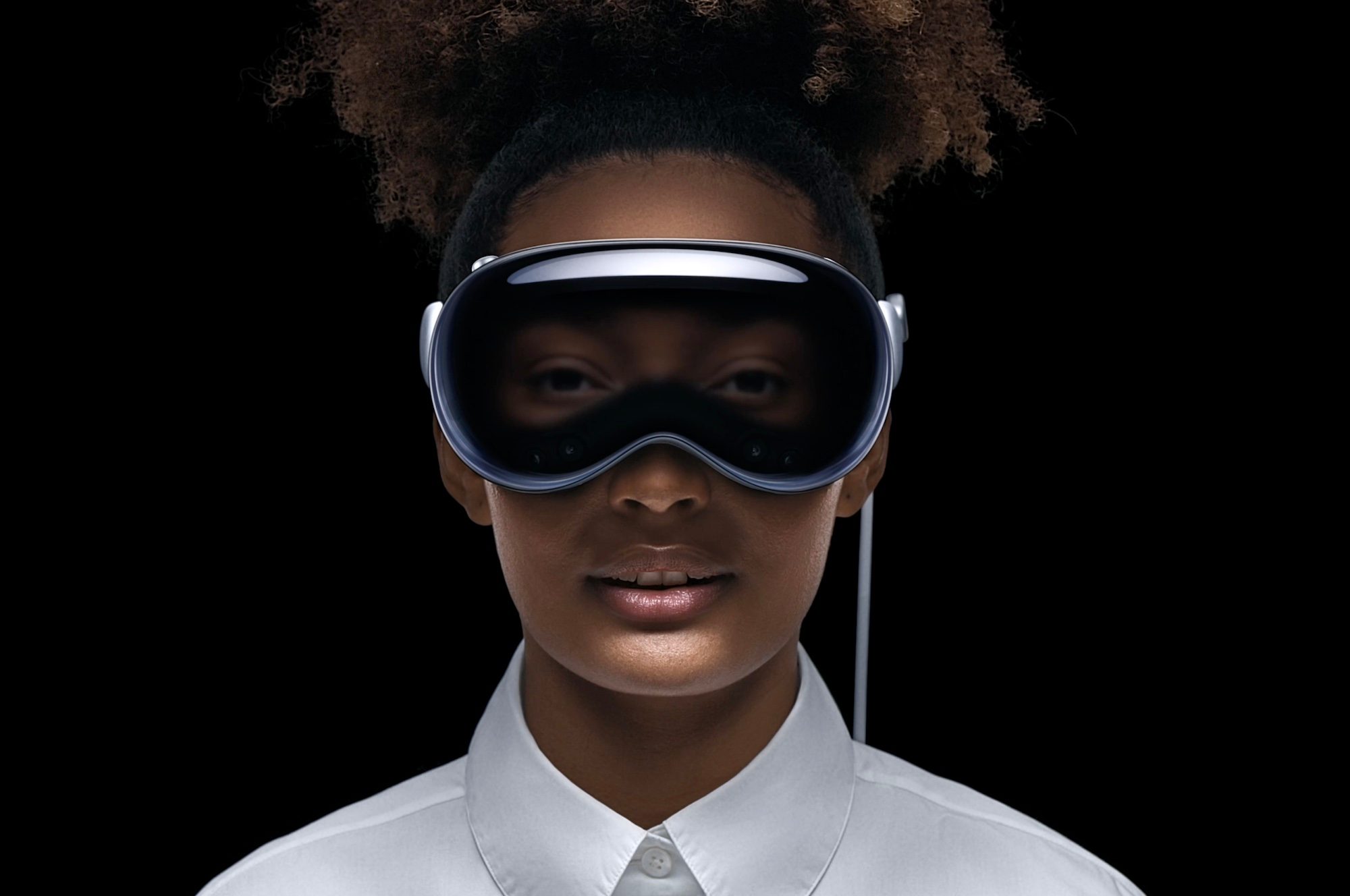
Neither Apple nor OpenAI has revealed exactly what these devices will look like. However, Bloomberg notes that OpenAI is already working on “several new devices” expected to launch over the next few years, while Apple is simultaneously developing smart glasses, AI-enabled AirPods with cameras, tabletop robots, and other AI-centric hardware of its own.

Could ChatGPT hardware be closer than we think?

Let’s be real, Meade’s move doesn’t confirm that OpenAI is building AI glasses, so it’s worth treating the speculation with caution. But hiring the executive who helped lead Apple’s Vision Pro and smart glasses hardware certainly strengthens the theory that OpenAI is assembling the talent needed for wearable AI, especially after bringing Jony Ive and several other former Apple veterans into its hardware team.

The funny thing is that this is starting to feel less like an AI chatbot race and more like a wearables race. Meta already has smart glasses on the market, Apple is reportedly preparing its own, and OpenAI is quietly building an all-star hardware team. Whether that leads to AI glasses, a wearable pendant, or something like an OpenAI ear wearable remains to be seen, but the company’s ambitions clearly extend far beyond ChatGPT on a screen.

Varun Mirchandani
Varun is an experienced technology journalist and editor with over eight years in consumer tech media. His work spans…
The camera on my smart glasses gives me the ick. The people around me feel the same.
Hey, stranger, you won't know it, but I just captured you in a picture and recorded you in a video!
Person wearing glasses with a camera

"Dude, I feel like a creep every time I press the camera button and the LED lights up." That was the blunt verdict from a friend who tried my camera-equipped smart glasses earlier today. My own feelings aren't too different. There's also a functional friction here, which I'll rant about soon enough.

I've used plenty of smart glasses. For the past four years or so, even before Meta flooded the market with its Ray-Ban-branded camera glasses, I've been playing around with another breed that lacked a camera but still offered plenty of fun. Brands like Rokid, XREAL, and Viture have been selling smart glasses with a built-in display unit, promising a private screen that sits right on your face. Immersive entertainment, or spatial computing on the go, all of it without a monitor in sight.

Read more
Nothing might be taking on Meta with its own smart glasses
Viture Pro 2 smart glasses

Nothing has already made a name for itself with smartphones, earbuds, and other accessories that look a little different from everything else on the market. Now, the company may be preparing to add another product category to its lineup: smart glasses.

According to Roland Quandt, who shared the details on Bluesky, Nothing is working on two different types of smart glasses. One will reportedly focus on audio, letting you listen to music and take calls, while the other could offer a built-in camera, ChatGPT integration, and translation features. While Nothing hasn't officially confirmed either product, the leak gives us an early idea of what the company might be planning.

Read more
Samsung Health now needs just 3 days of sleep data to coach you toward better sleep
Samsung is making its Sleep Coaching feature easier to access while adding more personalized advice and clearer sleep reports.
Samsung health sleep tracking

Samsung is making it much easier to get started with Sleep Coaching in the Samsung Health app. With its latest update, you only need three days of sleep data from the past two weeks to begin, down from seven days in a month.

I think that’s a welcome change. Sleep Tracking only tells you how you slept, while Sleep Coaching tries to help you build better sleep habits. Lowering the requirement means you reach the more useful feature much sooner.

Read more