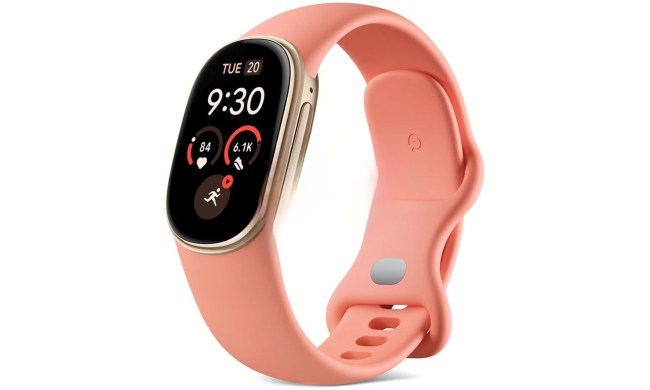
While most wearable devices out right now are solely concerned with tracking your habits, Pavlok is all about changing them. Inspired by the work of Ivan Pavlov and his concept of classical conditioning, the device is designed to give you a small electric shock each time you don’t meet your goals – no matter what they might be.
The idea is that by providing a negative stimulus whenever you act out a bad habit, your brain will gradually begin to associate that stimulus (in this case an electric shock) with the action you perform. Over time, your brain will eventually form such a strong connection between the action and corresponding punishment that you won’t need the shock — you’ll instinctively feel inclined to stop biting your nails, or get out of bed instead of hitting snooze, for example.
To start using the app, you simply enter in your goals and select a corresponding punishment. Theoretically it could be used for just about anything, and the team plans to expand the device’s functionality after the crowdfunding campaign, but at this point the device and accompanying app appear to focus on three main areas: sleep, exercise, and productivity
Related: SingNshock alarm clock delivers an electric shock to wake you up
The sleep function, for example, will wake you with small vibrations on your wrist, but if you try to hit snooze or the embedded accelerometer doesn’t detect movement, you’ll be dealt a shock. The exercise function will allow you to do things like enter the location of your gym and set a schedule for when you want to be there. If your phone doesn’t enter the geofence around the gym by the predetermined time, you can pay a penalty fee, get your failure posted to Facebook, or get shocked. The productivity function, on the other hand, will work with an accompanying Chrome plugin, and allow you to select websites you want to avoid or visit less frequently. If you don’t make your goal, zap city.
But here’s the kicker; Pavlok isn’t just about punishing bad behavior — it’s also designed to reward you for achieving your goals, and thereby offers incentives to make them happen. If you consistently meet your exercise goal, for example, you can win money that other users have lost, or even get gift cards from Pavlok’s partners. In the future the company plans to integrate with IFTTT, which would allow the band to work with a huge selection of different web apps and other connected devices.
The project is currently less than halfway to achieving its $50,000 funding goal on Indiegogo, but it’s still got a month left in the campaign, and we’d be surprised if it didn’t end up raising the money. Prior to launching this crowdfunding campaign, the device was featured on dozens of different TV shows, including The Colbert Report and Late Night with Jimmy Fallon, so we’ve got little doubt it’ll end up a success. If you back the project now, you can lock down a Pavlok wristband for around 130 bucks, and if all goes well, the creators hope to ship the first units as early as April 2015.