  1. Home
  2. Wearables
  3. Emerging Tech
  4. News

These insanely thin LEDs let you put a digital display on the surface of your skin

Add as a preferred source on Google

What if wearable technology was more like a temporary tattoo than a gadget around your wrist? An incredibly thin digital display developed at the University of Tokyo could make skin-level digital displays a wearable reality. Other than the film layer researchers are using to stick their sensors and LEDs to human skin, the technology looks a whole lot like a light-up tattoo that displays data about your body’s health.

In their study, researchers from the University of Tokyo are calling the technology optoelectronic skins, or OE-skins. The photodetectors and the polymer LEDs are so thin that, even with the film layers sandwiching the technology, the entire device is only three micrometers thick. That’s even thinner than the external layer of human skin we all wear, to take the tattoo comparison even further. Combinations of different colored LEDs and more complex sensors could lend the technology to some impressive health tracking functionality.

Recommended Videos

One of the current prototypes of the super thin digital system uses organic photodetectors and polymer LEDs to measure and display oxygen concentration in the blood. “The device unobtrusively measures the oxygen concentration of blood when laminated on a finger. On-skin seven-segment digital displays and color indicators can visualize data directly on the body,” researchers explained in the study. That capacity for immediate, surface-level display is quietly being heralded as a promising future path for wearables.

So as the world of wearable devices is quickly moving towards thinner, more adaptable technology that exists as part of our day-to-day lives, it’s possible our gadget collections may shrink. Applications of the optoelectronic skin technology have been simple so far, but researchers believe that future versions could display complex fitness data in the same way a smart watch or health tracker might — but directly on the surface of your skin.

Chloe Olewitz
Former Digital Trends Contributor
Chloe is a writer from New York with a passion for technology, travel, and playing devil's advocate. You can find out more…
Google just teased its most interesting Fitbit in years, and it’s merely days away
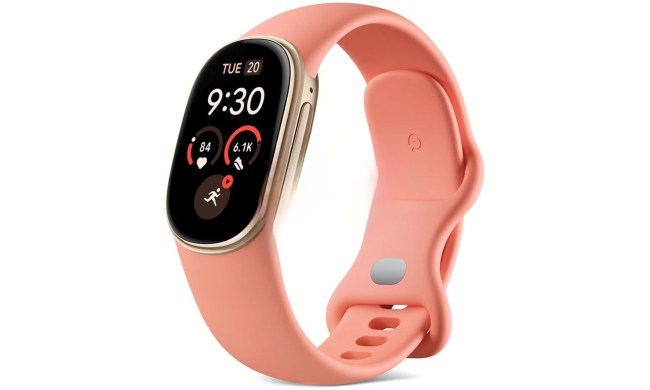
Google’s next fitness band, the Fitbit Edge, is set to arrive on October 12 with ECG, GPS, and an OLED display
Google Fitbit Edge

Google has just released a cryptic teaser for its next wearable device. “Get an Edge on your health,” says the X post by the company's health division. In case you haven't been following the news or the rumor mill, the device in question appears to be the upcoming Fitbit Edge, a fitness band with a screen. Over the past couple of weeks, the device has appeared in leaks showing it from all angles. 

https://twitter.com/googlehealth/status/2108590030050541579?s=46

Read more
A new sweat-sensing smartwatch could help workers stay hydrated in the heat
The watch tracked electrolyte levels for nearly three hours, showing promise for real-time hydration monitoring.
man wearing a smartwatch

If you have ever worked outside on a hot day, you know how much you sweat. In 2023, Associate Professor Isao Shitanda and his team at Tokyo University of Science built a chloride sensor that could be heat-pressed onto T-shirts and wristbands. Their latest device, detailed in a study published online in ACS Omega, is a wristwatch that measures sodium and potassium in sweat in real time.

Why is reading sweat harder than it sounds?

Read more
Natura’s new smart ring combines health tracking with the ability to control multiple AI agents
This $99 smart ring wants to make AI agents part of your everyday life.
natura-interface-smart-ring-lifestyle

What if your smart ring could do more than count your steps? Natura's new $99 Interface ring tracks your health while also letting you command AI agents like Claude and ChatGPT with a finger press. It also tracks heart rate, HRV, sleep, activity, steps, and skin temperature (via TechCrunch).

What can Natura's smart ring do for you?

Read more