  1. Home
  2. Wearables
  3. Android
  4. Cars
  5. Mobile
  6. News

Got an Android Wear 2.0 smartwatch? You can finally use it to hail an Uber ride

Add as a preferred source on Google

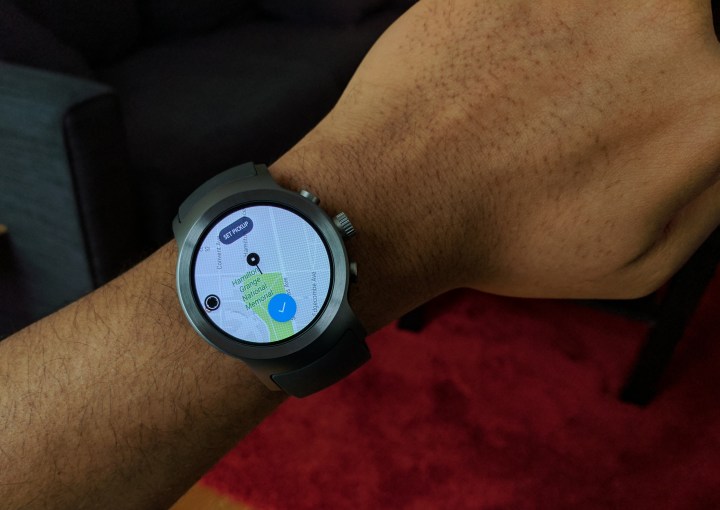
Attention, Android Wear smartwatch owners: You can finally hail an Uber from your wrist. Support for the Wear app was announced at I/O 2015, Google’s annual developer conference, but it has taken the ride-booking company a whopping 21 months to deliver.

Now that Android Wear 2.0 is available on the LG Watch Sport and Watch Style — with a roll out to current smartwatches arriving at the end of the month — apps can be downloaded directly by the Android Wear Play Store app without the need for a phone. The stand-alone watch features in version 2.0 also mean you hardly need to interact with your phone to hail a ride with the Uber app.

Recommended Videos

After installation, open the Uber app and you’ll be prompted to sign in — you’ll need to enter your login details via your phone, but you don’t need the Uber app on your phone to do this. You’ll then need to allow the Wear app to access your location — and that’s it. You can then drop a pin wherever you want and press the check mark. Set a destination, choose what type of ride and price you want — you have all the options depending on your location from UberPool and UberX to UberXL and SUV. Tap request, and a driver should be on the way.

You can check the driver’s ETA and progress to you, and the vehicle’s model and license plate number. Once you’re in the car you can view your progress to your destination.

Right now, it looks like Uber is the only on-demand ride-hailing service for Android Wear users — there’s no alternative, though Lyft used to have an app. It’s likely the company is working on a Android Wear 2.0 stand-alone app to compete with Uber.

You can download the Uber app from the Android Wear Play Store now if you have the LG Watch Sport or Style, but you’ll have to wait until the latest version of the smartwatch operating system makes its way to existing smartwatches later this month.

Julian Chokkattu
Former Mobile and Wearables Editor
Julian is the mobile and wearables editor at Digital Trends, covering smartphones, fitness trackers, smartwatches, and more…
This smart ring makes a blood pressure promise Apple and Oura still won’t
The $399 Signal Ring provides actual systolic and diastolic readings, but it’s launching as a wellness device without FDA clearance
Oura Ring 4, Galaxy Ring and RingConn Gen 2 in the palm of a hand

Vital Signals has unveiled a $399 smart ring that goes further than Apple and Oura currently dare. The Signal Ring displays numerical blood pressure readings without requiring an arm cuff for initial or recurring calibration.

Bloomberg reports that preorders open July 16, with shipping scheduled to begin in October. The ring can collect readings during the day and overnight, then display the results through an iOS or Android app.

Read more
HTC’s smart glasses are apparently coming to the US, but HTC hasn’t said so
Amazon briefly listed the VIVE Eagle for a September 1 launch, while HTC still says the $499 glasses are only available in Taiwan
A woman wearing the HTC Vive Eagle smart glasses

HTC’s VIVE Eagle smart glasses could finally be heading to the US. Apparently, Amazon got the memo before HTC was ready to share it.

Notebookcheck spotted six versions available for preorder at $499, each carrying a September 1 release date. Amazon has since pulled the pages, so new orders are closed and anyone who already placed one is left wondering whether it still counts.

Read more
Don’t expect smartwatches and fitness bands with replaceable batteries anytime soon
Turns out even the EU thinks your smartwatch is too small for a battery swap.
Wristwatch, Arm, Body Part

The EU has a habit of pushing tech companies to adopt meaningful changes in their product. It's the reason your iPhone finally has a USB-C port, and it's also why companies now have to offer spare parts and repair support for electronics for several years after launch. So naturally, many of us assumed wearables were next in line for mandatory swappable batteries. Turns out, the EU just went the other way.

So what did the EU announce?

Read more