  1. Home
  2. Wearables
  3. Audio / Video
  4. News

1mm-thick speakers could reshape smart glasses, smartwatches, and earbuds

Add as a preferred source on Google
xMEMS Sycamore microspeaker driver.
xMEMS

XMEMS, the company that created the first speaker based on a microchip manufacturing processes, is getting set to release its next wave of tiny speakers. Known as Sycamore, the newest model is just 1.13 mm thick, and weighs only 150 milligrams, yet it can reproduce full-range sound over short distances — like the gap between your ears and the limbs of your smart glasses — according to xMEMS.

Sycamore is the latest step in the evolution of micro speakers. XMEMS’ first version could be used in wireless earbuds to reproduce high frequencies, but needed the help of a dynamic driver for bass. Its second product could do full-range sound, but was still limited to earbuds that seal the ear canal with a silicone tip. Sycamore is the company’s first micro speaker that reproduce full-range sound without the need of a closed, sealed environment.
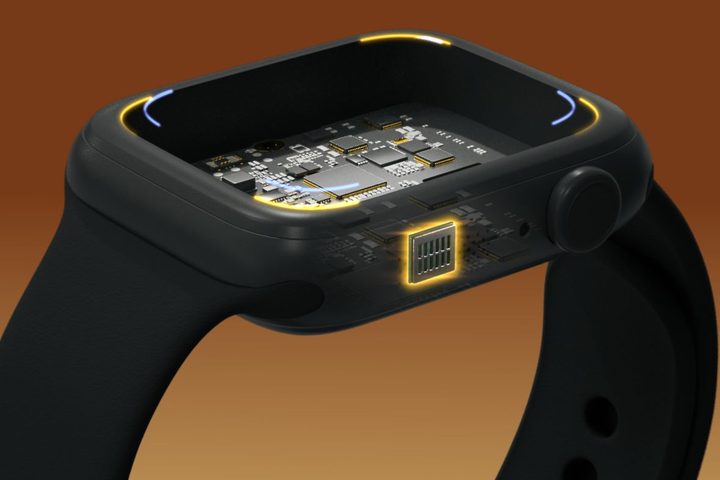
xMEMS Sycamore microspeaker driver.
xMEMS

The company is extolling the many audio benefits of the Sycamore driver as compared to traditional speaker technologies: “With its first-order low-frequency roll-off, it can match mid-bass performance of legacy drivers while offering as much as 11 [decibels] headroom in sub-bass extension. Sycamore also pushes the performance envelope on high-frequency sound — by as much as 15dB above 5KHz over legacy drivers.”

Recommended Videos

In other words, the Sycamore is expected to produce better lows and highs. It’s also remarkably robust, with an IP58 rating that makes it impervious to water and highly resistant to dust.
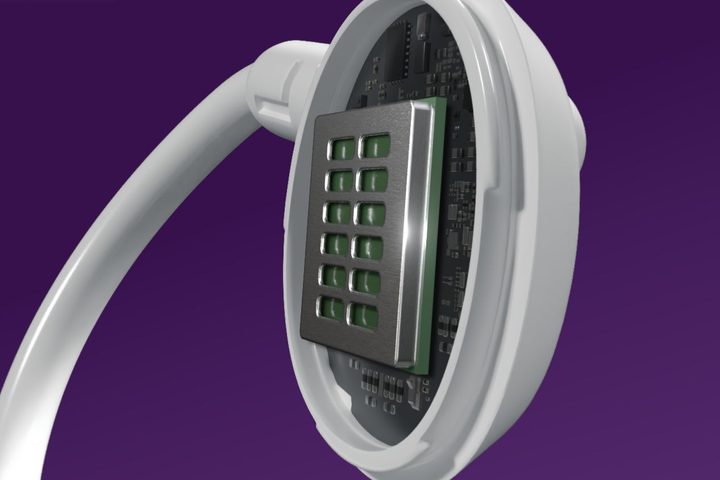
xMEMS Sycamore microspeaker driver.
xMEMS

However, it’s really Sycamore’s size that’s expected to spur designers of electronics into creating better products. It’s one-seventh the size of a conventional dynamic driver package, according to xMEMS, and one-third the thickness. That difference alone could yield smart glasses with thinner, more fashionable limbs, thinner and more durable smartwatches, and open-ear earbuds that are smaller and sound better.

XMEMS also predicts that there will be other uses for Sycamore. With its high-frequency performance, it could act as a tweeter in automotive headrests, Bluetooth speakers, and laptops. The company thinks it could also yield clearer calls and greater privacy when used as an earpiece speaker in smartphones.

All of this is still speculative. XMEMS won’t be releasing Sycamore manufacturing samples to prospective electronics companies until the first quarter of 2025, and says that mass production won’t begin until October 2025. Still, with these timelines, we could see the first Sycamore-enabled products announced in time for CES 2026.

Simon Cohen
Former Contributing Editor, A/V
Simon Cohen obsesses over the latest wireless headphones, earbuds, soundbars, and all manner of related devices and…
Nothing might be taking on Meta with its own smart glasses
Viture Pro 2 smart glasses

Nothing has already made a name for itself with smartphones, earbuds, and other accessories that look a little different from everything else on the market. Now, the company may be preparing to add another product category to its lineup: smart glasses.

According to Roland Quandt, who shared the details on Bluesky, Nothing is working on two different types of smart glasses. One will reportedly focus on audio, letting you listen to music and take calls, while the other could offer a built-in camera, ChatGPT integration, and translation features. While Nothing hasn't officially confirmed either product, the leak gives us an early idea of what the company might be planning.

Read more
Samsung Health now needs just 3 days of sleep data to coach you toward better sleep
Samsung is making its Sleep Coaching feature easier to access while adding more personalized advice and clearer sleep reports.
Samsung health sleep tracking

Samsung is making it much easier to get started with Sleep Coaching in the Samsung Health app. With its latest update, you only need three days of sleep data from the past two weeks to begin, down from seven days in a month.

I think that’s a welcome change. Sleep Tracking only tells you how you slept, while Sleep Coaching tries to help you build better sleep habits. Lowering the requirement means you reach the more useful feature much sooner.

Read more
Fitbit Edge gives me more features, but my money’s still on the Fitbit Air
Fitbit Edge vs Fitbit Air: Sometimes, less really is more
Google Fitbit Edge launched

I'll admit, Google's new Fitbit Edge looks on par with some of the great fitness bands coming out of China. It takes everything I appreciate about traditional Fitbit trackers and wraps it in a sleek design and better polish. You get a 1.34-inch Hybrid OLED display, built-in GPS, ECG support, and a physical button. Google has even made the battery replaceable, something I genuinely appreciate in an era when most wearables become disposable once their batteries deteriorate.

For $179.99, the Edge seems to be reasonably priced too. However, the more I think about what I'd actually want from a fitness tracker, the more I lean towards Google's $99.99 Fitbit Air. Believe it or not, the lack of a display is also the Air's biggest strength.

Read more