Mornings in big cities often blur into the same scene: buses overflowing with passengers, cars inching forward in gridlock, and cyclists squeezing through narrow lanes. For many, commuting feels less like a choice and more like a daily routine dictated by necessity. But in this sameness, a growing number of people are looking for something different—mobility that reflects their personality, gives them control over their time, and makes the journey as enjoyable as the destination.
E-scooters have emerged as a practical option in this shift—compact enough to fit into daily commutes, capable of covering short distances that might otherwise require a car, and stylish enough to appeal to a generation that wants sustainability without sacrificing individuality.
Drawing on years of technical experience, Ausom develops scooters that aim to meet the evolving needs of urban transportation—balancing performance, style, and sustainability
The Role of Ausom Scooters in Everyday City Travel
What sets Ausom’s scooters apart is how their technology translates into everyday value for riders. Across all three models—the L1, L2 Max Dual Motor, and DT2 Pro—the focus is on delivering a riding experience that is not only efficient but also comfortable and secure.
- The shocfree® suspension system is designed to reduce the impact of uneven surfaces, which may help improve comfort during longer rides.
- With responsive brakes and integrated lighting, the scooters aim to enhance rider visibility and control in a range of city conditions.
- Ergonomic handlebars, intuitive displays, and durable construction make these scooters adaptable to a wide range of environments—from quick city errands to longer weekend rides—empowering users with both reliability and freedom.
Each Ausom model is developed with different rider preferences and use cases in mind.
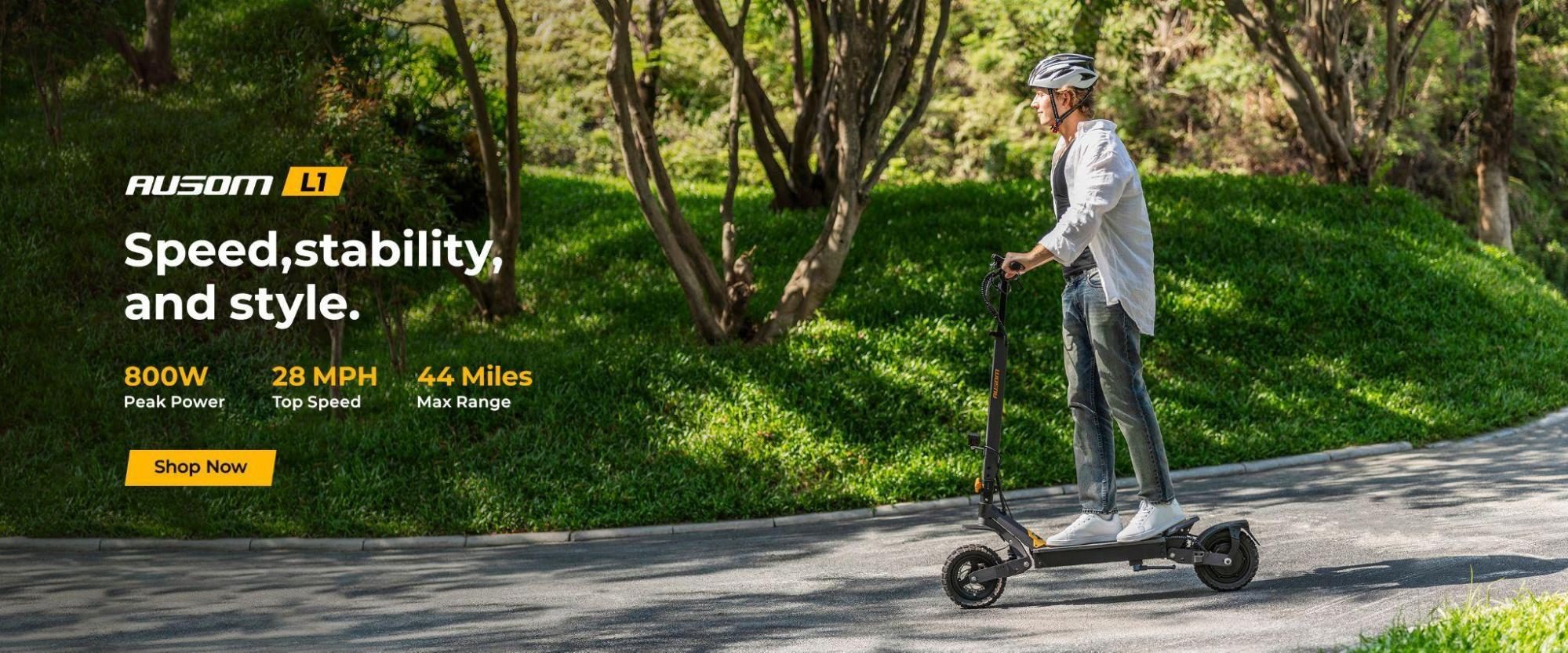
L1: The L1 is designed with urban commuters in mind, offering features suited to short daily trips. With an 800W motor and a range of up to 44 miles (70 km), the L1 is capable of handling multiple short trips between charges, depending on usage and conditions. The compact design and smart unlocking features make it practical for navigating busy city streets, while its 28 mph (45km/h) top speed ensures that keeping pace with urban traffic never feels like a struggle.
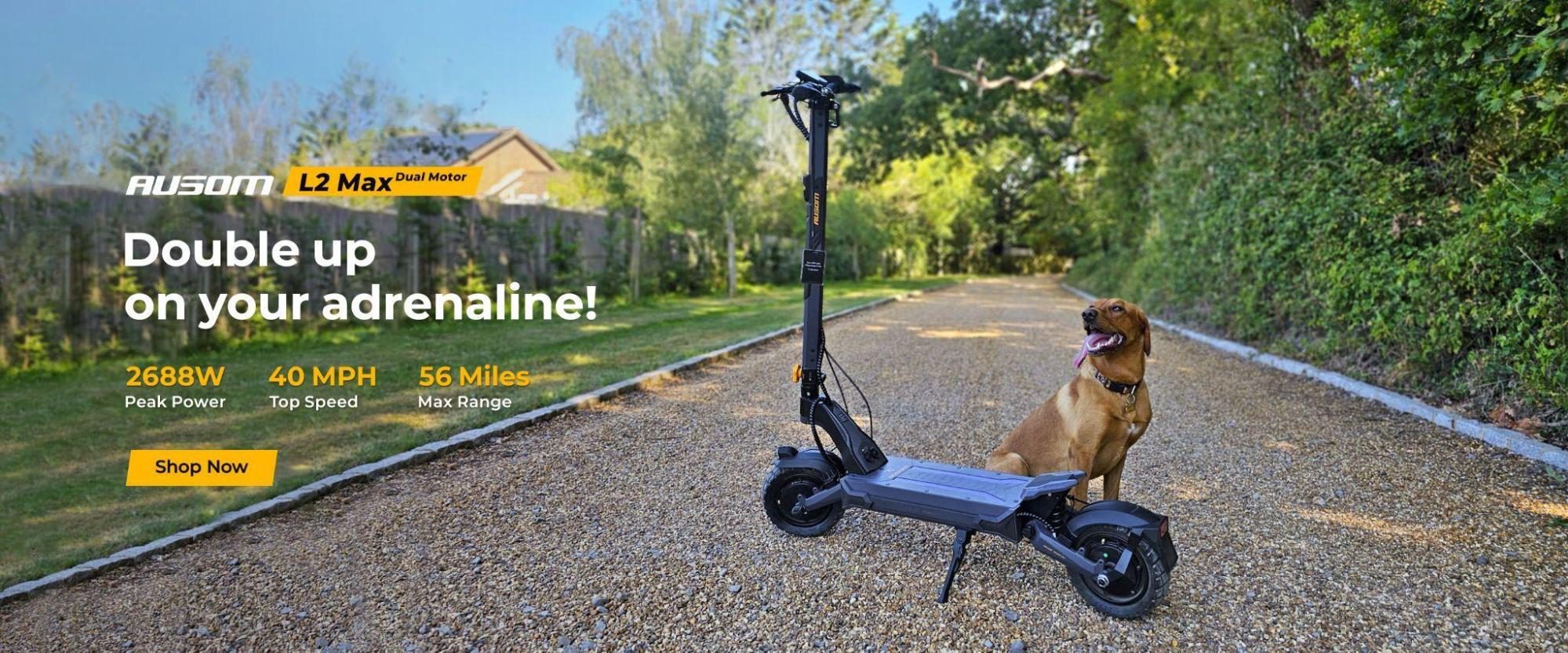
L2 Max Dual Motor: For riders who need more than a simple point-to-point solution, the L2 Max Dual Motor delivers. Its dual 1000W motors and 56 miles (90km) range mean longer commutes can be handled without compromise, while the intelligent energy management system helps extend battery life for consistent performance. With tubeless tires and reliable disc brakes, it adapts seamlessly from smooth city roads to light off-road paths, empowering users who want flexibility in how and where they ride.

DT2 Pro: Built for those who value strong performance capabilities, the DT2 Pro incorporates Ausom’s latest engineering features. With 2912W peak power, 71 miles (115km) of range, and speeds up to 42mph (68km/h), it unlocks the freedom to take on demanding terrains or long-distance rides without hesitation. Equipped with hydraulic brakes and a reinforced suspension system, the DT2 Pro is built to handle higher speeds and varied terrain with improved stability.
Together, the three models reflect Ausom’s commitment to empowering riders with choices that match their lifestyle—whether it’s commuting to work, exploring beyond the city, or chasing high-performance rides—all while keeping sustainability at the core.
Connecting Through a Shared Mobility Culture
An Ausom e-scooter provides not just a practical form of transport, but also a way to get involved in the rising community of riders who are interested in modern, sustainable mobility; from the brand’s side, it has built an active presence on popular Instagram, TikTok, and on YouTube, where people share their rides-their commute experience, weekend journeys, and customization tips-while linking one individual’s ride with the experiences of many others.
What makes this community stand out is the sense of shared purpose. Riders aren’t simply looking for convenience; they’re showing that sustainable choices can also be exciting and stylish.
Learn More and Ride Smarter
Learn more details, specifications, and customer reviews by visiting the Amazon store, the EU Shop, or the GB Shop.