Heading into Mobile World Congress, the general vibe of Motorola’s event was quite lukewarm. While many expected the company to address its acquisition by Lenovo, not much else was predicted. It was supposed to be a business-like affair. While the event did end up being a small affair, several key announcements made it more pronounced than people thought.
On its sale to Lenovo
The big elephant in the room was, of course, Motorola’s acquisition by Lenovo. Motorola Mobility was originally picked up by Google for $12.5 billion, with Lenovo then buying the company off of Google’s hands for a relatively scant $2.91 billion.
 For Motorola, it believes that being sold to Lenovo gives the company “an opportunity to partner on mobile to a larger degree.” It certainly helps that Motorola has an extensive product portfolio, something it brought up more than once. However, Motorola will continue to remain independent in terms of product deployment.
That, however, is not guaranteed. While Motorola certainly hopes “it will continue in this direction,” nothing says Lenovo won’t simply step in and eliminate Motorola’s limited independence.
A smartwatch and a new Moto X on the horizon
Something that we did not expect was new product announcements, yet Motorola did just that. Not only did the company announce that a smartwatch is in development, but that a successor to the Moto X will be released this summer.
Motorola was coy about what software the smartwatch would run, confirming only that it won’t run Tizen, an operating system that Samsung chose for its Gear 2 smartwatches.
Broadening Moto Maker to support more countries
With Moto Maker, Motorola had a winner in its hands. Here was this easily understandable software that allowed consumers to customize the company’s Moto X to meet their color needs. Unfortunately, the main sticking point was that it was only available in the United States; customers overseas cannot customize their Moto X handsets.

Motorola addressed that point with the announcement of Moto Maker for Europe and Mexico in the second quarter of 2014, beginning with the U.K., Germany, and Mexico. No word on when we will see Moto Maker expand to other European countries, but don’t lose hope, Vatican City, it may get there eventually.
Expanding its horizons
Even though Google took over Project Ara, that doesn’t mean Motorola won’t keep an eye on the project.
Announced late last year, Project Ara aims to deliver a modular and customizable phone to those who want it. Originally in development by Motorola’s 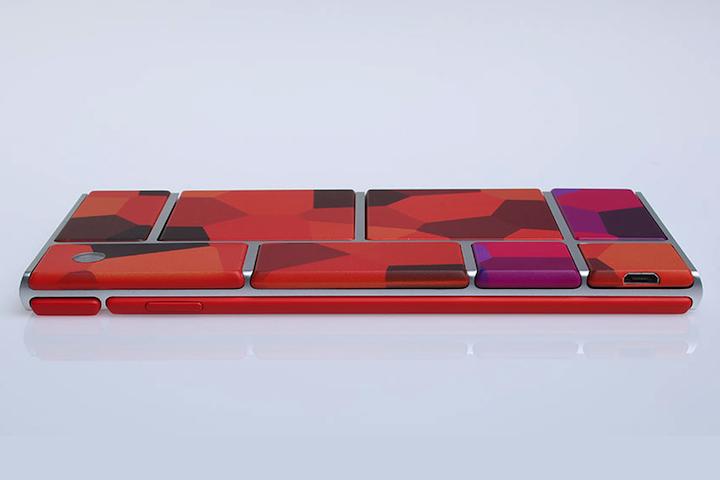 Advanced Technology and Projects (ATAP) group, Project Ara was integrated into Google once it was announced that Motorola would be sold to Lenovo.
Motorola was vague about Project Ara, saying that it still has a “great relationship” with the group and that it will “follow closely the developments of Ara.”
Finally, it looks like Motorola is committed to Android. Motorola will continue to use the same software that it uses on the Moto X and Moto G, which means we should expect near-stock Motorola devices in the foreseeable future. Don’t expect to see any Windows Phone handsets coming out of Motorola.
All in all, for an event that was not expected to pack much in the way of news, Motorola surprised us quite well. Still, one can’t help but wonder if Motorola made these announcements just to make its presence known. Plus, we can’t assume that new owner Lenovo won’t simply cancel these products when the acquisition finalizes.
If Motorola wanted to create a buzz, its event at Mobile World Congress surely did just that.