  1. Home
  2. Cars
  3. News

Judge nixes Uber safe rides fee-related $28.5 million settlement offer

Add as a preferred source on Google

Uber hasn’t been faring too well with settlement offers this year. In August in San Francisco, a District Court judge rejected a $100 million settlement with Uber drivers in a suit addressing the question of whether the drivers should be classified as employees or contractors. Now a different judge in the same courthouse rejected Uber’s $28.5 million settlement offer in a lawsuit relating to safe rides fees, according to Bloomberg.

Starting in April 2014 Uber instituted a safe rides fee of $1 per trip. The fee was charged to passengers and was supposed to compensate Uber for driver background checks, vehicle checks, and insurance. In some cities the fee eventually got as high as $2.50 per trip.

Recommended Videos

In the class action lawsuit, riders alleged that driver background checks weren’t as stringent as Uber promised. In a similar suit in April, which was settled for $10 million, prosecutors said drivers who got through the background checks included thieves, burglars, a kidnapper, and a convicted murderer.

Uber’s $28.5 million offer was rejected because it fell far short of the revenue Uber realized from the fees. Bloomberg reported that, as a result of improper redaction, a copy of the court rejection order revealed that Uber took in $448,598,018 in safe rides fees. That amount is 16 times the amount of the settlement offer. The plaintiffs’ attorneys estimated they would recover $132 million if they won the case, or a full third of the fee revenue Uber took in during the period at issue.

If the offer had been accepted, it would have resulted in approximately 82 cents for each of class action member. U.S. District Judge Jon Tigar ruled that a positive portrayal of that amount in comparison to the average $1.12 charged for safe ride fees “rings hollow” since many in the group paid multiple fees and some passengers paid nothing.

“In sum, the proposed settlement does not fairly and reasonably protect the class,” Tigar wrote.

The next step in the case is for the lawyers to present briefs on why the revenue figures should be sealed. Although the judge gave the attorneys five days to prepare their arguments, the improperly redacted document let the cat out of the bag.

Bruce Brown
Bruce Brown Contributing Editor   As a Contributing Editor to the Auto teams at Digital Trends and TheManual.com, Bruce…
Volvo is rolling out Apple Music to over 2 million cars with a simple OTA update
Your Volvo may soon get Apple Music without needing CarPlay
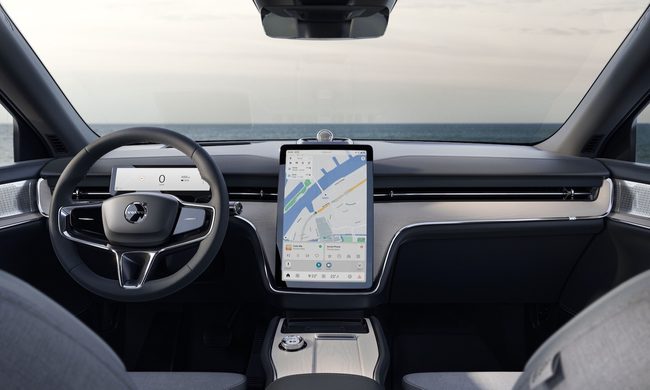
Interior view of the 2024 Volvo EX90.

The line between your smartphone and your car continues to blur. Volvo has announced that it is rolling out an over-the-air software update that brings Apple Music directly to the infotainment systems of more than 2 million vehicles worldwide. Instead of relying on Apple CarPlay or plugging in an iPhone, eligible drivers will be able to stream music natively from their car's built-in system, making Apple Music another integrated feature of Volvo's software experience.

The update is arriving for a wide range of Volvo models, including the EX90, ES90, XC90, S90, V90, XC60, S60, V60, XC40, EX40 and EC40, covering model year 2020 onwards. Availability, however, may vary depending on the vehicle.

Read more
Chery’s latest EV packs flagship tech for the price of a base Tesla, but you can’t buy it
Here's everything packed into Exeed's 2027 Exlantix ES, from its 27-sensor autonomous driving suite to its 860 km range, all starting under $31,000.
Car, Transportation, Vehicle

Chery's premium arm just dropped a sedan that makes you wonder why American EVs cost twice as much for half the tech.

Exeed's 2027 Exlantix ES ships with a driver-assist system called Falcon 700. It is built around an Nvidia Orin-Y chip and a genuinely stacked sensor suite.

Read more
A new AI model wants self-driving cars to think before they swerve
Forget guessing games, this self-driving AI actually shows its work.
Self driving car

Self-driving cars have gotten pretty good at driving. The harder problem is teaching them to drive safely in situations nobody planned for. We have heard horror stories of self-driving cars, behaving erratically in emergency situations, often times delaying first responders from reaching the scene.

A team at Seoul National University, led by professor Jun Won Choi from the Department of Electrical and Computer Engineering, thinks they have cracked part of that puzzle with a new AI model called SafeDrive. The research was recently selected as a highlight paper at CVPR 2026, a distinction that goes only to roughly 3% of all submissions.

Read more