1. Home
  2. Computing
  3. News

360-degree documentary 'Follow My Lead' puts viewers in the arena for the NBA Finals

Add as a preferred source on Google

The National Basketball Association has teamed up with Oculus to release a 25-minute virtual reality documentary about last year’s championship series. Follow My Lead: The Story of the 2016 NBA Finals is a 360-degree video experience that charts the entire seven-game series between the Golden State Warriors and the Cleveland Cavaliers.

The film demonstrates how VR technology might be used to augment traditional video experiences. Follow My Lead was shot with 360-degree cameras, so viewers can turn their heads while watching to see any aspect they like of any given scene.

Recommended Videos

This means that you can immerse yourself in the crowd and see how others react when LeBron James pulls off a particularly impressive dunk. Some more unusual moments were also captured — the memorable tumble taken by a cameraman during Game 6 is apparently even more visible than it was on the television broadcast.

Creed and The Wire actor Michael B. Jordan was called upon to provide narration for the documentary. Meanwhile Brooklyn-based outfit m ss ng p eces — perhaps best known for working on the video for Daydreaming from Radiohead’s A Moon Shaped Pool album — handled production duties.

It will certainly be interesting to see whether Follow My Lead starts a trend of documentary content designed to be viewed using VR hardware. Despite the film’s lengthy runtime, watching it in this format is apparently not as conducive to headaches and discomfort as you might expect, according to a report from Engadget.

Follow My Lead is an ideal way to relive the conclusion of last year’s championship series before the 2016-17 season gets underway next month. The film has been designed to be viewed on the Samsung Gear VR headset, and is available now as a free download via the Oculus Store.

Brad Jones
Brad is an English-born writer currently splitting his time between Edinburgh and Pennsylvania. You can find him on Twitter…
Amazon wants to design in-house chips for Kindles, Fire TV, and Echo speakers
Apple did it first. Amazon is doing it now, starting with 40 million chips a year and a partner most people have never heard of.
Amazon Kindle Scribe dark mode featured image.

Apple's decision to design its own chips reshaped the consumer electronics industry. Amazon may be about to make the same call, just about two decades later.

Supply chain analyst Ming-Chi Kuo reports that Amazon is preparing to shift away from externally sourced processors for its consumer electronics lineup, marking what he describes as the company's first major processor procurement change in 20 years. The transition is expected to begin in 2027.

Read more
AI wants to summarize it all. TripAdvisor’s misleading reviews show AI will also ruin your travel plans
Spotless, friendly, and totally wrong. AI summaries are hiding the reviews that actually matter.
Tripadvisor logo on MacBook

Planning a trip is stressful enough without wondering if the glowing hotel summary you just read was written by an AI that skipped the scary parts. As it turns out, that might be exactly what's happening on TripAdvisor.

According to an investigation by consumer group Which?, reported by the Guardian, TripAdvisor's AI-generated review summaries are smoothing over serious guest complaints, and in some cases, downright dangerous ones.

Read more
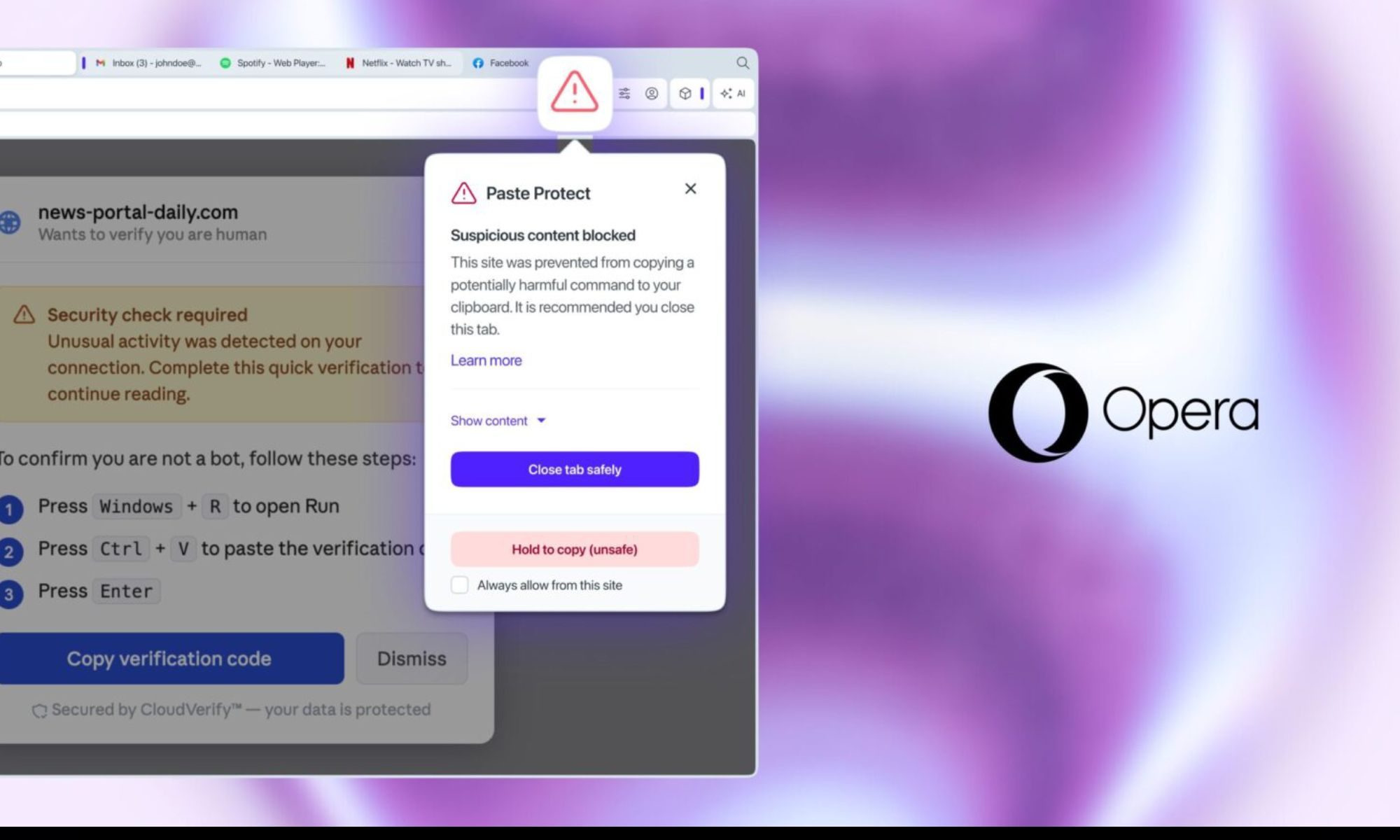
Opera’s new Paste Protect feature stops the clipboard attack your antivirus can’t catch
ClickFix attacks trick you into compromising your own device, and no major browser had a native defense against them until now.
Opera Paste Protect featured

Most online scams are easy enough to spot once you know what to look for. Fake login pages, suspicious attachments, or urgent wire transfer requests are dead giveaways. But ClickFix doesn't look like any of them. It presents itself as a solution, and it asks you to do something so routine that few people think twice about it.

The technique was behind more than 53 percent of malware loader incidents last year, according to cybersecurity firm Huntress, and no major browser had a native defense against it until now. Opera is fixing that with a new feature called Paste Protect.

Read more