  1. Home
  2. Phones
  3. Business
  4. Mobile
  5. News

South Korea’s antitrust watchdog concerned Google meddled with Samsung’s Tizen

Add as a preferred source on Google

Samsung might be all in on Android, but the South Korean firm also toys around with its in-house Tizen operating system for phones, smartwatches, televisions, and everything in between. However, South Korea’s antitrust watchdog is concerned that Samsung business with the former might have negatively affected its business with the latter, with Google to blame, reports The Korea Times.

The matter goes back to 2011, when Samsung signed the Mobile Application Distribution Agreement (MADA) and anti-fragmentation agreement (AFA). MADA required Android smartphones to use Google as the default search engine and pre-install specific Google-developed apps, such as YouTube and Gmail, to the home screen. AFA, meanwhile, forbade Samsung from using Google’s algorithms to develop its own operating system.

Recommended Videos

At the time, Korea’s Fair Trade Commission (FTC) looked into MADA and whether it violated the country’s Antitrust Law. Google’s Korean arm was cleared of all alleged wrongdoing in 2013. Furthermore, the federal agency launched an investigation into AFA in 2016 and found some issues that might have led to Google’s possible interference of Samsung’s Tizen development.

“We are currently checking if Google thwarted competition in the OS market,” said an FTC official. That official also confirmed the FTC will review whether to reinvestigate the 2013 antitrust case.

“As lawmakers have demanded a reinvestigation of the case, the FTC is checking whether it is possible to do so.”

A spokesperson for Google Korea said the company has done nothing wrong, but did not say what its next step is.

“Android is an open-source platform. Our partner agreements are entirely voluntary — anyone can use Android without Google,” said the spokesperson. “The Android OS can be downloaded for free. It can be modified and used to build a phone. Many companies have used Android’s source code as the starting point for their own operating systems.”

Williams Pelegrin
Williams is an avid New York Yankees fan, speaks Spanish, resides in Colorado, and has an affinity for Frosted Flakes. Send…
OnePlus is building another flagship monster for a shrinking audience, and its expected to launch in October
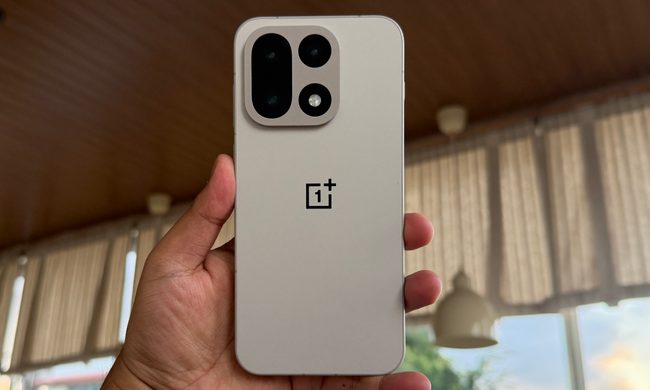
OnePlus 16 could launch in October, but it may not leave China
Rear shell of OnePlus 15.

While OnePlus may have exited the US and Europe, the brand is still alive in its home market and is already working on its next flagship smartphone. A fresh leak from Chinese tipster Digital Chat Station has now revealed more details about the OnePlus 16, including its design and a revised launch timeline.

The tipster previously claimed that the phone would arrive in September 2026, but the latest information points to an October launch in China (via Gizmochina). The global picture is far less clear, and there is now even some doubt over whether the OnePlus 16 will make it to India, which remains the company’s biggest market.

Read more
Samsung has another wild foldable phone lined up for 2027 and it will excite screen connoisseurs
Samsung wants another giant OLED folding inside your pocket
Samsung Galaxy TriFold unfolded

Samsung just gave foldable fans a wider 4:3 canvas with the Galaxy Z Fold 8. But that still isn't enough screen for the company. Samsung has reportedly begun early development of a successor to the Galaxy Z TriFold, its dual-hinged phone that unfolds into something much closer to a proper tablet.

According to Korean publication ETNews, Samsung has already shared information about the next-generation project with suppliers, but its final specifications have yet to be decided. One detail should immediately grab the attention of anyone who buys a foldable primarily for its display. A source familiar with the project told ETNews that Samsung is currently targeting a screen size similar to the original TriFold.

Read more
Android’s most powerful app permission could soon come with a much scarier warning
New Android 17 language spells out how trusted apps may interact with your screen while your device remains locked
Electronics, Mobile Phone, Phone

Android 17 could make one of its most powerful app permissions harder to approve without a second thought. New warning text explains that trusted apps may view and interact with screen content, even while the phone is locked.

Nerd’s Chalk uncovered the language in an APK teardown of Android 17 QPR2 Beta 1. The feature isn’t active, but Google’s description now leaves considerably less to the imagination.

Read more