1. Home
  2. Computing
  3. News

Digital Trends may earn a commission when you buy through links on our site. Why trust us?

Razer Power Bank looks good while keeping USB devices charged up

Add as a preferred source on Google

Razer is best known for its gaming notebooks and accessories, but the company makes a number of other products as well. Some, like its Nabu wearables, are more stand-alone products that aren’t directly related to gaming, while some others augment the company’s better-known lines.

One example of the latter is a new product aimed at helping gamers play longer. The Razer Power Bank smart charge accessory can power USB devices up to and including Razer’s own Blade Stealth notebook while upholding the classic Razer aesthetic.

Recommended Videos

The Razer Power Bank packs in a large, 12,800mAh battery that can provide the Razer Blade Stealth with enough additional power to last a full 15 hours of work, specifically an extra six hour of batter life from only two hours of charging time. The smart charger is encased in a black CNC aluminum casing adorned with the Razer logo for good looks, durability, and portability.

With dual USB-A ports and a USB Type-C connection, the Razer Power Bank can work with a host of devices, and it incorporates intelligence that allows it to instantly recognize devices as they’re attached for optimal charging. Qualcomm Quick Charge 3.0 support works with compatible devices to charge up to four times faster than a conventional USB charger.

“High-performance mobile laptops like the Razer Blade Stealth are more a part of daily life than ever before, and keeping them charged and ready is a high priority,” says Min-Liang Tan, Razer co-founder and CEO. “The Razer Power Bank enables true mobility for users who can now quickly and smartly charge their laptop, phone, and tablet at the same time when an outlet isn’t an option.”

The Razer Power Bank will ship in March and priced at $150. The company will be selling the portable charger exclusively at the Razer Store.

Mark Coppock
Former Computing Writer
Mark Coppock is a Freelance Writer at Digital Trends covering primarily laptop and other computing technologies. He has…
The maker of ChatGPT wants to make open-source projects less of a security bargain
OpenAI launches Patch the Planet for open-source security, with over 30 open-source projects on board.
openai-chatgpt-os

OpenAI has launched Patch the Planet, a new initiative aimed at fixing one of the internet's quietest problems – the chronically underfunded security of open-source software.

Patch the Planet pairs OpenAI's most security-capable AI models with Trail of Bits, a security firm that has committed its entire research organization to the effort, alongside support from HackerOne and Calif.

Read more
I sifted through the Prime Day chaos to find the best Apple deals actually worth buying
Apple's about to hike prices. Prime Day 2026 is your last chance to save up to $150 on MacBooks, AirPods, and iPads.
Prime Day Deals on Apple Products

Apple is set to increase the prices for its upcoming iPhones and MacBooks, as the company can no longer offset the rising RAM and storage costs. That means, if you are looking to upgrade your aging device, you should buy the current-generation Apple products rather than wait for the new ones.

And since Amazon Prime Day is offering good discounts on the latest iPhones, iPads, MacBooks, and other Apple accessories, this is the perfect time to buy them. Here are my favorite Amazon Prime Day deals for Apple products. 

Read more
This sneaky photo trick gets AI chatbots to ignore their safety rules
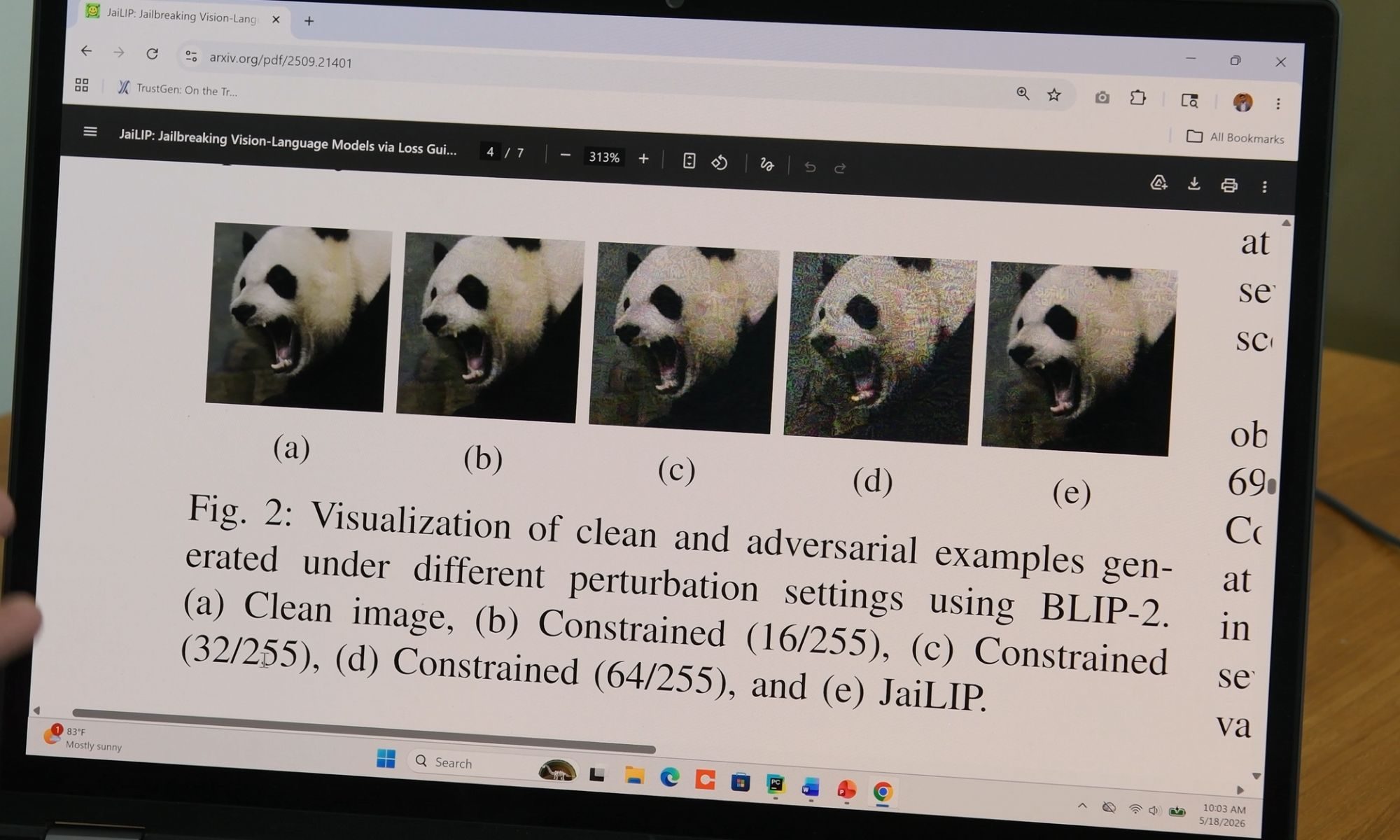
Florida International University researchers built a method that nearly doubled the rate of harmful responses from a tested AI model using nothing but pixel-level edits in an image.
JaiLIP AI chatbot exploit image

A photo that looks completely ordinary to you could carry a hidden instruction to trick an AI chatbot into ignoring its safety rules, according to new research out of Florida International University. The study found that pixel-level alterations in an image that are invisible to the human eye can be enough to confuse the model reading the image and lead it to generate responses it would normally block.

Hacking what the AI sees

Read more