A new Los Angeles-based startup is getting into the business of prefabricated homes in a unique way by combining technology, efficiency, and a one-stop-shop approach. Cover was founded by architects Alexis Rivas and Jemuel Joseph in 2014, with an eye towards building precision-designed homes that aren’t dependent on an army of architects, engineers, and general contractors.
The company’s work comes in at a time of abundance for prefab home builds, ranging from stackable shipping container homes to igloos. But the architects at Cover are convinced their approach is different from any other prefab, design-build, or engineering model that has ever existed.
Their tactic is certainly comprehensive. The process starts by sending potential customers a survey of 50-100 questions pertaining to a variety of needs, from lifestyle to appliances to special awareness. That’s a typical first step for generic architecture firms, but the difference with Cover is in how the firm utilizes those answers.
Cover uses CATIA, a multi-platform software design suite developed by Dassault Systemes, to analyze the data gathered from the client and generate hundreds of unique building designs. The program is widely used for manufacturing in the aerospace industry — Boeing used it to design the Boeing 777 and 787 airliners — but the software is rarely used in the architecture industry. In fact, the practice of using the software to design homes is so uncommon that one of the only architects using it is world-renowned architect Frank Gehry, who uses it to design his curvilinear buildings.


The software is unique in its capacity for designing home models that are responsive to their environment. The architects at Cover can leverage sun path and geospatial data to place windows in the most optimal location to get light throughout the day, as well as optimizing the home’s energy performance. To that end, the company delivers on its promise at an astonishing pace and cost. Most clients can get a complete design and price estimate within three business days for $250.
Another unique aspect to Cover is its target market; instead of focusing on the custom designs and constructions that generic home builders offer, the company is focused on accessory dwelling units — detached living space intended for use as a home office, guest bedroom or in-law suite.
Naturally, a full construct costs considerably more than the initial design, but Cover is committed to walking buyers through the entire process. The permitting process runs about $20,000 and takes between two and five months. A Cover structure generally costs between $250 to $350 per square foot. Once permitting is completed, Cover can construct a unit within 12 weeks. In other words, a customer could conceivably buy a home and move in within six months.
Once permitting is completed, Cover can construct a unit within 12 weeks.
The sample prices for completed units on the Cover website run between $70,000 for a guest room to $250,000 for a two-bedroom unit. In a housing-starved market like Los Angeles, the prices would still be a bargain, which is part of the reason Cover recently bought a factory in the sprawling city.
Construction is just as efficient as the design process, since Cover essentially builds its structures like a Revell snap-tite model. The company uses CNC machines and automated cutting tools to make the fabrication process seamless, adding detail and precision to a process where problems often emerge. The structures are based on steel frames, and are covered with insulated, waterproofed panels that include the electrical and plumbing systems. Once on-site, the whole unit snaps together like building a bookshelf from Ikea.
The company’s attitude towards energy and cost-efficiency is partially rooted in Rivas’ experience as an intern at high-end architectural firms in Toronto, where multi-million-dollar builds earned superior finishing and design details.
“It was a shame that these details would be built once for one client,” he recently told Co.Design. Instead, he says on the Cover website, the company’s long-term goal is “to make thoughtfully designed and well-built homes for everyone, not just the high-end market.”
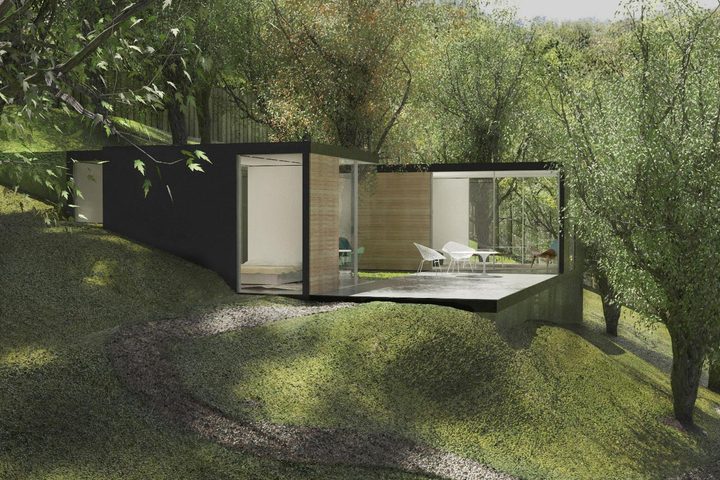
Cover’s factory is designed to have the capacity to produce 100 accessory dwelling units annually, but the company is growing quickly. The four-person team has already produced one structure, and has seven projects in the design phase, ranging from a $90,000 backyard office to a $300,000 one-bedroom home. Yet the Cover team’s goal is to consistently make their products more affordable by reinvesting profits in research and development to produce a more efficient design and manufacturing process.
“A world where we’ve succeeded is a world where everyone is able to live in beautiful, healthy, functional spaces tailored to their specific way of living,” says Rivas. “A world where buildings enhance our environment, not consume its resources. None of this is easy, but it’s important, and that’s why we’re doing it.”