1. Home
  2. Cars
  3. News

Great Scott! ‘Back to the Future’ fan ticketed for going 88 in his DeLorean

Add as a preferred source on Google

Well, what would you do if you were taking your newly acquired DeLorean out for a spin and suddenly noticed the speedometer hovering at around 85 mph? Wouldn’t you push it to 88 mph in the admittedly desperate hope that something magical might happen?

Spencer White of Santa Clarita, California, did just that last week. And got a ticket for his troubles.

Spencer White with his DeLorean. Spencer White

White, who happened to have his mom alongside him at the time, told the BBC it all started when he hit the gas to get past some slow traffic on the freeway.

Recommended Videos

When he noticed he was moving at 85 mph, he suggested to his mom pushing it to 88 — the precise speed the DeLorean needed for time travel in Back to the Future. She was clearly up for it, imploring her son to “go for it!”

Next thing he knew, he was getting pulled over by a traffic cop.

“I had to open up the door because DeLoreans have these really weird windows on them, and [the cop] had a big grin on his face,” 36-year-old White explained.

After a brief discussion, the officer pulled out the radar gun and showed White the “88 mph” readout. To his surprise, the officer asked if he wanted to take a picture of it.

Clearly a fan of the movie that secured the car eternal fame, the cop asked White if he happened to have a flux capacitor inside the vehicle, the vital component that enabled McFly to travel through time inside his souped up DeLorean.

White, who only bought his beloved car a few months back, said he’d hoped the cop might let him off. But it wasn’t to be. The officer told White he didn’t immediately realize it was a DeLorean when he clocked it, adding, “But I still have to do my job.”

He got hit with a $400 speeding ticket, a fine that only a spot of time travel will be able to reverse.

Trevor Mogg
Contributing Editor
Not so many moons ago, Trevor moved from one tea-loving island nation that drives on the left (Britain) to another (Japan)…
Your next car’s software update could become its biggest security risk
Your next car could receive updates like your smartphone. That's also becoming a cybersecurity nightmare.
OTA technology allows manufacturers to remotely deliver software updates.

Modern cars are no longer machines that stay the same after they leave the showroom. Increasingly, they're becoming software-defined vehicles that receive new features, bug fixes, and security patches wirelessly, much like smartphones. But while over-the-air (OTA) updates have made vehicle maintenance easier and cheaper, cybersecurity experts are warning that the same technology could also become one of the automotive industry's biggest security challenges.

Researchers and policymakers are now calling for stronger oversight as connected vehicles become increasingly dependent on remote software updates. Their concern isn't just about hackers stealing personal data. It's about someone potentially interfering with the operation of a moving vehicle.

Read more
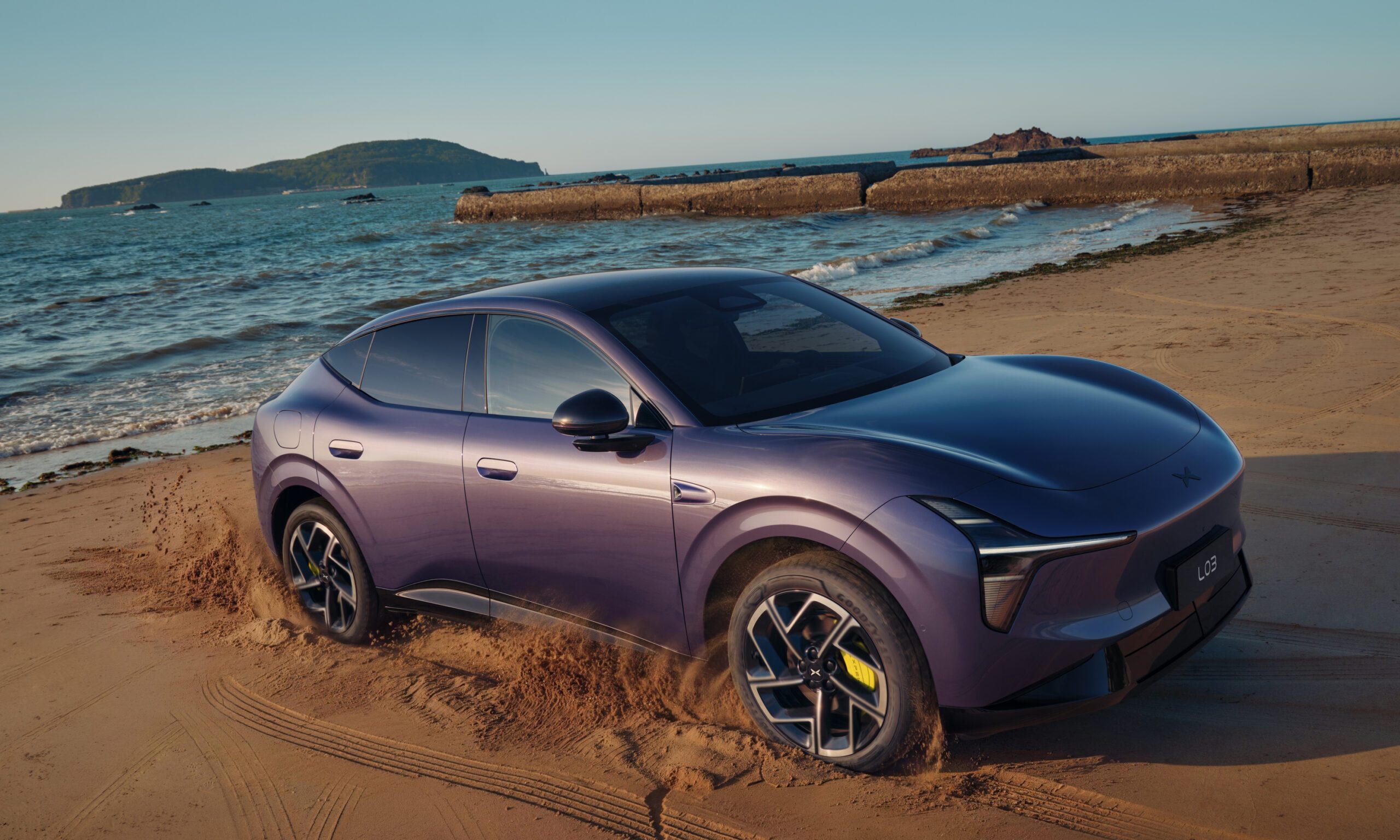
This sleek Chinese EV pairs supercar styling with three AI brains
The Xpeng L03 is an AI supercomputer disguised as a stylish family SUV
Xpeng L03

Xpeng’s latest electric vehicle carries enough processing power to make the term "smart car" actually sound more realistic than it actually is. The new Xpeng L03 debuted simultaneously in Europe and China on July 16, with the company presenting it across 65 markets. Available as a fully electric vehicle and an L03 Power X range-extender, the coupe-SUV is Xpeng’s most internationally focused model so far. Market-specific prices and sales dates remain unannounced.

Three AI chips and Google Maps built right in

Read more
A new sodium battery posts wild four-minute charging numbers, but don’t expect it in an EV yet
The breakthrough could improve fast charging and battery life, but the study hasn’t demonstrated those results in a production-sized pack
EV Charger

A new sodium-metal battery has posted a charging number that makes today’s EVs look painfully slow. In laboratory testing, the cell operated at a 15C rate, equivalent to completing a charge or discharge in roughly four minutes.

That doesn’t mean researchers plugged in an electric car and watched it fill up before the driver finished buying coffee. The result came from a small experimental cell using a new quasi-solid electrolyte, while the larger pouch-cell prototype delivered far less dramatic performance.

Read more