  1. Home
  2. Cars
  3. News

Tokyo robotics firm ready to build driverless cabs for 2020 Olympics

Add as a preferred source on Google

Japanese cabs are already a little bit robotic thanks to their automatic doors, which the driver operates from the comfort of their seat.

But as part of plans for the 2020 Tokyo Olympics, hundreds of taxis in the capital city are gearing up to go full-robot, doing away with their driver altogether to offer rides in self-driving cars.

Recommended Videos

The government has been talking of such a move for the last couple of years, and this week Tokyo-based robotics maker ZMP announced it’s inked a deal with local taxi firm Hinomaru Kotsu to make it a reality, Reuters reported.

Similar to companies like Waymo, ZMP is developing automated driving technology — both software and hardware — that uses lasers, sensors, cameras and other equipment to guide a driverless car and its occupants safely through traffic.

The company has been testing its technology on the roads of Tokyo since last year with a view to incorporating it into a fleet of taxis ready to transport athletes and sports fans around the city during the Olympics and beyond. While current tests involve an engineer in the driver’s seat monitoring the car’s progress, the plan is to have a car on the road without a safety driver by the end of this year.

A number of competing taxi firms in Japan’s capital are also interested in putting autonomous cabs on the road, with some turning to local car giant Toyota for help with the technology.

Japan’s self-driving plan for the Olympics isn’t only a way for the nation to showcase its advanced technologies. Such a system could also help relieve the pressure on taxi companies which, because of the nation’s declining birth rate and resulting fall in the number of available workers, are finding it increasingly hard to find new drivers.

“We’ve been trying to improve diversity by hiring more new graduates, women, and foreigners, but this will not be enough to ease labor shortages,” Kazutaka Tomita, Hinomaru president, told Reuters, adding, “We’ll have to compensate for the lack of supply by using autonomous driving technology.”

ZMP boss Hisashi Taniguchi promised that “autonomous taxis and the taxi industry can grow and prosper together” as he looked forward to transforming the streets of Tokyo with driverless cars.

Trevor Mogg
Contributing Editor
Not so many moons ago, Trevor moved from one tea-loving island nation that drives on the left (Britain) to another (Japan)…
Volvo is rolling out Apple Music to over 2 million cars with a simple OTA update
Your Volvo may soon get Apple Music without needing CarPlay
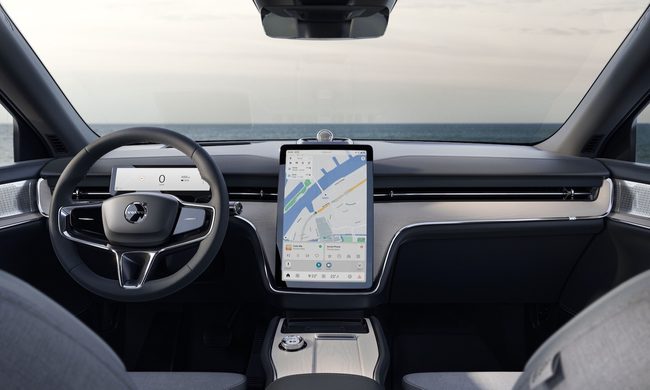
Interior view of the 2024 Volvo EX90.

The line between your smartphone and your car continues to blur. Volvo has announced that it is rolling out an over-the-air software update that brings Apple Music directly to the infotainment systems of more than 2 million vehicles worldwide. Instead of relying on Apple CarPlay or plugging in an iPhone, eligible drivers will be able to stream music natively from their car's built-in system, making Apple Music another integrated feature of Volvo's software experience.

The update is arriving for a wide range of Volvo models, including the EX90, ES90, XC90, S90, V90, XC60, S60, V60, XC40, EX40 and EC40, covering model year 2020 onwards. Availability, however, may vary depending on the vehicle.

Read more
Chery’s latest EV packs flagship tech for the price of a base Tesla, but you can’t buy it
Here's everything packed into Exeed's 2027 Exlantix ES, from its 27-sensor autonomous driving suite to its 860 km range, all starting under $31,000.
Car, Transportation, Vehicle

Chery's premium arm just dropped a sedan that makes you wonder why American EVs cost twice as much for half the tech.

Exeed's 2027 Exlantix ES ships with a driver-assist system called Falcon 700. It is built around an Nvidia Orin-Y chip and a genuinely stacked sensor suite.

Read more
A new AI model wants self-driving cars to think before they swerve
Forget guessing games, this self-driving AI actually shows its work.
Self driving car

Self-driving cars have gotten pretty good at driving. The harder problem is teaching them to drive safely in situations nobody planned for. We have heard horror stories of self-driving cars, behaving erratically in emergency situations, often times delaying first responders from reaching the scene.

A team at Seoul National University, led by professor Jun Won Choi from the Department of Electrical and Computer Engineering, thinks they have cracked part of that puzzle with a new AI model called SafeDrive. The research was recently selected as a highlight paper at CVPR 2026, a distinction that goes only to roughly 3% of all submissions.

Read more