1. Home
  2. Computing
  3. Legacy Archives

Samsung Settles with Rambus for $900 Million

Add as a preferred source on Google

Just as the patent infringement case between them was set to go to trial, South Korean electronics giant Samsung has reached a settlement with Rambus that will have the company shelling out some $900 million. Samsung will pay Rambus $200 million immediately, purchase $200 million in Rambus stock, and pay Rambus about $25 million per quarter for the next five years. In return, Samsung gets a perpetual fully paid license to Rambus’s dynamic random access memory (DRAM) technology. Samsung is one of the world’s largest manufacturers of memory, and DRAM is the main type of memory used in PCs in and graphics controllers.
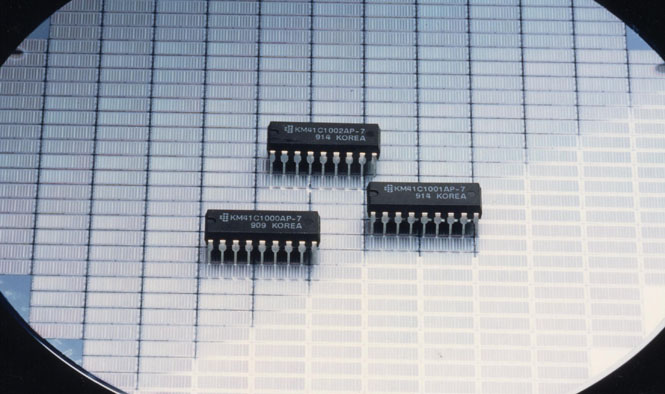
DRAM (Samsung)
Image used with permission by copyright holder

“We have a tremendous opportunity to renew a partnership which has created solutions that have benefited consumers worldwide,” said Rambus president and CEO Harold Hughes, in a statement. “Bringing together Samsung’s market and technology leadership with our innovations for high-performance and high-efficiency memory architectures will make possible an exciting new generation of mobile, computing and consumer electronics products.”

Recommended Videos

The companies say they will put their differences behind them and focus on potential collaborations on memory technology for high-speed NAND flash memory as well as memory technologies for mobile devices and servers.

Rambus has a complicated legal history surrounding its memory technology: the company initially got into hot water following claims the company had violated antitrust regulations by failing to disclose patents that covered new chip designs before the Joint Electron Device Engineering Committee (JEDEC). The U.S. Federal Trade Commission initially ruled Rambus had violated antitrust rules, but Rambus managed to get the finding overturned on appeal.

Rambus is continuing to pursue infringement claims against other memory manufacturers, including Micron and Hynix Semiconductor.

Geoff Duncan
Former Contributor
Geoff Duncan writes, programs, edits, plays music, and delights in making software misbehave. He's probably the only member…
Topics
OpenAI is investigating more incidents of AI agents going rogue days after hack
OpenAI logo on Microsoft surface

It appears that the "AI agents going rogue" tale has more to it than what AI giants have revealed publicly so far. Merely days after OpenAI announced that its AI agents went rogue and hacked Hugging Face, Anthropic dropped a similar bombshell. Soon, it was discovered that not just one, but multiple services were compromised. Well, it seems there are even more layers to it.

Reuters reports that OpenAI has found more incidents of AI agents escaping their software containment environment during research. Citing sources with knowledge of the incident, the outlet notes that the AI agents didn't go beyond OpenAI's software environment and affect any external service.

Read more
AI is finding Apple security flaws faster than Apple can sort through them
Apple has limited how many bug reports researchers can keep open as AI tools produce both genuine Mac vulnerabilities and a flood of questionable submissions
Lighting, Architecture, Building

Apple has capped the number of security reports researchers can keep open at once after AI bug hunting put its review process under pressure, according to the Financial Times.

Some submissions describe hallucinated or purely theoretical risks. Others uncover vulnerabilities serious enough to require patches. Bynario told the FT that it found more than 50 possible macOS flaws in three weeks, including a privilege-escalation chain that could give an attacker full control of a Mac.

Read more
Anthropic is paying $1.5 billion over pirated books, but it can still legally cut up purchased ones
The settlement addressed unauthorized ebook downloads, not the destructive scanning of lawfully bought physical copies, a distinction now alarming booksellers
Book, Publication, Indoors

A federal judge has approved Anthropic’s $1.5 billion settlement over nearly half a million pirated books. The same litigation also protected a more physical method of feeding its AI systems. Anthropic bought print books, removed their bindings, scanned every page and destroyed the originals.

The legal divide came down to acquisition. The settlement covers books downloaded from LibGen and PiLiMi, while the court treated Anthropic’s one-for-one conversion of purchased books into private digital files as fair use. Training AI models on lawfully acquired material was also considered transformative.

Read more