1. Home
  2. Audio / Video
  3. News

Digital Trends may earn a commission when you buy through links on our site. Why trust us?

This projector’s low input lag means you can’t blame losing on your controller

Add as a preferred source on Google

Projectors are all the rage for home theater enthusiasts, but you don’t hear as much enthusiasm from the gamer crowd, and with good reason. Projectors are notorious for having input lag when playing games, leading to poor gameplay experience and lagging skills in competitive matches. While there are some projectors are better than others for gaming, Benq’s new short-throw projector, the TH671ST, is designed specifically with ultra-low input lag in mind.

For gaming, anything lower than 40-millisecond input lag is going to give the best experience. Benq claims the TH671ST’s input lag is measured at 16.67 milliseconds, which is extremely low for not just projectors, but even high-end TVs. This is combined with a microsecond DMD (digital micro-mirror device) response time that eliminates unwanted motion blur and image lag while you’re playing.

Recommended Videos

Those specs are sure to be exciting for gamers on the hunt for a projector that will suit their hobby, but the TH671ST also has several other features that should appeal to an even wider audience.

Being a short-throw projector, the TH671ST can project an up to 100-inch, full HD 1080p image from less than five feet away. This is great for those with spacing considerations and could make setup much simpler than with other projectors. Installation gets even more flexible thanks to vertical keystone correction, which allows the image to be aligned and corrected even at off-center placements, and will prevent the “trapezoid effect” or “keystone effect” that sometimes plagues projector images, wherein the projected images looks like a, well, trapezoid.

Room consideration is an important element to keep in mind with considering a projector purchase, and that’s mostly because of lighting. Thankfully, the TH671ST’s 3,000-lumen brightness makes it a great projector for environments with ambient lighting, even rooms with all the lights on. It’s also equipped with Benq’s exclusive LumiExpert technology, which adjusts brightness automatically to account for ambient lighting.

Should this all sound a bit overwhelming, don’t worry: A simple setup wizard comes standard on the TH671ST and will guide users through the entire installation process.

For those who want to do more than just game, a USB-A port on the back of the TH671ST can be used to connect streaming sticks and dongles like Chromecast or Chromecast Ultra, Fire TV, and Roku Streaming sticks. Other ports include two HDMI connections, 3.5mm audio-in and out ports, PC-in and monitor-out, RS-232, and mini USB. The projector also includes a built-in 5W stereo speaker with custom modes for different content types, such as Cinema, Music, Sports, and Game mode, making it an all-in-one setup.

The TH671ST is available for $750 from Benq’s online distribution, or from third-party retailers like Best Buy, Fry’s, NewEgg and B&H. You can read more about the TH671ST and all of Benq’s projector line on the company’s website.

Brendan Hesse
Former Staff Writer, Home Theater
Brendan has written about a wide swath of topics, including music, fitness and nutrition, and pop culture, but tech was…
Stop joining group projects with a blurry laptop webcam and buy one of these instead
Your laptop webcam is sabotaging your first impression. These five can fix it
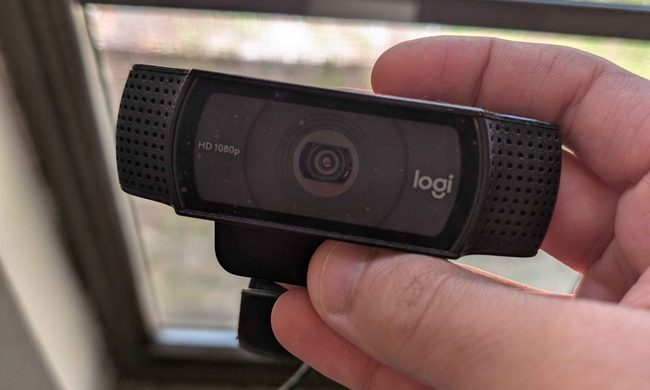
I'm holding my Logitech C920 1080p webcam in my hands.

The webcam built into your laptop might be good enough for a quick call with friends and family. But its shortcomings become much harder to ignore when you are presenting a semester project, interviewing for an internship, or maybe if you're planning to stream for fun.

Laptop cameras also tend to sit far too low, especially when the computer is placed directly on a desk. Meanwhile, a dedicated webcam lets you position the camera closer to eye level. This improves the framing and brings larger sensors, better microphones, and more effective low-light processing.

Read more
I desperately want a new classic Walkman, but Sony probably can’t give me one
Tech minimalism is begging for a new Walkman. Though rebuilding it may be close to impossible
Sony Walkman WM2011

Every few months, another piece of tech that seems obsolete crawls out of a drawer and becomes cool again. The age of minimalism has revived the popularity of iPods among younger buyers. Dumbphones have become an escape hatch from endless notifications. Similarly, digital cameras are dangling from bags again. Physical media keeps attracting people who want something they can actually hold instead of another frustrating subscription.

All of this makes it the perfect time for Sony to bring back the classic Walkman, which was a phenomenon during the 80s and 90s. I would love one. Give me a compact cassette player, physical buttons, and wired headphones. Keep the apps, notifications, and algorithms that shape your taste of music. No more AI assistants or personalzied feeds, just you and your Walkman. There is only one problem though. Recreating the Walkman that people love and remember, would be far harder than putting an old design back into production.

Read more
Proton reveals how smart TVs track you and the escape situation is pretty grim 
Modern smart TVs fingerprint your screen content at the chipset level.
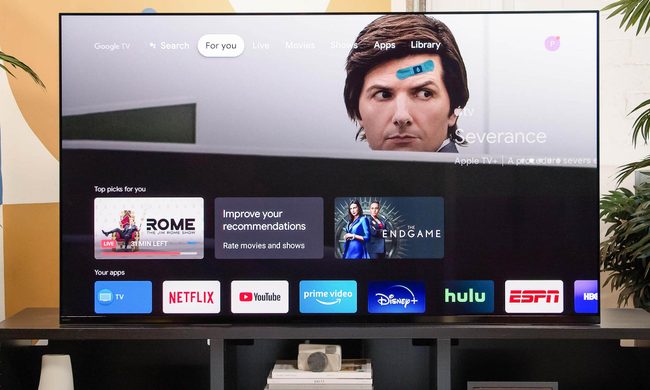
Google TV applications on the Sony A95K TV.

Your smart TV may know far more about your viewing habits than you realize, even if you rarely use its smart features. In a new privacy explainer, Proton warns that many modern TVs quietly collect data about everything displayed on the screen and share it with manufacturers, advertisers, and analytics companies.

The worrying part is that escaping this tracking is becoming increasingly difficult because many privacy controls are buried deep in settings or enabled by default. Proton argues that buying a smart TV today often means accepting a level of surveillance that most people never knowingly signed up for.

Read more