  1. Home
  2. Phones
  3. Mobile
  4. s

Speed test: Galaxy S9 Plus vs. S8 vs. S8 Plus vs. Note 8

Add as a preferred source on Google
 

The Galaxy S9 Plus is Samsung’s latest flagship, and arguably its best. In our S9 Plus review, we characterized it as “a statement of best-in-class hardware,” commending the phone for its svelte design and stunning camera capabilities. The S9 Plus also sports a cutting-edge Snapdragon 845 processor, but does that give it a noticeable edge over the other phones in Samsung’s roster?

Recommended Videos

To find out, we pitted the S9 Plus and three other Samsung phones — the Note 8, S8, and S8 Plus — against one another, allowing us to see which phones could launch a variety of apps and games the quickest. It wasn’t the most rigorous test, but it did provide some insight into the relative power of these different models.

For the test, we opened a host of popular apps — Twitter, Facebook, Pokémon Go, and Super Mario Run, among others — and timed how quickly they launched.
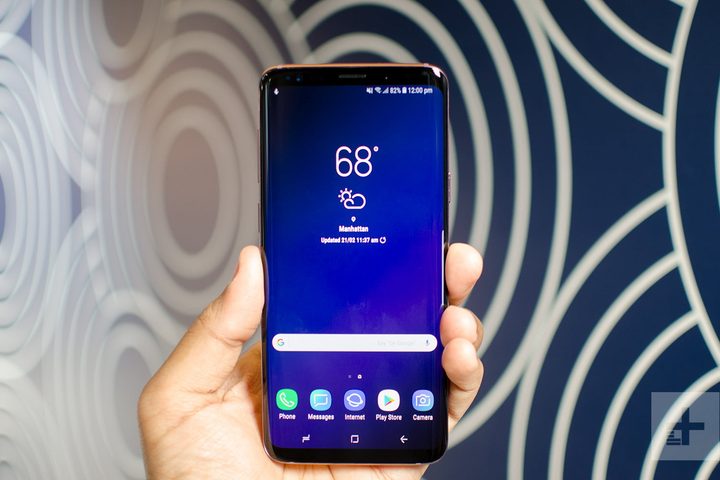
Samsung Galaxy S9 Plus
Image used with permission by copyright holder

What were the results? Surprisingly, for most apps, the four phones finished in about the same time. The S9 Plus performed the best when it came to Google Maps, and tied for first when launching a few other apps. The S9 Plus was the slowest at opening Facebook and Pokémon Go, however, and clocked in nearly 15 seconds after the S8 when launching the latter. This falls in line with the observations we made in our S9 Plus review, in which we noted the headset’s occasional stutter despite its ability to handle day-to-day tasks with the utmost ease.

How is it possible that the S9 Plus, which has a Snapdragon 845 instead of a last-gen 835, fared so poorly? There are a couple of possibilities. One is that the phone was experiencing issues, such as excessive cached data, which had a direct impact on performance. Another thing to consider is that, although smartphone processors are becoming more advanced, the apps themselves don’t require any more processing power; if the load you’re carrying is small enough, it doesn’t matter how big your engine is.

David Cogen — a regular contributor here at Digital Trends — runs TheUnlockr, a popular tech blog that focuses on tech news, tips and tricks, and the latest tech. You can also find him on Twitter discussing the latest tech trends.

Will Nicol
Will Nicol is a Senior Writer at Digital Trends. He covers a variety of subjects, particularly emerging technologies, movies…
The Pixel 11 is almost here, and these are the 3 upgrades I’m begging Google to make
Electronics, Mobile Phone, Phone

We're only a month away from Google's next big hardware event, with the Pixel 11 series officially arriving on August 12. 

After living with the Pixel 10 Pro and the Pixel 10a over the past year, I've come to appreciate what Google's phones do well — and, more importantly, where they still fall short. With the smartphone landscape evolving faster than ever, there are three upgrades I'm hoping Google finally delivers this year. If you're a fellow Pixel user, chances are these are on your wishlist too.

Read more
5 reasons I keep coming back to Apple Reminders despite paying for premium task managers
I rely on OmniFocus for complex projects, but Apple Reminders still handles my everyday tasks better than any paid app.
Apple Reminders open on iPhone

The App Store is filled with premium task managers, and like Things 3, Todoist, and OmniFocus, despite buying and switching between several of them, I keep coming back to Apple Reminders. 

Don’t get me wrong, I still use OmniFocus to manage my projects. But when it comes to daily tasks and quick capture, Apple Reminders still remains my go-to app. In this guide, I'll walk you through the five biggest reasons why.

Read more
Google may finally ditch Samsung’s modem in the Pixel 11, and Tensor G6 could be better for it
FCC paperwork for Google’s next foldable points to MediaTek, raising hopes for lower power use and a cleaner break from Tensor’s Exynos roots
AI recreation of Pixel 11's Pixel Glow feature.

Google may be preparing its biggest Tensor hardware split yet. As spotted by Android Authority, FCC testing for an unreleased foldable Google phone includes a reference to MediaTek radio-frequency software, adding weight to reports that the Pixel 11’s Tensor G6 could leave Samsung’s Exynos modem behind.

Every previous Tensor chip has used Samsung modem hardware. Changing suppliers won’t guarantee better battery life or reception, but it gives Google a fresh path after years of leaning on the same underlying technology.

Read more