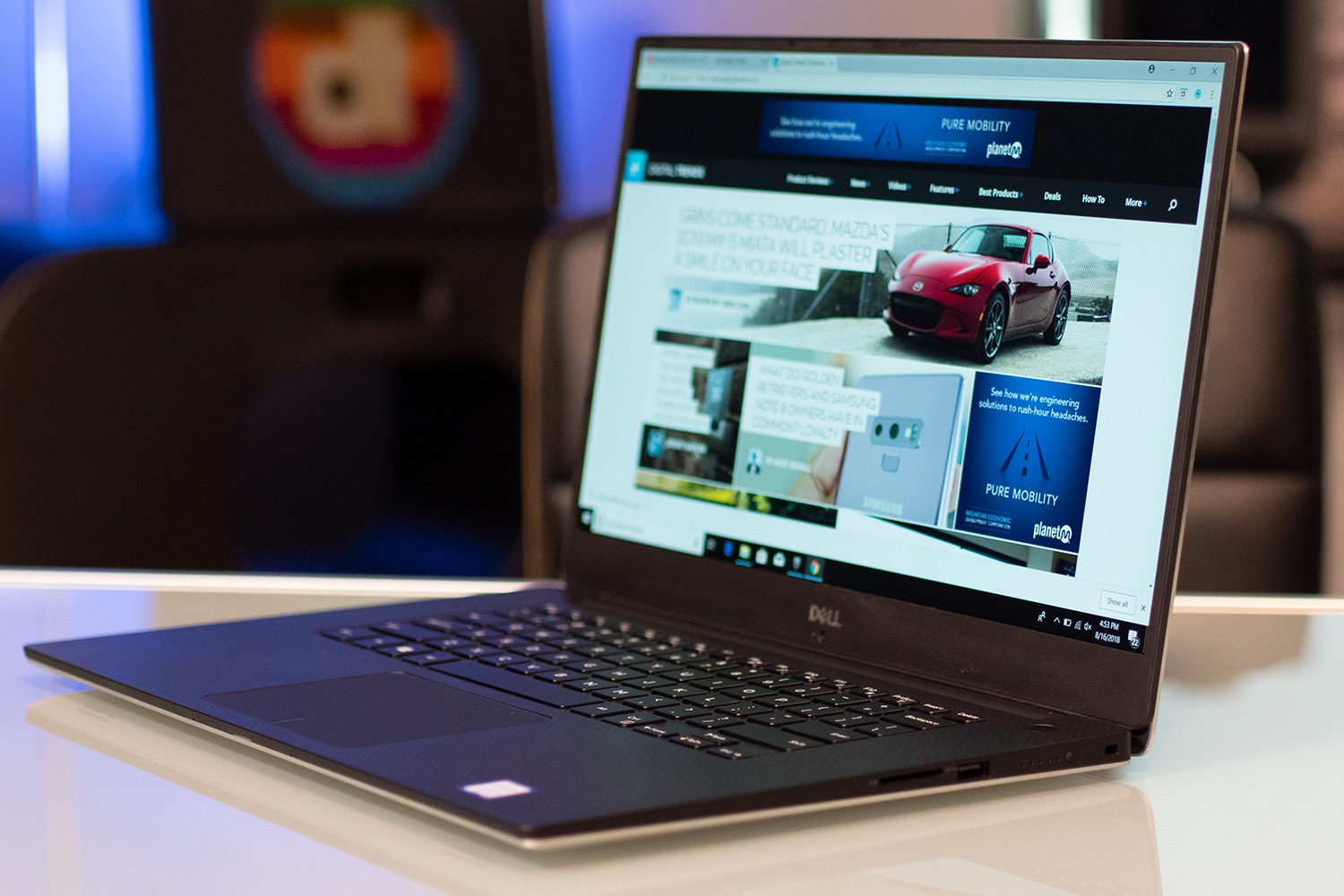
Dell makes a few of our favorite notebooks, including the XPS 15, that use minimal bezel size to pack a ton of power into tiny chassis. The XPS 15 is our ideal 15-inch notebook, and for some good reasons — it’s fast, svelte, and well-built.
Asus wants to challenge Dell’s tiny notebook hegemony with its latest family of ZenBook premium notebooks. We compare the ZenBook 15, the larger of three siblings, against the Dell XPS 15 to see which company manages to squeeze the best notebook into the smallest frame.
Design
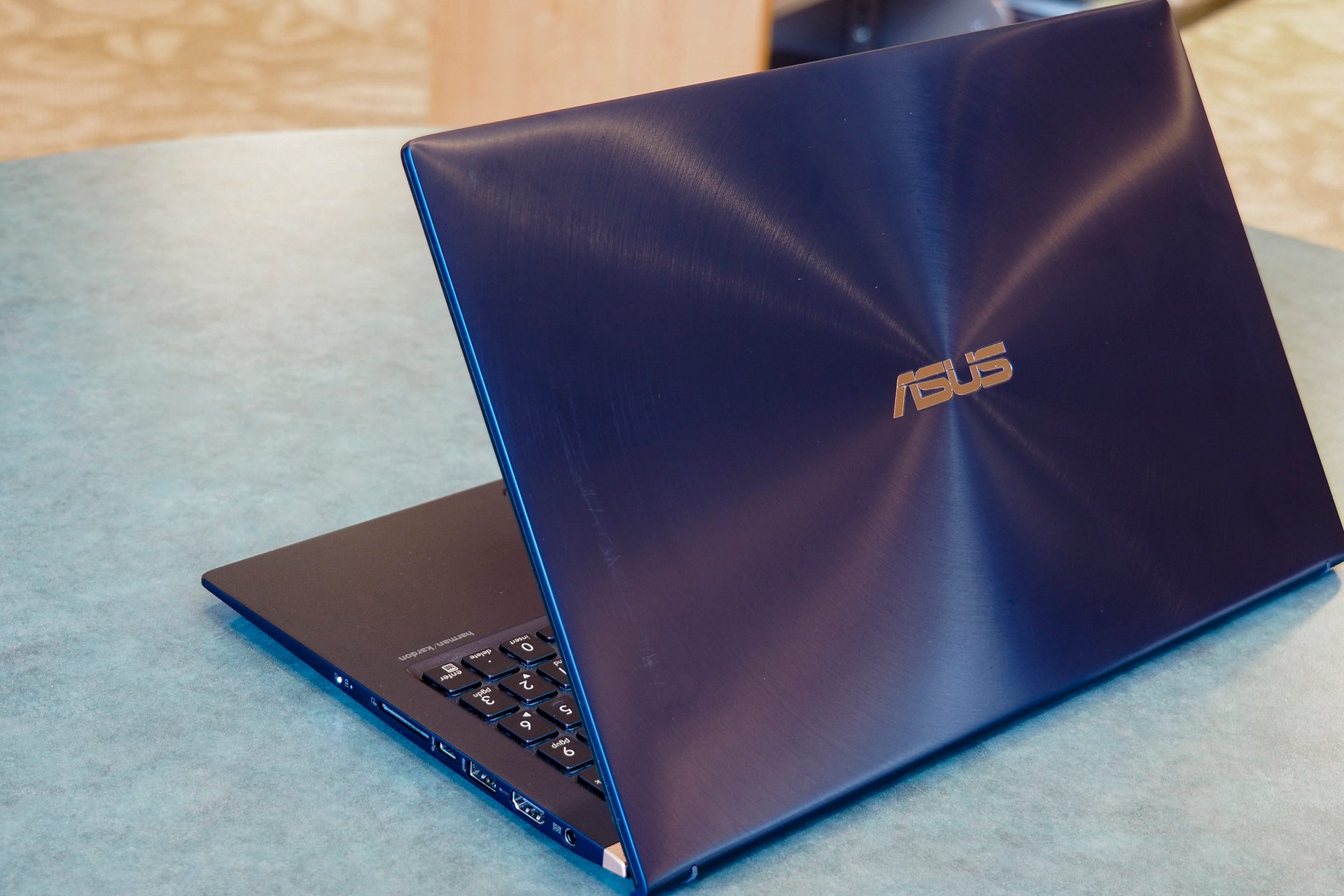
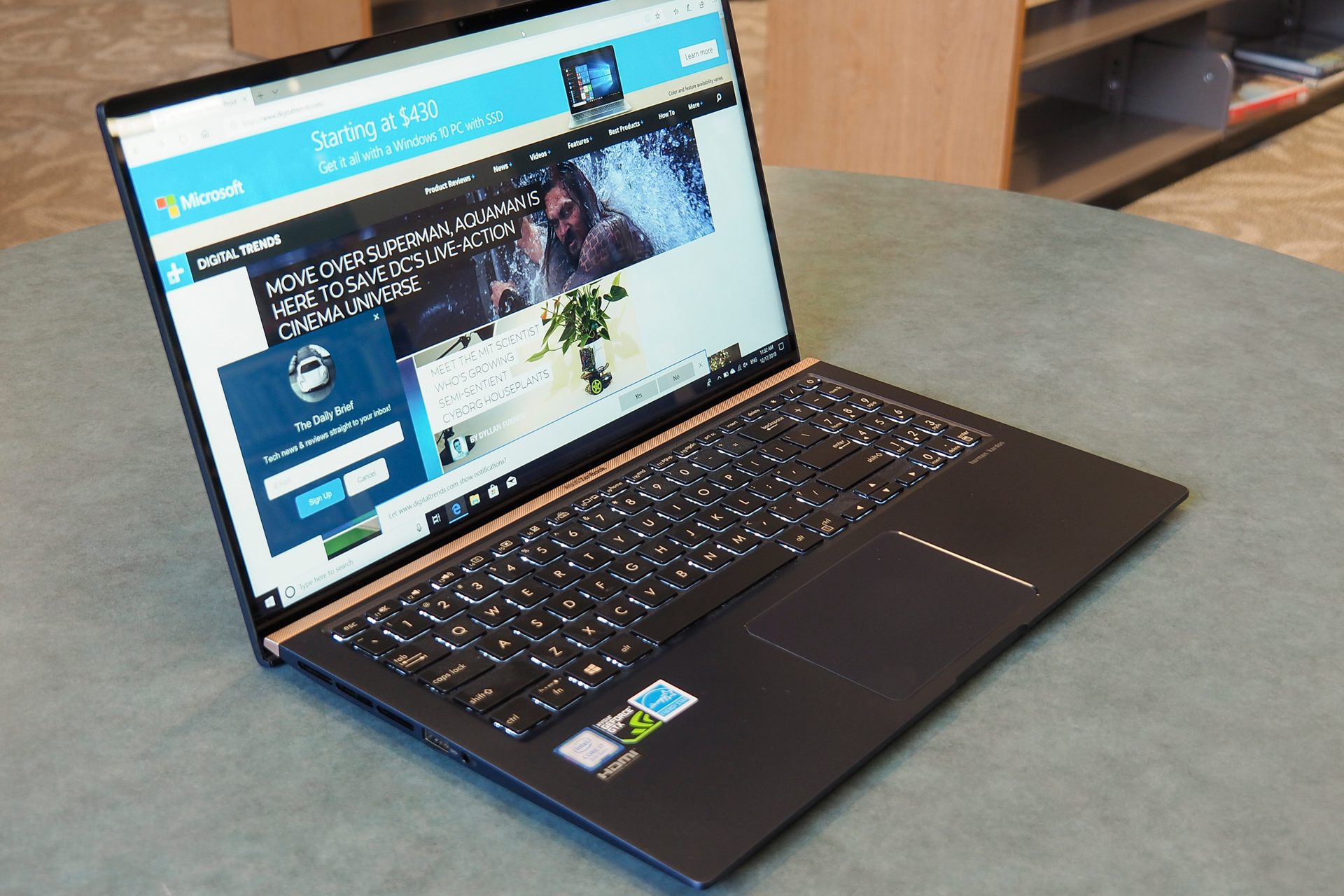
Both the ZenBook 15 and the XPS 15 offer large 15.6-inch displays, and both use small display bezels to fit their panels into a very small chassis. Dell’s bezels are 5.7mm, and it put the webcam below the display for an uncomfortable up-the-nose video conferencing angle. Asus used 3.0mm side bezels and 4.5mm up top — with the webcam and infrared camera up there as well — to make a notebook with an industry-leading 92 percent screen-to-body ratio. That makes the ZenBook 15 smaller in both width and depth than the XPS 15. Both machines sport solid build qualities, with the ZenBook 15 tested to MIL-STD-810G military standards for durability.. But Asus didn’t fortify the keyboard deck as well, and it’s a bit flexible.
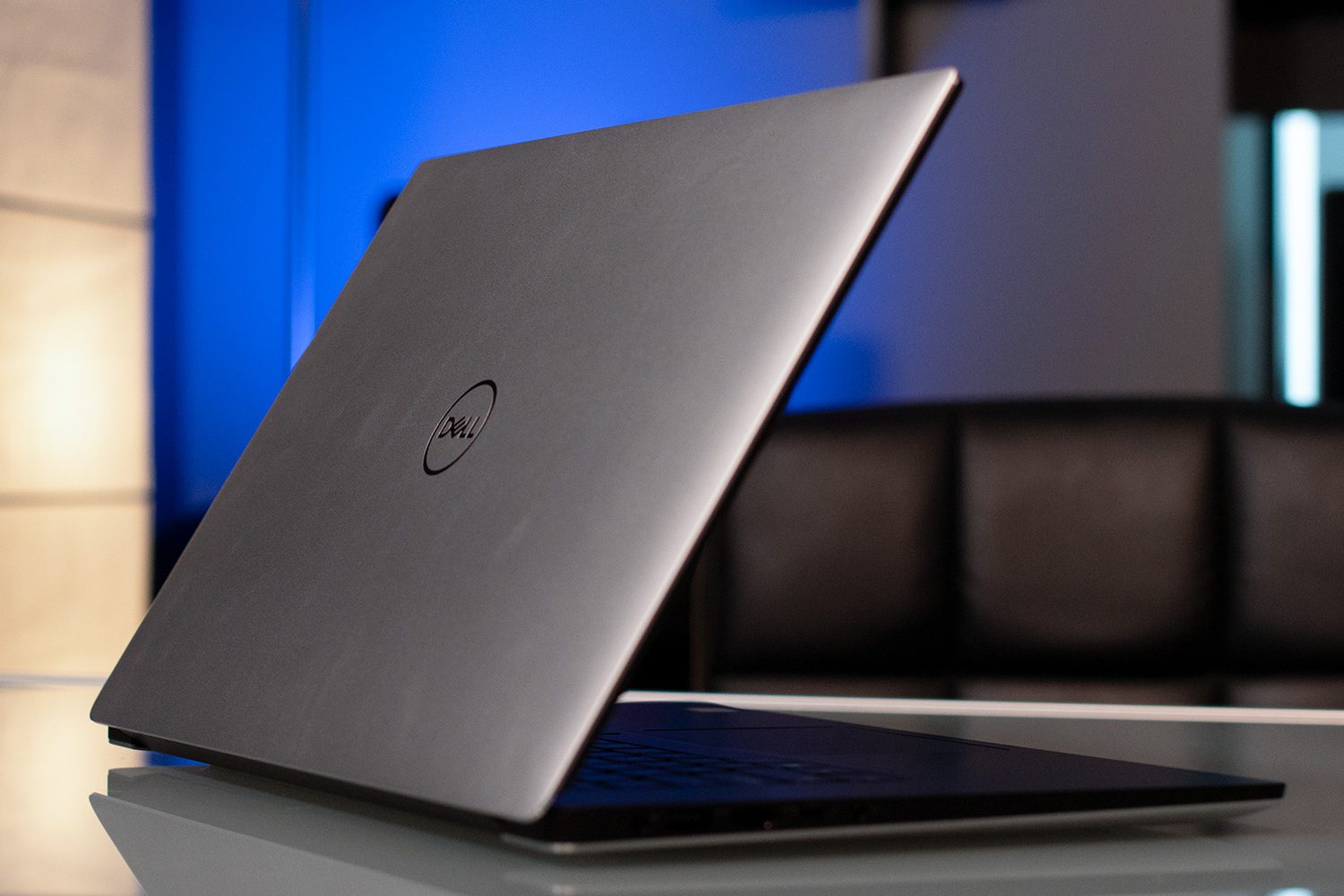
Aesthetically, the ZenBook 15 leverages a Royal Blue with gold trim color scheme and iconic Asus concentric swirl on the lid to make a notebook that stands out. The XPS 15 is more conservative with its silver and black color scheme and a carbon fiber keyboard deck that’s more comfortable in actual use.
Both notebooks enjoy very good keyboards with copious travel and precise mechanisms, and so they’re essentially tied here. Both touchpads are large and provide support for Microsoft’s Precision touchpad protocol that enables accurate and reliable multitouch gestures. And neither notebook’s Full HD display is touch-enabled. You can, though, select a 4K display for the XPS 15 that supports touch.
Regarding connectivity, the ZenBook 15 focuses on supporting legacy devices with USB-A 3.1, USB-A 2.0, and USB-C 3.1 ports (without Thunderbolt 3 support), a full-size HDMI connection, and a microSD card reader. The XPS 15 is no slouch either, offering two USB-A 3.1 ports, a USB-C port with 40 Gb/s Thunderbolt 3 support, an HDMI port, and a full-size SD card slot. That’s a winning combination.
The ZenBook 15 is slightly smaller, and it has a more exciting look, but it can’t keep up with the XPS 15’s superior build quality and excellent connectivity.
Performance
The ZenBook 15 utilizes the latest Whiskey Lake quad-core 8th-generation Intel Core i7-8565U, a 15-watt part. The XPS 15 goes in another direction, packing in an 8th-generation six-core 45-watt CPU, the Core i7-8570H. While the ZenBook 15 performs better than any other Intel U-series notebook we’ve tested, it can’t keep up with the speedy XPS 15. The Dell’s GPU is also faster, being an Nvidia GeForce GTX 1050 Ti Max-Q versus the GTX 1050 Max-Q in the ZenBook 15.
Storage speeds were less conclusive. The ZenBook 15’s PCIe solid-state drive (SSD) was faster in writing data than the XPS 15 SSD, while the Dell was faster in reading data. It’s a wash, though, because you’ll notice no real-world difference between these two.
Displays are another differentiating factor. The ZenBook 15 has only one display option, a 15.6-inch Full HD IPS display compared to both Full HD and 4K options for the XPS 15. And the panels on the XPS 15 are also brighter, offer higher contrast, and enjoy better colors than the single panel on the ZenBook 15.
The ZenBook 15 is a good performer with an average — and thus good — display. But the XPS 15 is faster, and its displays options are much better.
Portability

As we said, the ZenBook 15 is slightly less wide and it’s shallower than the XPS 15. It’s a bit thicker at 0.7 inches to the XPS 15’s 0.66 inches, but it’s also lighter at 3.73 pounds compared to the Dell’s 4.02 pounds (56 watt-hour battery) to 4.5 pounds (97 watt-hour battery). Neither 15-inch notebook takes up that much space in your backpack, but the ZenBook 15 isn’t going to weigh you down as much.
Looking at battery life and considering just the Full HD version of the XPS 15, and the ZenBook 15 has good battery life, but it just can’t beat out the Dell across the board. The Asus did better in our most CPU-demanding Basemark web benchmark test, but it fell behind on our web browsing and video loop tests.
You’ll have to carry a little extra weight around with you, but you’ll like the XPS 15 for its superior battery life.
The ZenBook 15 is a bit smaller, but it’s weaker than the XPS 15
The ZenBook 15 is a well-priced notebook in its single configuration, coming in at $1,400 for a Core i7-8565U, 16GB of RAM, a Full HD display, and a 512GB SSD. We wish Asus would offer more configurations, including a 4K display.
The XPS 15 is a more expensive notebook, at $1,710 ($1,530 on sale) for a Core i7-8570H, 16GB of RAM, a Full HD display, and a 512GB SSD. You can spend considerably more for more RAM, more storage, and a 4K touch-enabled display.
The ZenBook 15 is a very nice thin, light, and small 15-inch notebook. But it runs into a buzzsaw when pitted against the superior XPS 15.