  1. Home
  2. Cars
  3. News

Porsche’s Augmented Reality app lets you see your dream car in the real world

Add as a preferred source on Google

If you can dream it, you can see it and even put it in your driveway — as long as you limit your dreams to one of three models. Porsche just lifted automobile manufacturer websites “build your own” car configuration tools to another level. The new Porsche Augmented Reality Visualizer App (PARVA) is available now for iOS and Android augmented reality-enabled mobile devices.

Recommended Videos

Customers and dreamers alike can configure their ideal Porsche vehicles with their desired options using the conventional Web Configurator on the automaker’s website. After fully configuring a car, users can upload the code from the Web Configurator into the app.

After loading their dream car in PARVA, users can view several dimensions for a closer look at technical details.

Porsche expects the full product line up will be integrated into PARVA by the end of 2019. For now, however, the AR app includes three cars, the Porsche 911 Carrera S, the Cayenne Coupe, and the Mission E concept study. This fall the Taycan model will replace the Mission E in the app.

“With our new app, the configuration of a Porsche will be even more of a digital experience,” says Porsche marketing communications director Oliver Hoffmann, Director Marketing Communications. “Now, before making the purchase decision, everyone can virtually park their dream Porsche in their own driveway, marvel at it in their own living room, or show a photo-realistic version to their friends.”

The augmented reality app adds news dimensions to Porsche’s existing Web Configurator tool. The configuration workflow processes are enhanced and optimized for viewing in the AR. After a customer uploads the vehicle configuration codes to PARVA, additional changes such as paint color are still possible within the AR app. With their dream Porsche in AR, customers can then put the photorealistic vehicle in any setting.

With Porsche’s new app, customers will be able to visualize what their dream car would look like sitting in their garage, parked in front of their home, or at any favorite location.

Because anyone can use the Porsche dream car app with an AR-enabled smartphone, the next time someone in a bar wants to show you a picture of their new 911 Carrera S, parked in their driveway, take a closer look.

And while we’re at it, check out my Cayenne Turbo Coupe in our backyard and my wife’s 911 Carrera 4S Cabriolet on the street curb in front of our house.

Bruce Brown
Bruce Brown Contributing Editor   As a Contributing Editor to the Auto teams at Digital Trends and TheManual.com, Bruce…
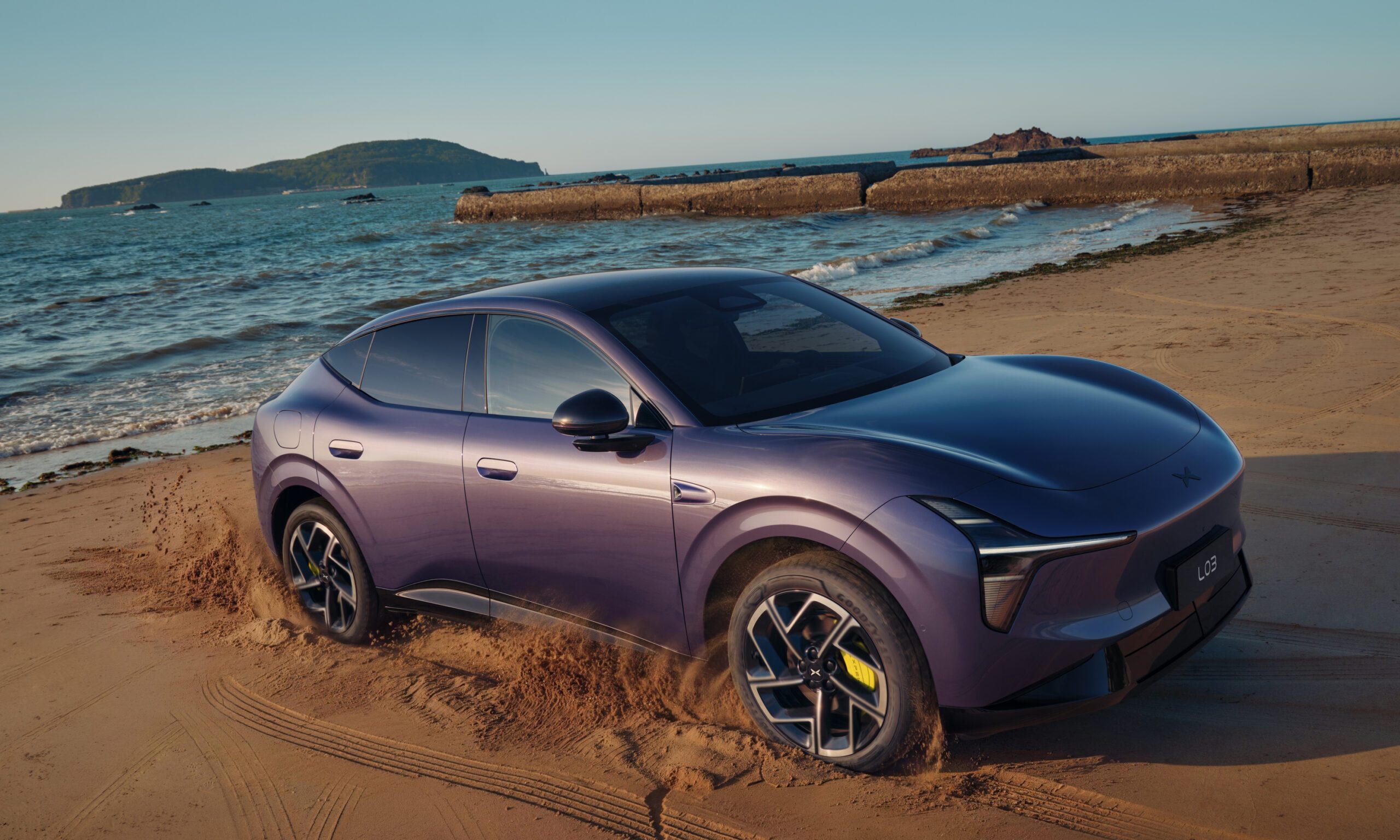
This sleek Chinese EV pairs supercar styling with three AI brains
The Xpeng L03 is an AI supercomputer disguised as a stylish family SUV
Xpeng L03

Xpeng’s latest electric vehicle carries enough processing power to make the term "smart car" actually sound more realistic than it actually is. The new Xpeng L03 debuted simultaneously in Europe and China on July 16, with the company presenting it across 65 markets. Available as a fully electric vehicle and an L03 Power X range-extender, the coupe-SUV is Xpeng’s most internationally focused model so far. Market-specific prices and sales dates remain unannounced.

Three AI chips and Google Maps built right in

Read more
A new sodium battery posts wild four-minute charging numbers, but don’t expect it in an EV yet
The breakthrough could improve fast charging and battery life, but the study hasn’t demonstrated those results in a production-sized pack
EV Charger

A new sodium-metal battery has posted a charging number that makes today’s EVs look painfully slow. In laboratory testing, the cell operated at a 15C rate, equivalent to completing a charge or discharge in roughly four minutes.

That doesn’t mean researchers plugged in an electric car and watched it fill up before the driver finished buying coffee. The result came from a small experimental cell using a new quasi-solid electrolyte, while the larger pouch-cell prototype delivered far less dramatic performance.

Read more
The Apple Car may be dead, but it became the foundation of Apple Intelligence
A decade of work on a canceled car project reportedly laid the groundwork for Apple Intelligence.
Apple Intelligence in Apple Car

The Apple Car may have never left the garage, but it apparently gave birth to Apple's AI ambitions. According to Bloomberg's Mark Gurman, Apple's canceled autonomous vehicle project, one that consumed more than a decade of work and over $10 billion before being scrapped in 2024, ended up laying the technological foundation for Apple Intelligence. In a rather ironic twist, one of Apple's most expensive failures may also become one of its most important long-term investments.

The Apple Car forced Apple to think like an AI company

Read more