A leaked report from Forbes has dropped specs for Microsoft’s next Surface 2-in-1, code-named Centaurus In addition to dual, 9-inch screens and an Intel 10nm Lakefield processor, one other important detail was leaked. Android apps. That’s right. A Microsoft Surface device in the future could launch with Android apps and the Google Play Store built-in.
These types of leaks should always be taken with a grain of salt, but let’s imagine for a moment the report is true. Are Android apps a good idea?
Android apps could be exactly what the Surface needs
In an interview just last week, Microsoft founder Bill Gates was asked his biggest regret from his time with Microsoft. His answer? Android apps. Owning the second-largest mobile app ecosystem was something Microsoft might have been able to do if mobile had been a serious part of the roadmap early on. Instead, the Windows Phone platform played third fiddle to iOS and Android. Apps never made their way to the platform in large numbers, even major ones like Instagram and YouTube.
That problem lingers on Windows 10 tablets. Despite the success of Microsoft’s 2-in-1s like the Surface Pro or Surface Go, tablet mode has always been a weakness. They work great as ultra-portable laptops, but once you disconnect the keyboard and try to use them as a tablet, the experience leaves a lot to be desired. The Microsoft Store is barren, lacking much of what you use daily on your phone, even containing cloned lookalikes that you should stay away from. It’s not a good situation.

Android apps sound like a smart solution for Microsoft. If this new device has only a 9-inch screen, mobile apps will feel more comfortable to use than native desktop options. They’re more touch-friendly, that’s for sure. According to Windows Central, Android app implementation was also rumored to be in the works for the delayed Project Andromeda, so why not on an iPad-sized device?
Project Centaurus is rumored to use something called Windows Lite, a more efficient version of Windows meant for smaller devices. It’s based on Windows Core OS, a modular platform of shared core elements that can be used across a wide range of devices, from the VR headsets to large-screen formats like the Surface Hub 2.
So, Android apps on the Centaurus is a no-brainer, right? Well…maybe not.
Didn’t Google already fail at this?
Google ported the entire Google Play Store over to Chrome OS for reasons that mirror Microsoft’s. Though most applications are available on the web, they aren’t made with smaller touchscreens in mind. That was a problem once Chrome OS added touchscreen support. Android apps, optimized for touch by default, seemed like the solution.
It wasn’t.
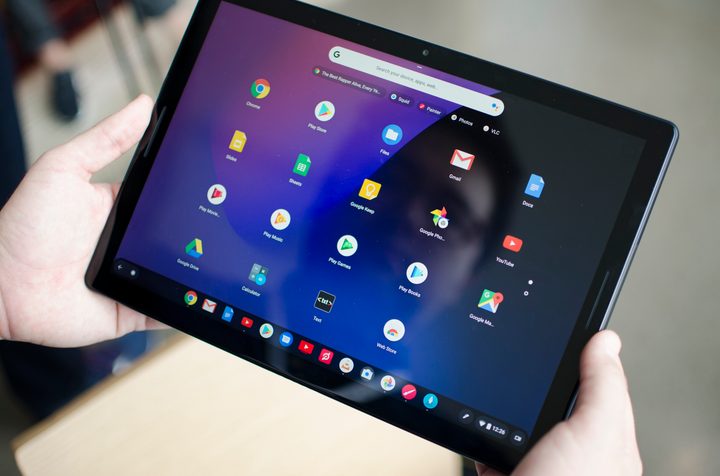
The push for ChromeOS tablets to challenge the iPad culminated in the launch of the Pixel Slate in late 2018. Unlike the Pixelbook, which was meant to be used primarily as a clamshell, the Pixel Slate lived and died on Google’s tablet mode. Despite the promise of that device, the software never quite knew what to do with Android apps. They were buggy, poorly optimized, and difficult to navigate. Compared to the software experience of an iPad, it was a mess.
In true Google fashion, the device has been canned, along with work on any future internal tablet projects. Google owns the Play Store and has more influence on Android apps that any other company in the world, but it couldn’t make Android apps work well on its own Chrome OS tablet.
Why does Microsoft think it can succeed where Google failed?
That’s not clear. Microsoft does have a few reasons to hope, however. With Surface, Microsoft owns a brand of hardware that people know. It’s a brand associated with 2-in-1 devices that bridge the gap between different form factors. With the right device, it just might be able to ship enough units to actually convince app developers to return to its Android apps.
Microsoft also has a tight relationship with the companies that create the majority of Windows PCs like Dell, Lenovo, and HP. Under Microsoft’s lead, these companies might have the confidence to enter the market with competitive machines and push the number of Android tablets in use even higher. That’s an option Google doesn’t have.
Let’s hope that this time Microsoft, has the guts to stick with it — and make Bill Gates proud.