Facebook announced Thursday it will alert users who have interacted with harmful misinformation related to the coronavirus, officially known as COVID-19.
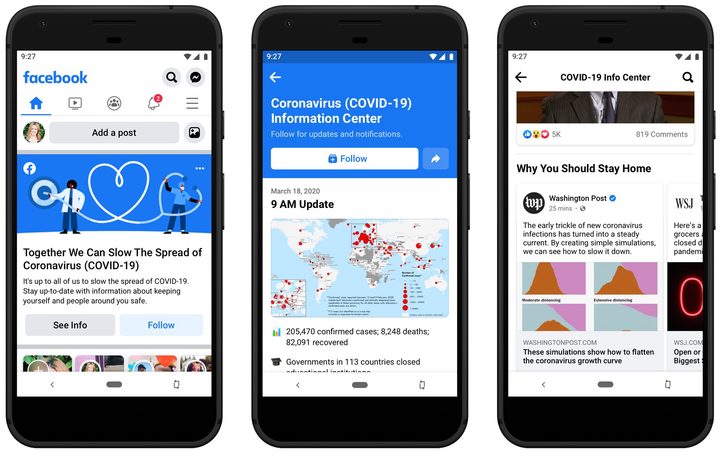
The messages will appear in your News Feed if you’ve liked, reacted to, or commented on posts Facebook flagged as harmful and later removed, according to a blog post by Facebook exec Guy Rosen. The alerts — which are set to roll out in the “coming weeks” — will direct users to a World Health Organization website that dispels myths about the deadly disease.
“We want to connect people who may have interacted with harmful misinformation about the virus with the truth from authoritative sources in case they see or hear these claims again off of Facebook,” Rosen said.
Facebook said it flagged more than 40 million posts in March alone that were deemed false by fact-checkers.
Users who saw those warning labels did not go on to read or view the false content 95% of the time, according to the blog post.
A Facebook spokesperson said the social media company will, “in rare cases,” remove posts that could lead to physical harm. Those hoaxes include false claims that “drinking bleach cures the virus” and theories that discount the effectiveness of social distancing measures. The company has removed hundreds of thousands of these dangerous posts to date.
However, claims that would not result in physical harm — like conspiracy theories, hoaxes or rumors — are flagged with a warning if proven false by Facebook’s fact-checking partners but not removed, the spokesperson said.
In addition to the new messages, Facebook has also expanded its COVID-19 Information Center with a new section: Get the Facts.
This new page will include articles from Facebook’s fact-checking partners that debunk common coronavirus myths. The articles will be selected by Facebook’s news curation team and updated every week, the company said.
The Get The Facts section is now available in the U.S. and will soon be added to Facebook News in the U.S. as well.
“As this pandemic evolves, we’ll continue focusing on the most effective ways to keep misinformation and dangerous hoaxes about COVID-19 off our apps and ensure people have credible information from health experts to stay safe and informed,” Rosen wrote in the blog.