Self-driving car testing on public roads gets most of the headlines, but that was no longer an option for Waymo once the coronavirus pandemic hit the United States earlier this year. With shelter-in-place orders in effect, Waymo’s testing program retreated behind the walls of a closed-course facility called Castle.
Castle is a 113-acre self-driving car testing facility built on the former Castle Air Force Base in Atwater, California, about two hours southeast of San Francisco. Since 2013, Waymo has been using the site to run prototype cars through the toughest scenarios engineers could come up with. This so-called “structured testing” has always been part of the process of developing autonomous cars, but during the worst of the pandemic, it became the main way to keep that process going. Waymo pulled its test cars off public roads in March (it also suspended operations at Castle for a time during that period), and resumed operations in Arizona in May.
The facility replicates real-world conditions, from city streets to railroad crossings and roundabouts. This controlled environment allows engineers to test specific scenarios without having to wait for a car to encounter them on public roads. These scenarios can range from the unlikely — a person exiting a Porta Potty and walking into the street, or a mattress falling off the back of a truck — to the mundane, such as following a garbage truck making multiple stops on an urban street.
Waymo has amassed a library of over 40,000 of these scenarios, many based on situations encountered on public roads. Exposing the autonomous-driving system (which Waymo refers to as a “driver”) to these scenarios makes it better equipped for real-world conditions, according to Waymo.
Some of this work can be done through simulation, which Waymo has also continued to use through the pandemic. Simulations only test the software, however, while closed-course tests of real cars at Castle show how the software and hardware work together. Cars are sent onto the test track after they have successfully completed a scenario in a simulation, validating the simulation results and allowing engineers to check for any real-world factors that might affect performance.
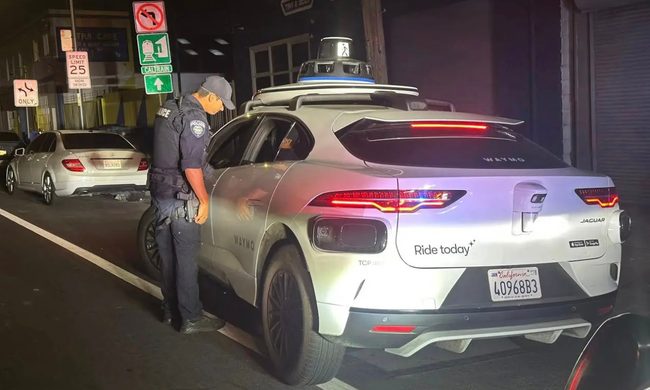
Testing a prototype autonomous vehicle as a complete system is necessary because the individual components are constantly changing. Software gets updated, the suite of sensors is changed as better equipment becomes available, and everything has to work on multiple vehicles. Waymo’s fleet currently includes Chrysler Pacifica minivans and Jaguar I-Pace electric SUVs, as well as semitrucks. Autonomous driving remains a work in progress, and closed-course testing allows Waymo to evaluate any changes before sending vehicles onto public roads — sometimes with paying passengers on board.
Updated on September 10, 2020: Added clarification that Waymo also suspended operations at Castle during mid-March.