The iPhone offers users a wide variety of display options, making it accessible to a similarly wide variety of needs and preferences. Chief among these is the ability to invert the colors displayed on its touchscreen, something that helps those who benefit from viewing text and images against a darker background. It’s not immediately obvious how to make use of this feature, so in this article, we explain how to invert colors on an iPhone.
This covers the Smart Invert and Classic Invert functions, while it also includes a section on Dark Mode and on how to set either Smart or Classic Invert as an accessibility shortcut. If you want further info on other accessibility options offered by the iPhone, you can check out our guide for iOS 14.
How to invert colors on an iPhone


You have two options when it comes to inverting colors on an iPhone: Smart Invert and Classic Invert.
Smart Invert inverts your overall display but leaves all images, media, and certain apps (which already use darker color schemes) as they are. In practice, this means your iPhone’s wallpaper and lock screen image will remain normal, but the backgrounds used on windows and tabs will be inverted, as will text and icons.
By contrast, Classic Invert inverts absolutely everything, including images and videos.
Regardless of which you prefer, you can activate either in the following way: Settings > Accessibility > Display & Text Size. Once on the Display & Text Size screen, tap the slider for either Smart Invert or Classic Invert, so that it turns green. You’ll notice a difference immediately (unless you choose Smart Invert and are already using Dark Mode).
Dark Mode
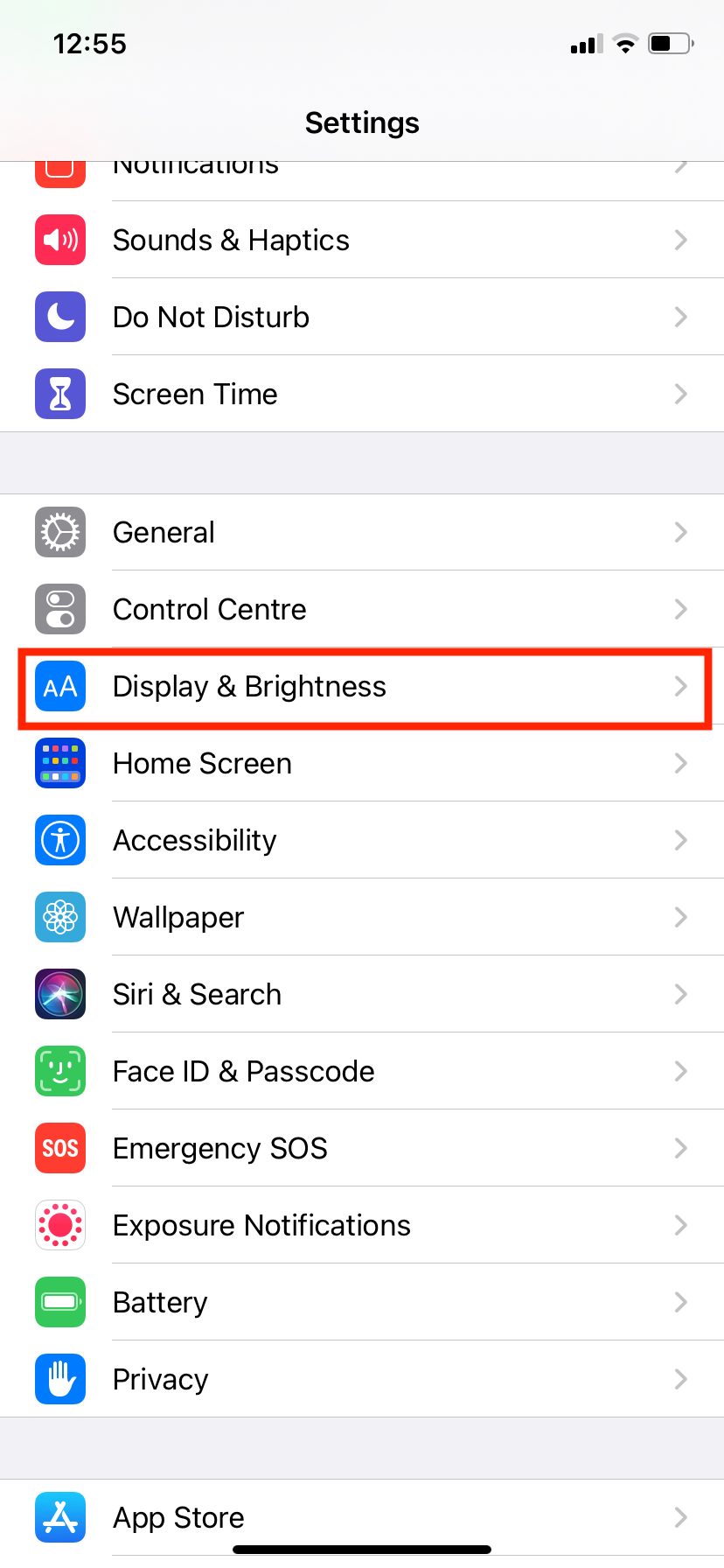

Dark Mode represents a kind of middle ground between Smart Invert and Classic Invert. While Smart Invert leaves some backgrounds white (or light), Dark Mode turns all backgrounds and windows black, but without inverting images and videos like Classic Invert.
If you want to switch on Dark Mode, simply go to Settings > Display & Brightness > Dark. Tapping Dark switches on Dark Mode, which is designed for low-light environments but can also be used during the day by anyone who prefers darker display colors.
As noted above, turning on Smart Invert doesn’t do anything when you already have Dark Mode on. However, if you have Dark Mode on and then activate Classic Invert, your iPhone’s display and background colors will then flip back to white (although images will still be inverted).
Setting Smart or Classic Invert as an accessibility shortcut


If you like to be able to invert colors on an iPhone at short notice, you can set either Smart or Classic Invert as an accessibility shortcut.
To do this, go to Settings > Accessibility > Accessibility Shortcut. Then tap either Classic Invert or Smart Invert. From now on, you can triple-lick the Side button (or Home button on the iPhone 8/iPhone SE 2020 and earlier models) to activate either invert option.