1. Home
  2. Space
  3. News

Check out Earth’s stunning cameo in this moon flyover video

Add as a preferred source on Google
 

NASA is busy making preparations to send the first woman and next man to the moon in the coming years, but you can visit right now thanks to an impressive piece of work by space enthusiast Seán Doran.

Recommended Videos

Doran pulled together a huge amount of footage and photos captured by Japan’s Kaguya lunar orbiter more than a decade ago to create a four-hour flyover video showing the lunar surface in incredible detail.

Posted on YouTube at the end of last month, the mesmerizing video takes you over the surface of our nearest neighbor at a gentle pace. The footage captures the moon under a range of lighting conditions that highlight its stark, crater-strewn landscape.

The Moon. For REAL.

4 hours of @JAXA_en Kaguya Orbiter archive converted to real time.

Denoised, repaired, graded & retimed.

Full version: https://t.co/omTZqqhNKA pic.twitter.com/ES5NDS21V8

— Seán Doran (@_TheSeaning) February 1, 2021

Unless you’re a big fan of “slow TV,” or have a major interest in the moon, you probably won’t want to sit through the entire four hours … at least not in one sitting. But don’t leave without catching Earth’s breathtaking cameo appearances, first at the 9:18 mark, and then, half in darkness, at 1:24:10.

Japan’s Kaguya orbiter — officially called SELENE, short for  Selenological and Engineering Explorer — arrived at the moon in 2007 and spent the next 20 months orbiting it.

For much of the time, the spacecraft orbited the moon at an altitude of about 62 miles, allowing it to complete its mission objectives that included studying the origins of the moon (including its geologic evolution), gathering data about the lunar surface environment, and carrying out radio science work that included precise measurement of the moon’s gravity field. Finally, when the mission was declared over, Kaguya was directed to crash onto the lunar surface near the Gill crater in June 2009.

Did you know that astronomers recently spotted what they dubbed a “mini-moon” orbiting Earth? But instead of a piece of space rock, it turned out to be something very different.

Trevor Mogg
Contributing Editor
Not so many moons ago, Trevor moved from one tea-loving island nation that drives on the left (Britain) to another (Japan)…
Getting to Mars may require a pit stop in orbit, and NASA just tested the nozzle to make that happen
A gas pump nozzle for spacecraft sounds simple. It is not, and that's what makes this test worth paying attention to.
Architecture, Building, Factory

Getting a spacecraft to Mars or beyond requires an enormous amount of fuel, most of which has to be hauled from Earth, adding to the overall cost and weight of the spacecraft. NASA has been working on a different approach, one that could be more efficient and effective.

It wants to refuel a spacecraft in orbit before heading out for the mission. What’s even more interesting is that the space agency just finished testing a component that could make that possible: a cryocoupler.

Read more
Elon Musk’ Starlink could soon offer mobile services as a US carrier
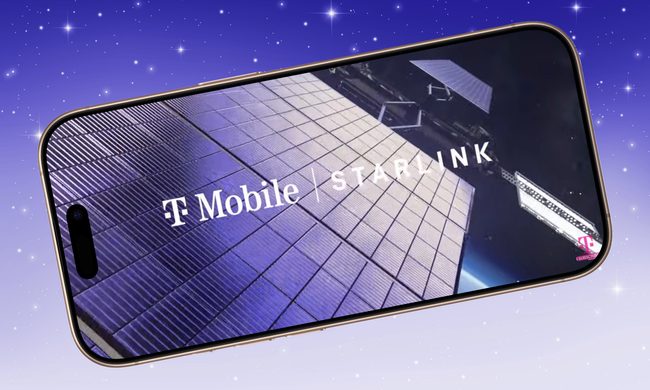
Showcase of T-Mobile Starlink service on an iPhone.

Elon Musk’s Starlink has already changed how millions of people access the internet, especially in places where traditional broadband struggles to reach. Now, the satellite internet service could be preparing for an even bigger leap — becoming your mobile carrier.

According to a Financial Times report, SpaceX has told investors it’s considering launching a retail Starlink mobile service in the US. Instead of simply partnering with wireless carriers, the company could begin selling mobile plans directly to consumers, putting it in direct competition with Verizon, AT&T, and T-Mobile.

Read more
Lightsails have hit another speed bump on the road to interstellar travel
The coolest interstellar travel idea may get betrayed by the light pushing it
LightSail in Earth orbit

Laser-powered lightsails are one of the coolest answers to spaceflight. It might not be as sci-fi-sounding as a warp drive, but now, its practicality has also come under question. Using lightsails, a spacecraft could unfurl an ultra-thin reflective sail and let a powerful laser push it toward another star, without relying on fuel.

The tech was simple and elegant--except it's also more complicated than it sounds. A new preprint from researchers Chao Shen and Jiaze Li of the Harbin Institute of Technology suggests that relativistic lightsails may run into a hidden propulsion problem once they start moving extremely fast.

Read more