Final Fantasy XIV has been on a wild ride over the last decade. Starting off as a train wreck that threatened Square Enix’s very existence before becoming one of its biggest revenue sources, the game has grown considerably throughout its existence. The MMORPG is about to get even bigger as fans predict that the fourth expansion pack could be announced at a fan event tonight.
There’s more than just new content to be considered for the game’s next update. With two new consoles out there, it’s time for its developers to talk shop about how they’ll be supported. A PlayStation 5-optimized version is a no-brainer, and with Microsoft’s new machine holding more power under the hood, it’s only natural for the game to finally make the jump. But it won’t. And, quite frankly, it shouldn’t.
The long road to stability
The PS5 and Xbox Series generation is just now getting started, and it seems like Square Enix could be enticed to bring its massive open-world game to more powerful devices. After all, as Final Fantasy XIV grows in popularity, so do the want and need to accommodate its ballooning following. But Microsoft’s noble gesture to leave no player behind is exactly why it may never be able to offer Eorzea to its fans.
With the exception of the franchise’s original MMO, Final Fantasy XI, releasing on Xbox 360, Final Fantasy XIV has skipped Microsoft’s console business entirely. Microsoft and Square Enix were previously in talks about bringing the MMO to its consoles, but it’s never gone beyond that. Some speculated that it was due to Microsoft’s Xbox Live Gold paywall blocking free-to-play and subscription-based games — a barrier Microsoft has committed to removing in the near future. With the wall about to fall and crossplay now more prevalent than ever, Square Enix has a whole new platform to grow its player base. But what if it’s ultimately the wrong direction for current players?
There’s no denying Microsoft’s latest machines are more than up to the job of powering Square Enix’s fantasy MMO. But that doesn’t mean they’re fit for the purpose. Microsoft’s commitment to have any and all Xbox games work across both current and last-gen machines threatens to hold Final Fantasy XIV back in much the same way the PS3 did at the start of the last generation.
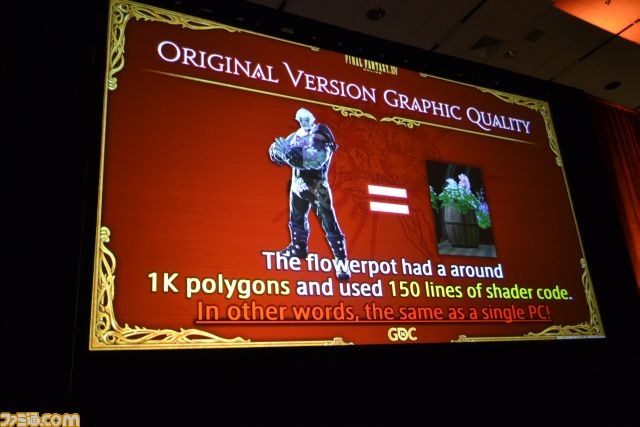
It wasn’t until after producer Noaoki Yoshida came into the picture that the root cause of the game’s performance issues during the PS3 era became apparent. Large, empty zones, cutting-edge player models, and a ridiculously detailed plot were bringing even powerful PCs to their knees. Even with sacrifices made to get a version of A Realm Reborn out on PS3, the aging hardware struggled to keep up, and within two expansions, it was phased out completely.
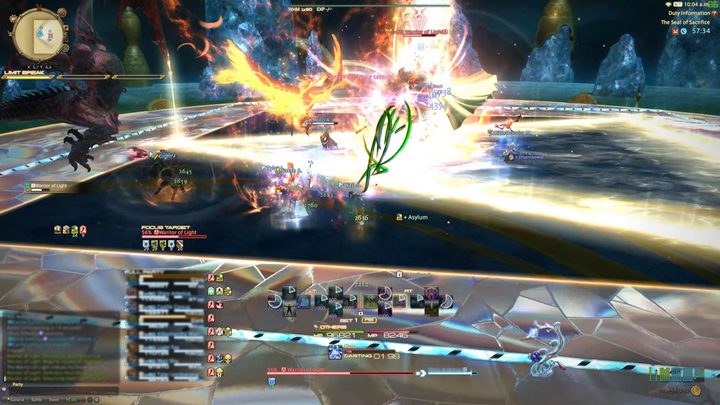
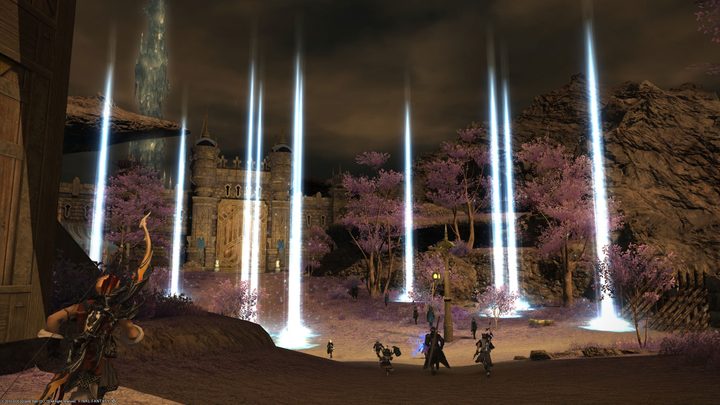
Since then, the game has grown in more ways than one — new zones dwarf the old ones, major battles are more interactive and cinematic than ever, and player housing — a favorite feature among the game’s sprawling roleplay community — has flourished thanks to drastically reduced furniture limits. The PS3 hasn’t been the only casualty in keeping the game fresh, either. With the launch of Shadowbringers, support for low-spec PCs ended, all in a bid to ensure the developer’s ambitions weren’t held back by ancient hardware. And with World of Warcraft: Shadowlands pushing for SSDs as a system requirement, Final Fantasy XIV might not be far behind.
The powerful tech that drives the more noteworthy features of next-gen machines alone could mean great things for the future of FFXIV’s instance-based gameplay. Larger zones, more grandiose battle sequences, and snappier response times have all come from dropping older tech and embracing increased system requirements. When you’re scraping the barrel of one system’s resources, more powerful machines are left wasting their potential, leaving a game that still has so much to give no room to spread its wings.
A generational challenge
The delicate nature of releasing and supporting live-service games on platforms about to be phased out is nothing new. The original Destiny, one of the most expensive and anticipated games of the last decade, released simultaneously across both Sony and Microsoft’s new and old consoles. With the next generation of consoles fresh out of the gate, it was hard to imagine just how much developing for new and old tech meant holding one back in order to safely support the other. It didn’t take long for the cracks to show, though. Just a year after release, Bungie made the decision to expand player item storage. The seemingly easy addition came at a cost: Last-gen players could no longer compare the stats between two items.
Final Fantasy XIV has been forced to make similarly perplexing design decisions in the past, including moving the party bonus HUD element to a separate menu to allow each player’s available resource to be visible to the group in a fight.
Destiny as a whole oversold its promise of having massive planets to explore. On release, those worlds were nothing more than a collection of relatively small zones. Final Fantasy XIV ran into similar issues before its rerelease, with large maps consisting of needlessly complicated corridors being swapped for notably smaller, but generally less claustrophobic fields and deserts. Destiny 2 would eventually fix those faults, solidifying the idea that a game crafted with multiple generations in mind would only suffer for it.
I’m not bold enough to bet that Final Fantasy XIV won’t ever come to a Microsoft console. With a Series X sitting on my desk ready and raring to go faster than my PC at this point, I truly hope it does. It’s only natural to expect PS4 support to be dropped in the years to come as adoption rates grow. But until Microsoft relaxes its demand that any Xbox game runs on a machine as old as A Realm Reborn, don’t expect to be exploring Eorzea and beyond with your Gears of War squad in the near future.