1. Home
  2. Phones
  3. Mobile
  4. News

Verizon’s 5G Home Internet service is coming to 10 more cities

Add as a preferred source on Google

Verizon’s 5G Home Internet service is being taken to the next level by expanding it to an additional 10 cities. Some of the new cities will get the service starting on March 18, while others will get it on March 25. Verizon promises typical download speeds of around 300Mbps, which is quite a bit more than many are likely getting on their wired internet service currently.

On March 18, the service will roll out to Cleveland, Las Vegas, San Diego; Louisville, Kentucky; and Omaha, Nebraska. On March 25, it will come to parts of Cincinnati, Salt Lake City; Charlotte, North Carolina; Hartford, Connecticut; and Kansas City, Missouri.

Recommended Videos

Verizon has been very selective about where it rolls out its home 5G service, likely to ensure that customers get fast download speeds. The service was first launched in 2018, and essentially involves getting a so-called “Internet Gateway” that connects to the local 5G network and turns that connectivity into Wi-Fi for your home devices. Verizon says customers could get speeds of up to 1Gbps, which is equivalent to fiber internet services that are available in some areas. Most areas will get speeds far slower than that though, at least for now.

Eventually, it’s said that 5G home internet could replace cable internet altogether, considering its fast speeds and low latency. It may be a while before that happens, though, considering how early 5G carriers are in their rollout of their 5G networks, and the fact that current 5G networks aren’t really all that much faster than 4G networks.

That’s on track to change with the launch of midband and high-band networks. Here’s a quick explainer: 5G is used across a range of radio frequencies, with the lower frequencies supporting the nationwide networks that are currently available. These frequencies are able to travel distances and through obstacles, but not able to deliver ultra-high speeds. Basically, the higher the frequency, the higher the download speeds — but the shorter the distance those frequencies are able to travel. Carriers are set to continue to roll out higher-frequency mmWave networks in populated cities around the country.

Verizon isn’t the only carrier to be rolling out a 5G home internet service. T-Mobile is piloting one, while AT&T is expected to announce its own in the near future.

Christian de Looper
Christian de Looper is a long-time freelance writer who has covered every facet of the consumer tech and electric vehicle…
I went hands-on with Samsung Galaxy Z Fold 8 Ultra. It’s peak foldable in an old garb. 
It may not look like a fresh start, but underneath the familiar chassis, there's plenty of thoughtful engineering tweaks.
Samsung Galaxy Z Fold 8 Ultra

Samsung just wrapped up its glitzy Unpacked event, revealing three new foldable phones and a pair of smartwatches. While my heart flutters for the pocketable Galaxy Z Fold 8, it’s the Ultra variant that truly feels like a refinement. Interestingly, when you look at the Galaxy Z Fold 8 Ultra for the first time, you might mistake it for the Galaxy Z Fold 7.

Both of them look identical, and Samsung has not made any visible changes on the Galaxy Z Fold 8 Ultra for it to stand out from its predecessor. Color options, obviously, are fresh this time around, but there are a few changes that have been made under the hood, and they make this phone feel like a practically rewarding iteration.

Read more
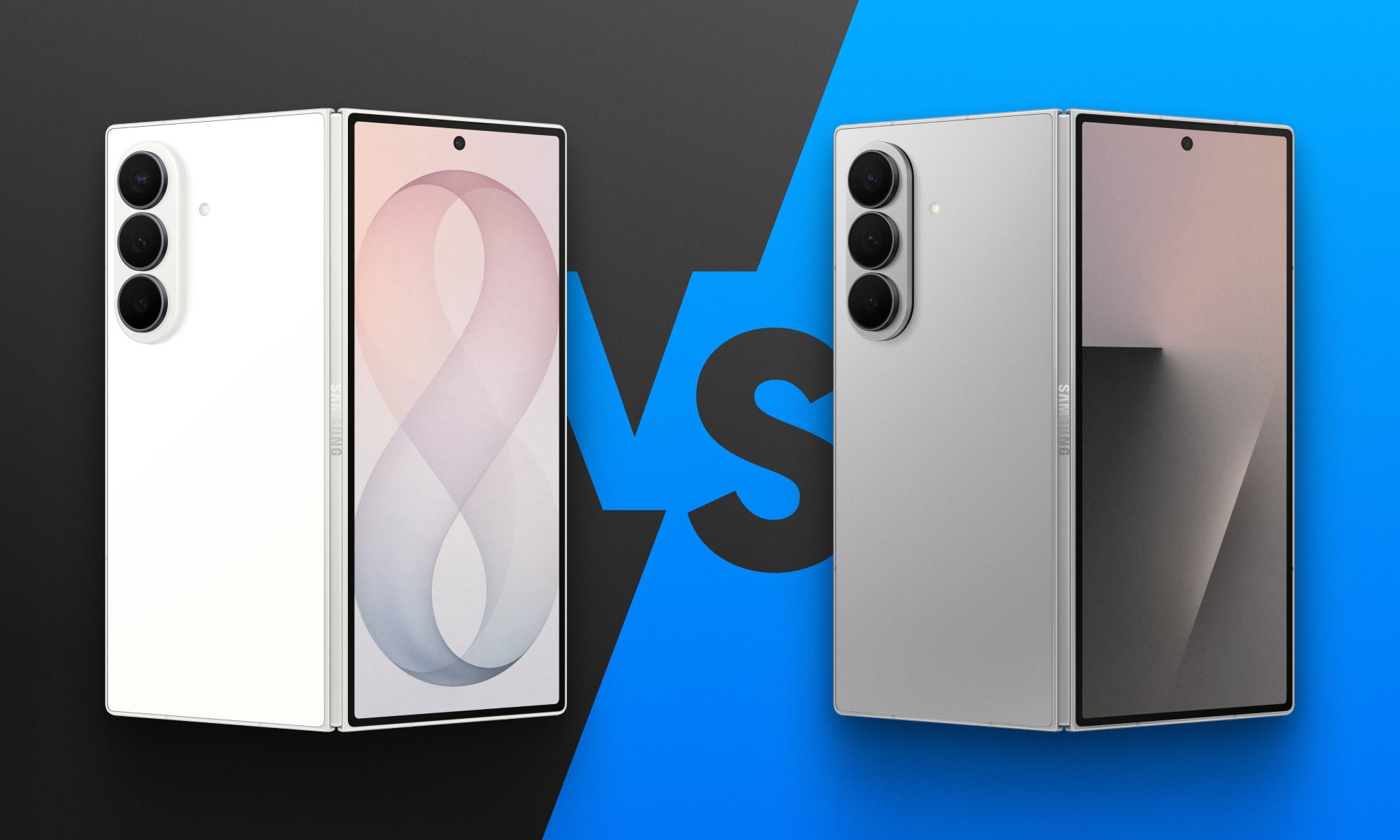
Fold 8 Ultra vs. Fold 7: Upgrades across the board, but is the Ultra really worth the upgrade?
From battery capacity to camera hardware, here's a full comparison between the Galaxy Z Fold 8 Ultra and Galaxy Z Fold 7, and whether upgrading actually makes sense.
Galaxy Z Fold 8 Ultra vs. Fold 7

Foldables age differently than regular smartphones or flagships. But why do I say this? It's the hinge and the foldable aspect that wins buyers over in the first place, not the specifications that get outdated every single year. That's precisely why anyone still carrying last year's Galaxy Z Fold 7 is asking a fair question today: does Samsung's freshly unveiled Z Fold 8 Ultra genuinely earn an upgrade, or does the Fold 7 still hold its ground?

And for shoppers who skipped last year's model entirely and are weighing their first foldable purchase, the calculus is totally different. A now-discounted Fold 7 might undercut the Ultra by a considerable sum, and that could matter to those looking to spend on the form factor, not the latest specifications. 

Read more
Samsung makes it easier to run multiple apps on Galaxy Z Flip 8’s cover screen
Samsung's Galaxy Z Flip 8 now runs 16 apps on its cover screen.
Galaxy Z Flip 8 cover display

Samsung is finally making the Galaxy Z Flip's cover screen much more useful. With the new Galaxy Z Flip 8, you no longer have to rely on workarounds to access more apps without unfolding the phone. Instead, Samsung has expanded native support on the FlexWindow, allowing 16 apps to run directly on the outer display and also making it much easier to launch virtually any other app.

The update addresses one of the biggest complaints Flip users have had for years and brings Samsung up to the level of rivals like Motorola, whose Razr series has long offered a more flexible cover screen experience.

Read more