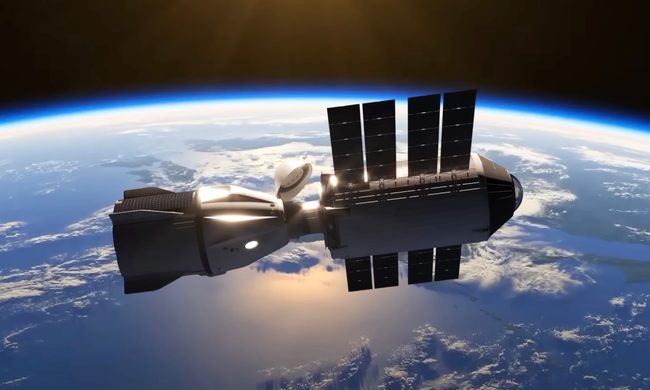
It’s not only astronauts that get to go to space. On NASA’s next cargo mission to the International Space Station (ISS), water bears and glow-in-the-dark bobtail squid will be heading there, too.
No, they’re not going to become exotic pets for the Expedition 65 crew currently aboard the orbiting outpost. Instead, they’ll be put to work, helping the astronauts carry out a range of scientific research.
Water bears
Water bears are microscopic creatures that are so called for their appearance and aquatic habitat. Also known as tardigrades, the tiny organisms are known for their ability to tolerate environments that most life forms would find too extreme. This, of course, makes the water bear ideal for space-based studies.
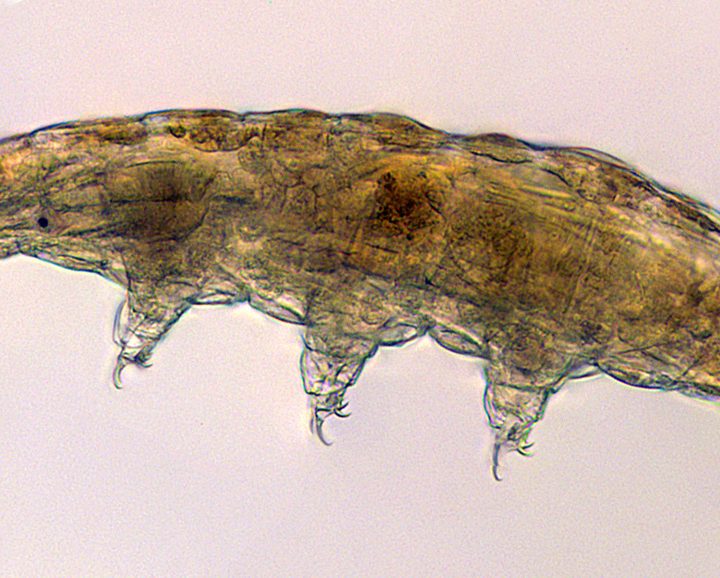
During their Cell Science-04 research, the astronauts will aim to identify the genes involved in water bears’ adaptation and survival in extreme environments.
The results of the study could throw more light on the stress factors impacting humans in space and aid in the development of countermeasures.
“Spaceflight can be a really challenging environment for organisms, including humans, who have evolved to the conditions on Earth,” said principal investigator Thomas Boothby. “One of the things we are really keen to do is understand how tardigrades are surviving and reproducing in these environments and whether we can learn anything about the tricks that they are using and adapt them to safeguard astronauts.”
NASA astronaut and current ISS crew member Megan McArthur also talked about the upcoming research in a video (below).
I can’t wait to welcome water bears to the @Space_Station! They’ll be flying to station aboard the next @SpaceX commercial resupply launch, along with many other science experiments. https://t.co/a8C32Q0EiD pic.twitter.com/nnXeb0Qole
— Megan McArthur (@Astro_Megan) May 27, 2021
Glow-in-the-dark bobtail squid
Meanwhile, the bobtail squid will be used in an experiment called UMAMI that will examine the effects of spaceflight on the molecular and chemical interactions between beneficial microbes and their animal hosts.
“Animals, including humans, rely on our microbes to maintain a healthy digestive and immune system,” said UMAMI principal investigator Jamie Foster. “We do not fully understand how spaceflight alters these beneficial interactions. The UMAMI experiment uses a glow-in-the-dark bobtail squid to address these important issues in animal health.”
The results of the research could lead to the development of measures that help astronauts remain healthy on long-duration space missions to Mars and possibly beyond. NASA said the work could also reveal more about the complex interactions between animals and beneficial microbes, and how microbes communicate with animal tissues.
“Such knowledge could help identify ways to protect and enhance these relationships for better human health and well-being on Earth as well,” the space agency said.
The creatures will head to the International Space Station as part of a SpaceX cargo mission scheduled to launch from Cape Canaveral in Florida on Thursday, June 3.