  1. Home
  2. Mobile
  3. Legacy Archives

Retailers in SF Now Required to Post Cell Phone Radiation Emissions

Add as a preferred source on Google
Image used with permission by copyright holder

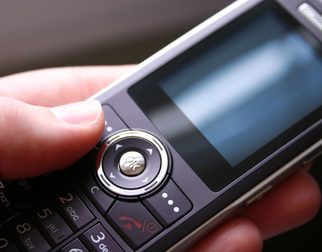
San Francisco’s Board of Supervisors has approved a new law requiring cell phone retailers to post the amount of radiation emitted by each phone they sell.

The board voted 10-1 Tuesday to approve a first-of-its-kind ordinance that requires stores to disclose the phones’ specific absorption rate, or SAR.

Recommended Videos

The measure is backed by Mayor Gavin Newsom, who is expected to sign it within 10 days.

Opponents say the city is responding to unfounded concern over cell phone radiation. Whether or not the radiation produced by cell phones causes cancer or other health problems is still a matter of debate among scientists.

Advocates say they hope the labels will dissuade consumers from buying higher-radiation phones until the science is clearer.

Ian Bell
I'm the co-founder and CEO of Digital Trends Media Group, which I launched in 2006 out of my home office to share my passion…
Snapchat Planets Meaning: Order, Rankings, and How Friend Solar System Works
Snapchat Planets turns your best friends list into a solar system, and yes, your orbit says a lot
Snapchat Planets being shown on the Snapchat app on iPhone.

Snapchat+ includes several exclusive features, but few have generated as much curiosity as Snapchat Planets. Part of the app's Friend Solar System, it transforms your Best Friends list into a planetary ranking, assigning each of your top eight friends a planet based on how often you interact.

From Mercury, which represents your closest friend, to Neptune, which represents your eighth closest, the system offers a quick visual snapshot of your interactions. But what do the different planets actually mean, and how does Snapchat decide who gets which one?

Read more
How to use WhatsApp Web
We'll show you how to use WhatsApp on your desktop or laptop
WhatsApp Web

As one of the most popular messaging services, you’ve already heard of WhatsApp. From its humble beginnings in 2009—two years before Apple introduced iMessage—to its acquisition by Facebook (now Meta) in 2014, WhatsApp has become the dominant messaging platform around the globe.

In recent years, it's grown even more potent with new features like video messages, self-destructing voice messages, the ability to edit sent messages, and more. We even finally got an WhatsApp iPad app in May 2025.

Read more
What is WhatsApp? How to use the app, tips, tricks, and more
From setting it up to mastering hidden features, here is your complete guide to WhatsApp.
WhatsApp app store listing open on iPhone

There's no shortage of messaging apps out there. The past decade has given us more options than we know what to do with, largely because smartphones demanded something better than plain old SMS.

Both the App Store and the Play Store are packed with apps that promise to revolutionize the way we communicate. Most of them didn't make it. The truth is, a messaging app is only as good as the number of people using it, and most apps never cross that threshold.

Read more