1. Home
  2. Space
  3. News

Watch Rocket Lab’s tour of its high-tech space facilities

Add as a preferred source on Google
Rocket Lab | Global Facilities Tour

Rocket Lab has shared a video tour of the state-of-the-art facilities powering its growing spaceflight ambitions.

Recommended Videos

The company has clearly come a long way since it started out in 2006, investing huge sums of money in high-tech operations in New Zealand and California that support not only its current commercial satellite-launch business but also preparations for more challenging missions in the coming years.

The video kicks off with Rocket Lab CEO Peter Beck showing us around the company’s rocket-building plant in Auckland. We also get a good look at its main launch site in Mahia Peninsula 220 miles away, with footage of its Long Beach base also part of the package. Rosie the robot makes a cameo appearance, too.

Rocket Lab’s video also offers a glimpse of its 3D printing setup, which has been creating rocket engines and rocket engine components for the last eight years, with over 200 of its 3D-printed rockets having so far launched to space.

“In this industry, there’s a lot of talk about factories of the future,” Beck says of the Auckland facility that produces a rocket every 20 days, adding, “You’re standing in the factory of the future, and it’s not a CAD image. It’s up and running.”

The New Zealand-born founder and boss of Rocket Lab said its global facilities “represent a huge investment by the company over many many years,” and have brought the company to a stage where making changes to rocket design or increasing production is easier than ever.

California-headquartered Rocket Lab, which currently employs around 450 people, achieved its first orbital launch in 2017 and since then has delivered more than 100 satellites to orbit across 21 missions involving its workhorse Electron launch vehicle. Its most recent mission took place at the end of last month.

But like any company involved in an industry where a small anomaly can have big consequences, it hasn’t all been smooth sailing for Rocket Lab, with the occasional mission mishap resulting in the loss of customers’ payloads.

The setbacks have failed to dent Rocket Lab’s ambitions, however, with the company earlier this year announcing Neutron, its most powerful rocket yet that will be capable of carrying heavier payloads than Electron, with crewed flights also on the cards.

Further expansion of the companies facilities includes the construction of a new factory in the U.S. to build the Neutron rockets, and new launch infrastructure at the Mid-Atlantic Regional Spaceport in Virginia for the first Neutron flights tentatively planned for 2024.

Trevor Mogg
Contributing Editor
Not so many moons ago, Trevor moved from one tea-loving island nation that drives on the left (Britain) to another (Japan)…
Space is becoming Bezos and Musk’s next data center site, and we have every reason to worry
The AI boom is coming for the night sky
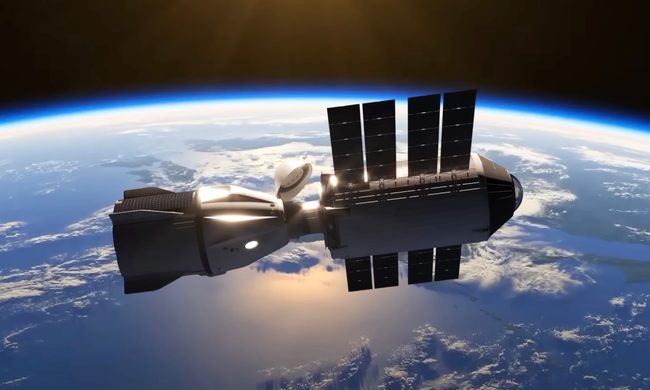
How Vast's space station will look in orbit.

AI data centers already consume vast amounts of electricity and water on Earth, so Silicon Valley has begun looking somewhere considerably more spacious... literally.

Elon Musk's SpaceX and Jeff Bezos' Blue Origin, along with several other companies, have proposed enormous constellations of satellites designed to operate as orbital data centers. However, environmental groups and former space officials are now warning that putting them into orbit at the proposed scale could have severe consequences for Earth's atmosphere and the night sky.

Read more
The first possible exomoon is here, and it makes our Moon look hilariously tiny
Scientists may have found the first exomoon, except this one is the size of Jupiter
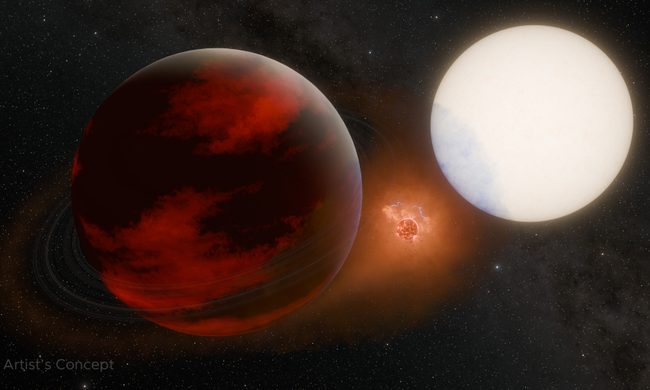
This artist’s concept depicts a potential volcanic moon between the exoplanet WASP-49 b, left, and its parent star. New evidence indicating that a massive sodium cloud observed near WASP-49 b is produced by neither the planet nor the star has prompted researchers to ask if its origin could be an exomoon.

We have already discovered more than 6,000 planets outside of our immediate neighborhood. Yet, finding a moon orbiting one of those distant worlds has proved considerably harder. Astronomers may finally have something close to the real deal, but this particular object stretches the word “moon” almost beyond recognition.

Using the European Southern Observatory’s Very Large Telescope in Chile, researchers detected strong evidence for a moon-like object in the CD-35 2722 system. Further observations are still necessary to confirm the discovery, but it could become the first confidently detected natural satellite outside our solar system. There is still one tiny complication though. This moon is apparently massive.

Read more
China’s answer to SpaceX’s reusable rockets literally catches boosters in a net
SpaceX catches boosters on legs. China just used a net.
Ammunition, Missile, Weapon

SpaceX's playbook for recovering a rocket booster generally involves legs, a precisely controlled vertical landing, and either a concrete pad or a drone ship. 

China just managed to pull off something similar, but in a slightly different way, and on July 10, it tested the method as well.

Read more