  1. Home
  2. Trash
  3. News

Scientists discover how to turn toxic sewer gas into hydrogen fuel

Add as a preferred source on Google

Hydrogen sulfide, known as sewer gas because it is emitted by manure and sewer pipes, is not only unpleasant to smell but is also poisonous and corrosive, and needs to be removed from products like natural gas. But now, researchers have found a way to convert this foul-smelling, dangerous sewer gas into useful fuel.
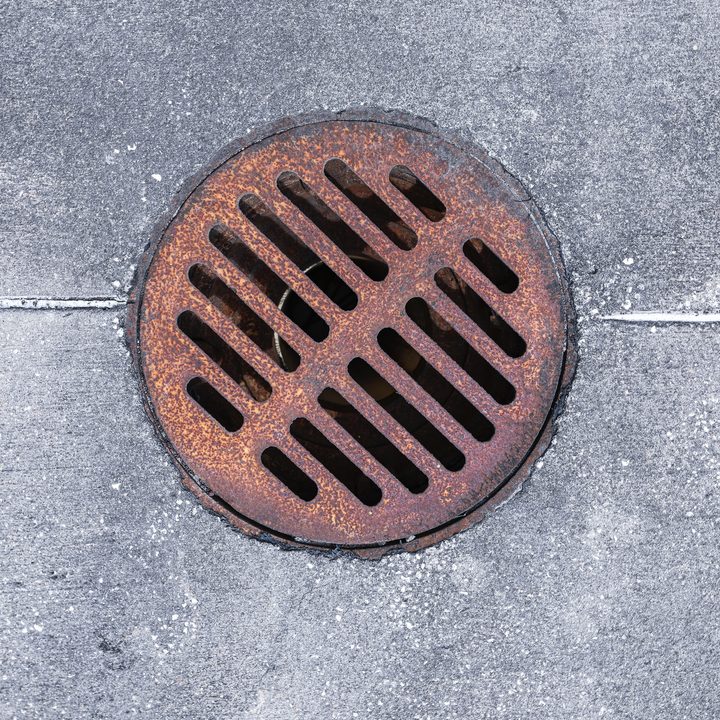
Image of a sewer grate.
Mick Haupt

“Hydrogen sulfide is one of the most harmful gases in industry and to the environment,” said Lang Qin, a co-author on the study and a research associate in chemical and biomolecular engineering at The Ohio State University. “And because the gas is so harmful, a number of researchers want to turn hydrogen sulfide into something that is not so harmful, preferably valuable.”

To do this the researchers used a process called chemical looping, which uses a solid material to break down a chemical reaction into many smaller sub-reactions — in this case, using metal oxide particles to circulate oxygen to burn fuel. This process has been used previously to burn fossil fuels like coal without emitting carbon dioxide, and now the team has found a way to apply the same principle to converting hydrogen sulfide. This can be used to create hydrogen, which has many uses including as fuel.

“It is too soon to tell if our research can replace any of the hydrogen fuel production technologies that are out there,” said Kalyani Jangam, lead author of the study and a graduate student in Ohio State’s Clean Energy Research Laboratory. “But what we are doing is adjusting this decomposition process and making a valuable product from that.”

For now, the process has only been demonstrated in the lab, so the next step is to find out if it works on a larger, industrial scale. If so, it could provide a new way both to neutralize harmful gas and to create a useful product.

“The big picture is we want to solve the harmful gas issue, and we thought that our chemical looping process would allow that,” Qin said. “And here, we have found a way to do it in the lab that creates this value-added hydrogen fuel.”

The research is published in the journal ACS Sustainable Chemistry & Engineering.

Georgina Torbet
Georgina has been the space writer at Digital Trends space writer for six years, covering human space exploration, planetary…
The Digital Trends App Bundle is yours to try for a whole week, free
Digital Trends App Bundle

Recently, we've entered an exciting collaboration with Maple Media, creating a bundle of 17 apps worth having on your phone. From relaxed fun to serious productivity boosts, these apps cover all your bases and provide a fun boost to your phone. Normally, the bundle is $9.99 per month (far lower than the cost of using the apps individually), but for your first 7 days you can get access to the bundle for free. View the full Digital Trends App Bundle for a complete list of the apps, or read on for a summarized take.

Start your free trial

Read more
The Galaxy S26 Ultra might not see much of a battery upgrade after all
It looks like it will stay the same as the last five years.
The back of the Samsung Galaxy S25 Ultra.

What's happened? This week, China's Quality Certification Center released information about a battery (EB-BS04898ABY) with a maximum capacity of 4,855mAh. That's the same capacity as was previously seen in the Samsung Galaxy S25 Ultra, and fans have taken this certification to mean the Galaxy S26 Ultra will not see a capacity increase after all.

The Samsung Galaxy Ultra models have had the same battery capacity for the last five years.

Read more
The Galaxy Tab S10 Lite is official, and it’ll be here sooner than you think
Galaxy Tab S10 Lite

What's happened? Samsung has officially announced the Galaxy Tab S10 Lite, a budget-friendly alternative to the Galaxy Tab S10. The device has been rumored for months, but this is the first time Samsung has officially acknowledged its existence.

The Galaxy Tab S10 Lite will have a 10.9-inch display and a peak brightness of 600 nits — a bit on the lower side, versus the iPad Pro's maximum brightness of 1,600 nits.

Read more