1. Home
  2. Space
  3. News

Stunning photo shows SpaceX rocket rising above Florida fog

Add as a preferred source on Google

Rocket launches are always a spectacular sight, but the latest one by SpaceX was truly something special as its Falcon 9 rocket climbed above thick fog blanketing the Florida coast on Saturday morning.
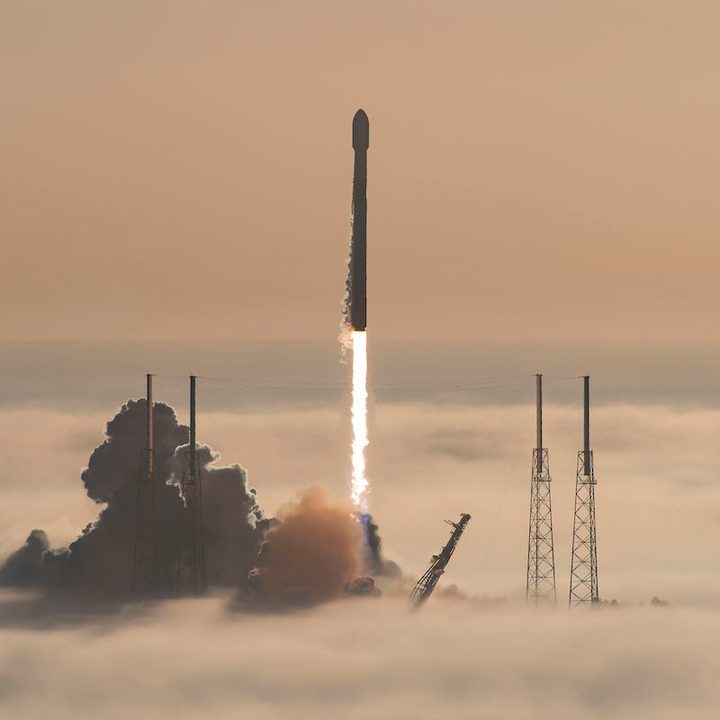
A SpaceX Falcon 9 rocket launching from Cape Canaveral.
SpaceX

The launch from Cape Canaveral saw the SpaceX mission deploy another 53 Starlink internet satellites to low Earth orbit as the company continues to build out its global broadband-from-space service.

Recommended Videos

Images shared by SpaceX show the beautiful sunrise at the launch site along with photos of the Falcon 9 rocket climbing above the fog.

Falcon 9's 25th launch of 2021 pic.twitter.com/hq1835HEgJ

— SpaceX (@SpaceX) November 13, 2021

The spaceflight company also posted a video showing the launch, which marked the ninth use of this particular Falcon 9 rocket. Previous missions using the booster included the Crew-2 launch to the International Space Station in April. The mission was also SpaceX’s 129th orbital flight.

Liftoff! pic.twitter.com/MiNSTNWNx0

— SpaceX (@SpaceX) November 13, 2021

SpaceX has now deployed more than 1,800 Starlink satellites since sending the first batch into orbit in May 2019.

The company launched a public beta of the service in November 2020 and now serves more than 100,000 customers in around 20 countries, including the U.S., Canada, the U.K., Australia, and Mexico, with Japan and India expected to come aboard in 2022.

In the U.S., Starlink customers pay a one-time fee of $499 for the Starlink kit and then $99 per month for the broadband service.

The Starlink project has faced criticism from astronomers who have complained that sunlight reflecting off the satellites could disrupt their view of deep space. SpaceX has been trying to overcome the problem by experimenting with various satellite designs to reduce glare.

Another concern is that low Earth orbit is becoming even more crowded with small satellites, a situation that is expected to get even more serious as the likes of Amazon (via Project Kuiper), Boeing, and OneWeb set about deploying satellites for services aimed at taking on Starlink.

The fear is that possible collisions between small satellites will lead to the creation of even more space junk, which poses a hazard to larger satellites providing important data for Earth-based services, and also to crewed satellites such as the International Space Station and China’s new orbiting laboratory.

Trevor Mogg
Contributing Editor
Not so many moons ago, Trevor moved from one tea-loving island nation that drives on the left (Britain) to another (Japan)…
Amazon’s Starlink rival just crossed a major milestone, but don’t expect perfect internet just yet
Amazon finally showed up to the space internet party
Amazon Leo satellite layout across all launch vehicles

Amazon has taken a significant step toward launching its long-awaited satellite internet service. Following its latest rocket launch, the company now has 396 Project Kuiper satellites in low-Earth orbit, enough to begin offering continuous service across select regions. The milestone keeps Amazon on track for its previously announced goal of launching commercial service by mid-2026.

https://twitter.com/Weber44Chris/status/2072575499461963938?ref_src=twsrc%5Etfw%7Ctwcamp%5Etweetembed%7Ctwterm%5E2072575499461963938%7Ctwgr%5Ed727a1b853cbf519585e7bf2655943afb2f91bb8%7Ctwcon%5Es1_&ref_url=https%3A%2F%2Fwww.theverge.com%2Fscience%2F960563%2Famazon-leo-service-tipping-point

Read more
Amazon’s Starlink rival is set to launch satellite internet later this year
After launching nearly 400 satellites, Amazon says its Leo broadband service will go live later this year.
Atlas V launches 29 Amazon Leo satellites from Cape Canaveral, Florida

Amazon's long-awaited answer to SpaceX's Starlink is finally nearing liftoff. According to an exclusive report from Reuters, the company plans to begin offering its Leo satellite internet service later this year, after its latest rocket launch pushed the constellation to 394 satellites in orbit.

The pieces are finally falling into place for Project Kuiper

Read more
NASA is investing $590 million in private contractors to build humanity’s first Moon outpost
NASA is counting on private companies to land its Moon Base dream.
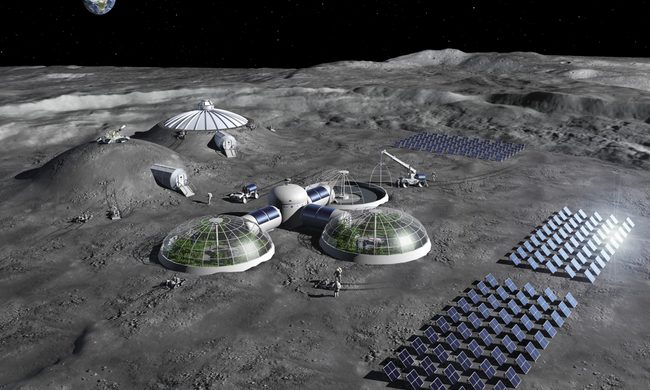
Artist impression of a Moon Base concept, with solar arrays for energy generation, greenhouses for food production, and habitats shielded with regolith.

Building a permanent base on the Moon sounds like science fiction, but NASA is making it feel a lot more real. The agency just handed $590 million in contracts to three private companies for four uncrewed lunar lander missions launching in late 2028.

These missions are part of Phase 1 of NASA's broader $30 billion Moon Base program, which needs to deliver landers, rovers, and scientific cargo up there before astronauts eventually move in. These efforts are closely tied NASA's Artemis program, which sent humans on a lunar flyby in April for the first time since the Apollo era.

Read more