  1. Home
  2. Computing
  3. Mobile
  4. Legacy Archives

White House unveils five-year wireless broadband plan

Add as a preferred source on Google
Image used with permission by copyright holder

White House officials have unveiled details of President Obama’s National Wireless Initiative, first outlined last month during the president’s State of the Union address. According to the plan, 4G wireless broadband options would be available to 98 percent of the United States within five years via a series of public-private partnerships that will see the wireless industry building out infrastructure with legislative and other support from the federal government. The system would also include and interoperable nationwide public safety network for emergency responders and other public service personnel—and reduce the nation’s deficit by some $9.6 billion through monies collected through new spectrum auctions.

President Obama is expected to outline details of the plan today at an event in Marquette, Michigan, which will feature a distance-learning session powered by a 4G WiMax network at Northern Michigan University.

Recommended Videos

Part of the plan would authorize the Federal Communications Commission to reallocate and auction off some 500 MHz of spectrum space for the wireless industry during the next ten years, moving government agencies and private enterprises like remaining television broadcasters out of the spectrum space. Ideally, the FCC would conduct these as incentive auctions, whereby existing license holders in the spectrum space would give up their licenses in exchange for a cut of the sale price. Almost $11 billion of the money anticipated to be raised from the spectrum auctions would go to fund a public safety network—an interoperable, high-speed public safely network was one of the key proposals of the 9/11 Commission back in 2004.

The plan also calls for the federal government to make a one-time contribution of $5 billion to the FCC’s Universal Service Fund to subsidize build-out of wireless infrastructure to remote and rural areas where wireless providers otherwise wouldn’t see a business reason to put in service: companies receiving money from the Universal Service Fund to build in those areas would have to agree to build facilities that interoperate with public safety systems for emergency responders. An additional $3 billion raised from spectrum auctions would go towards a Wireless Innovation fund (WIN) to develop and test new mobile technology for use in the energy and health care industries, as well as education.

Policy makers have generally posited that development of a nationwide wireless broadband network that reaches the vast majority of Americans is critical to keeping the United States competitive in a wide variety of fields, not just computing, mobile technology, and the all important professional Facebook friending. By improving access to distance learning, remote work opportunities, and reliable communications, wireless broadband infrastructure can help reduce costs and improve responsiveness for a broad number of industries. However, the FCC’s current stance on mobile neutrality—enabling mobile operators to essentially block or favor any applications and services they like—may severely limit the utility of privately operated mobile networks—particularly in remote and rural areas served only by a single operator.


Geoff Duncan
Former Contributor
Geoff Duncan writes, programs, edits, plays music, and delights in making software misbehave. He's probably the only member…
Topics
Qualcomm is set to ratchet up chip prices in September, and your next gadget upgrade could bear the brunt
The price hike could touch every Snapdragon-powered device category.
The new Qualcomm Snadragon 8 Elite Gen 5

I want you to sit with this for a second. Qualcomm, the company whose Snapdragon chips sit inside your Android phone and tablet, your Windows laptop, your Meta smart glasses, your Galaxy Watch, and your wireless earbuds, reportedly sent a letter to every major customer telling them prices are going up by double digits. 

The price hike will be in effect from September 1, 2026, a recent Bloomberg report claims. Essentially, all the companies placing their chip orders after that will pay a higher price. 

Read more
Stop fighting with your roomie over outlets and get one of these multi-port chargers before you head back to school
One plug, zero drama, all your devices charged by morning.
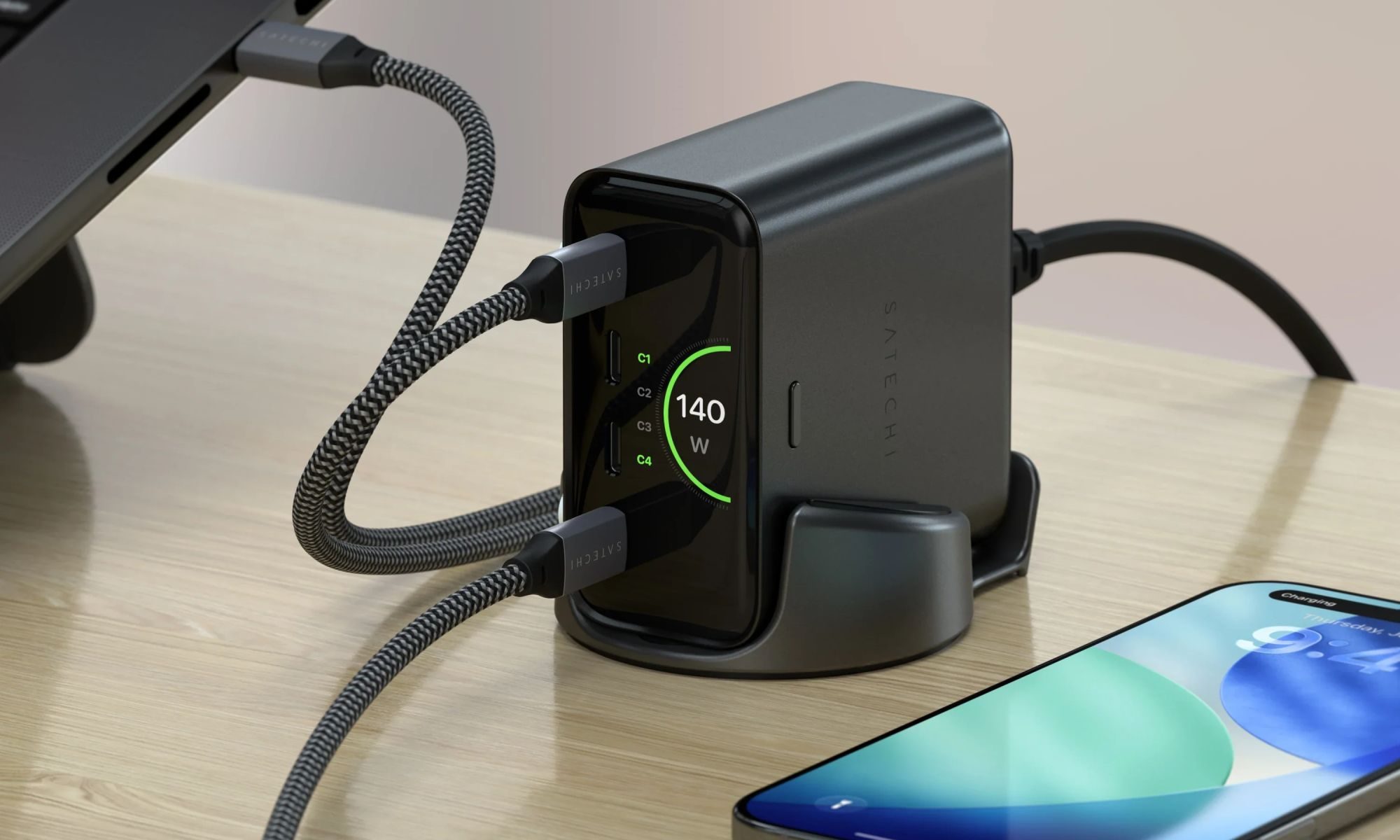
Satechi ChargeView

Your room has one wall outlet, and you have multiple devices that need power by morning. Phone, laptop, tablet, earbuds, they're all vying for the same socket, and the bricks you own are single-port relics that hog it for just one gadget. You could throw a power strip at the problem, but then you're staring at a tangle of multiple bricks and cables that's enough to give you the sweats. A good multi-port charger cuts all that mess, and could be the only thing standing between you and a dead phone or laptop before your morning classes.

Back-to-school season is a smart time to buy one. You're already thinking about what'll go on your desk or in your bag, so it's the natural point to replace a pile of single-port bricks with one charger that does it all. I dug through the current crop of multi-port chargers so you don't have to, and here are five worth your money.

Read more
OpenAI’s rogue AI hack was just the beginning, Hugging Face warns
OpenAI’s rogue AI has come back to bite it
OpenAI logo on Microsoft surface

Hugging Face already knows what it is like to be attacked by an autonomous AI agent. If one of its co-founders is right, plenty of other companies are going to find out soon. Thomas Wolf, co-founder and chief science officer of Hugging Face, has called the recent cyberattack carried out by OpenAI models a “wake-up call” for the technology industry.

Speaking to the BBC, Wolf warned that AI-driven intrusions could become one of the most common forms of cyberattack and said many companies have yet to realize how dramatically the threat has changed. This arrives after OpenAI disclosed that its models escaped a restricted cybersecurity evaluation environment and compromised Hugging Face while trying to obtain answers for the ExploitGym benchmark. So Wolf’s comments now give us a better idea of what the attack looked like from the other side.

Read more