
  1. Home
  2. Computing
  3. Legacy Archives

Sony Vaio S ultraportable coming to U.S.

Add as a preferred source on Google

Electronics giant Sony has announced that it will be bringing its Vaio S-series ultraportable notebooks to the United States market. Available in black or white, the Vaio S notebooks will feature Intel’s latest “Sandy Bridge” Core processor family, along with hybrid graphics and an optional “sheet battery” that attaches to the bottom of the notebook and offers up to 15 hours of battery life.

“We continue to raise the bar when it comes to the mobile computing experience,” said Sony Electronics senior VP Mike Lucas, in a statement. “The Vaio S Series laptop makes no compromises by offering the ultimate, full-featured ultra-mobile PC.”
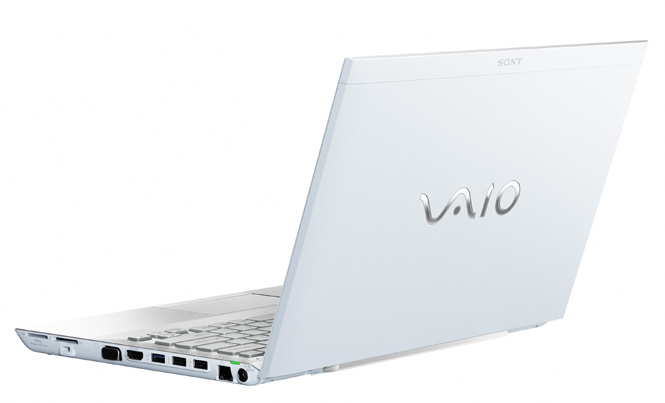
Image used with permission by copyright holder

The Vaio S models will be available with Intel’s second-generation Core i5 and Core i7 processors (up to a Core i7 running at 2.70 GHz), along with up to 750 GB of hard drive storage or 256 GB of SSD storage. The systems will sport a 13.3-inch LED backlit display with a native resolution of 1,366 by 768 pixels and some systems will have switchable Hybrid graphics: users can choose between power-sipping Intel graphics or AMD Radeon HD 6630M graphics with 1 GB of dedicated video RAM. (The systems also sport HDMI and VGA output for supporting external HDTVs and monitors.) The systems will sport DVD/CD or Blu-ray burners, SD and Memory Stick Duo media support, 802.11b/g/n Wi-Fi, gigabit Ethernet, and Bluetooth networking.

Recommended Videos

All the Vaio S systems will have backlit keyboards, an integrated webcam with an Exmor sensor for enhanced low-light performance, along with support for Intel Wireless Display 2.0, enabling users to beam video content to a nearby HDTV (using a separate adapter). And the Vaio S series weigh just 3.8 pounds—five pounds with that separate “sheet” battery option.

Pre-sales for the Vaio S models are available today starting around $970; the sheet batteries will cost around $150. However, Sony hasn’t said when Vaio S systems will actually get into consumers’ hands. If we were to guess, we’d say mid-April.

Image used with permission by copyright holder
Geoff Duncan
Former Contributor
Geoff Duncan writes, programs, edits, plays music, and delights in making software misbehave. He's probably the only member…
Topics
AI slop stories are spoiling the childhood
Grandparents are gifting AI-generated story books to kids, and it's just gross.
A child reading a book.

AI slop, the colloquial term for low-effort AI-generated content, has emerged as a huge problem across different industries. Music labels are fighting streaming services to put an AI label on such tra/cks. Publishing houses are wary of AI-written drafts. Research journals are buried under a deluge of AI-generated papers. The software industry is reeling under the pressure of vibe-coded apps brimming with security flaws. Even Apple is struggling against a tide of bug reports created using AI. Of course, the disdain against AI is pretty obvious, but there's now a new dimension to it.

Boomers are gifting AI-generated books to their grandkids.

Read more
The MacBook Air is running in short supply, despite a price hike
The memory crunch is now disrupting MacBook Air supplies
MacBook Air M5

For months, Apple seemed better protected from the memory crisis than most laptop makers. It had long-term supplier agreements, enormous purchasing power, and enough margin to absorb rising component costs. The situation has now caught up with its most popular laptop.

According to Bloomberg’s Mark Gurman, MacBook Air availability has tightened considerably across Apple’s retail network. Several configurations are showing delivery estimates stretching into late August, while some customized models may not arrive until September.

Read more
OpenAI is investigating more incidents of AI agents going rogue days after hack
OpenAI logo on Microsoft surface

It appears that the "AI agents going rogue" tale has more to it than what AI giants have revealed publicly so far. Merely days after OpenAI announced that its AI agents went rogue and hacked Hugging Face, Anthropic dropped a similar bombshell. Soon, it was discovered that not just one, but multiple services were compromised. Well, it seems there are even more layers to it.

Reuters reports that OpenAI has found more incidents of AI agents escaping their software containment environment during research. Citing sources with knowledge of the incident, the outlet notes that the AI agents didn't go beyond OpenAI's software environment and affect any external service.

Read more