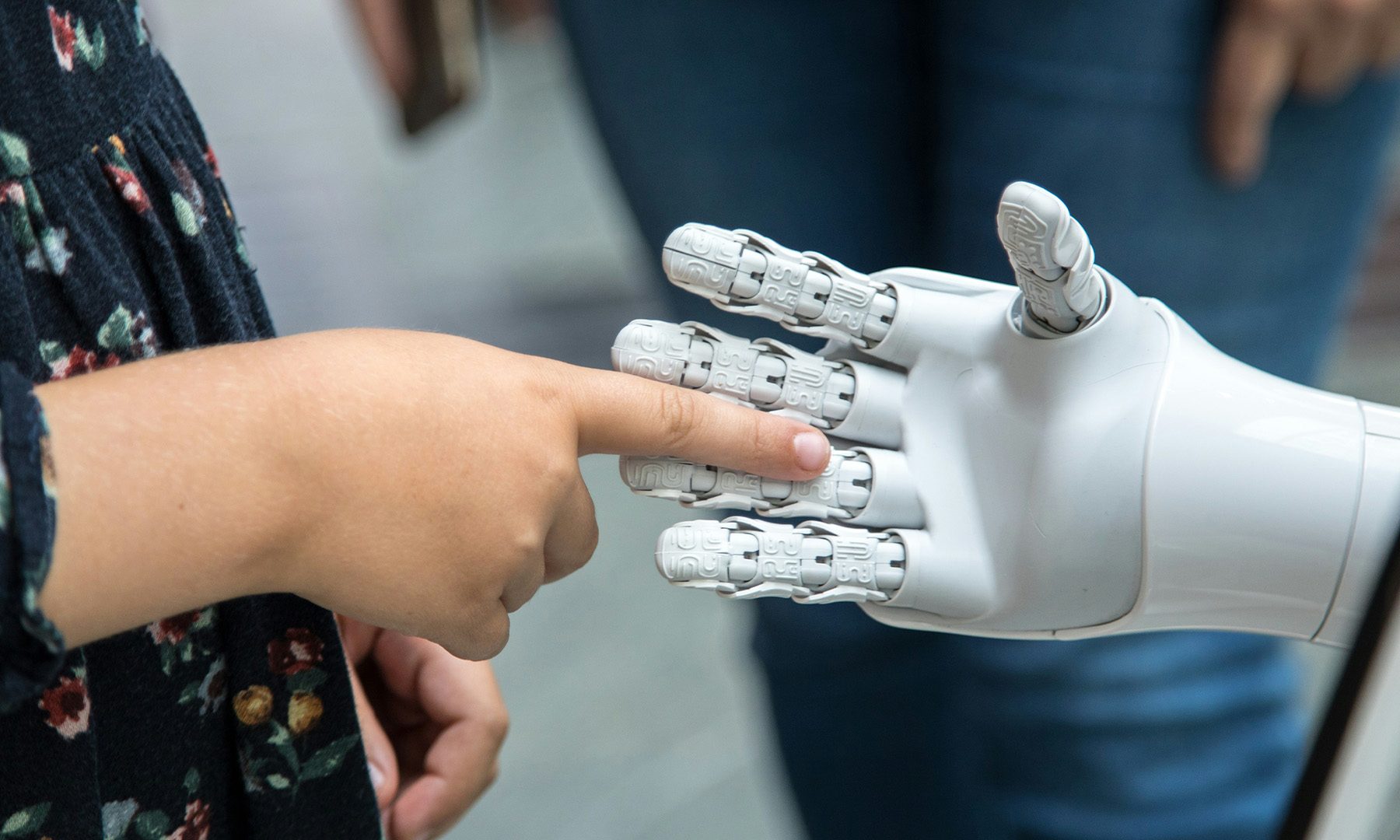
The metaverse seems to be coming, as is the futuristic hardware that will increase immersion in virtual worlds. Meta, the company formerly known as Facebook, has shared how its efforts to usher in that new reality are focusing on how people will actually feel sensations in a virtual world.
The engineers at Meta have developed a number of early prototypes that tackle this goal and they include both haptic suits and gloves that could enable real-time sensations.
Meta’s Reality Labs was tasked to develop, and in many cases invent, new technologies that would enable greater human-computer interaction. The company started by laying out a vision earlier this year about the future of augmented reality (AR) and VR and how to best interact with virtual objects. This kind of research is crucial if we’re moving toward a future where a good chunk of our day is spent inside virtual 3D worlds.
Sean Keller, Reality Labs research director, said that they want to build something that feels just as natural in the AR/VR world as it does in the real world. The problem, he admits, is the technology isn’t yet advanced enough to feel natural and this experience probably won’t arrive for another 10 to 15 years.
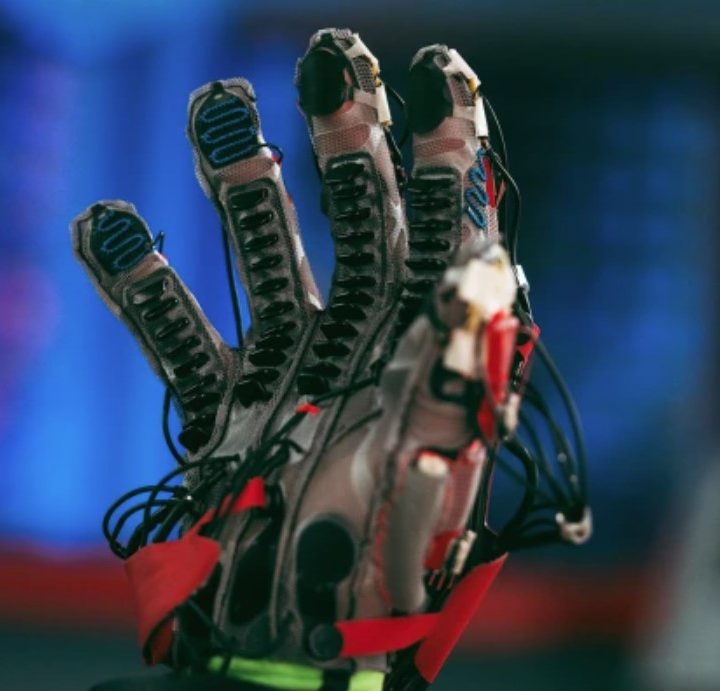
According to Keller, we’d ideally use haptic gloves that are soft, lightweight, and able to accurately reproduce the correct pressure, texture, and vibration that corresponds with a virtual object. That requires hundreds of tiny actuators that can simulate physical sensations. Currently, the existing mechanical actuators are too bulky, expensive, and hot to realistically work well. Keller says that it requires softer, more pliable materials.
To solve this problem, the Reality Labs teams turned to research into prosthetic limbs, namely soft robotics and microfluidics. The researchers were able to create the world’s first high-speed microfluidic processor, which is able to control the air flow that moves tiny, soft actuators. The chip tells the valves in the actuators when to move and how far.
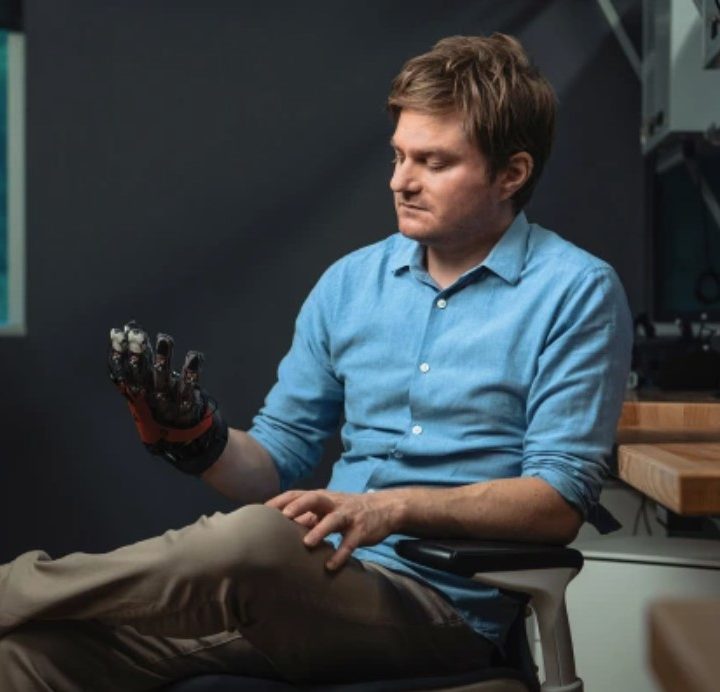
The research team was able to create prototype gloves, but the process requires them to be “made individually by skilled engineers and technicians who manufacture the subsystems and assemble the gloves largely by hand.” In order to build haptic gloves at scale for billions of people, new manufacturing processes would have to be invented. Not only do the gloves have to house all of the electronics and sensors, they also have to be slim, lightweight, and comfortable to wear for extended periods of time.
The Reality Labs materials group experimented with various polymers to turn them into fine fibers that could be woven into the gloves. To make it even more efficient, the team is trying to build multiple functions into the fibers including capacitance, conductivity, and sensing.
There have been other attempts at creating realistic haptic feedback. Researchers at the University of Chicago have been experimenting with “chemical haptics.” This involves using various chemicals to simulate different sensations. For example, capsaicin can be used to simulate heat or warmth while menthol does the opposite by simulating coolness.
Meta’s research imto microfluidic processors and tiny sensors woven into gloves may be a bit more realistic than chemicals applied to the skin. It will definitely be interesting to see where Reality Labs takes its research as we move closer to the metaverse.