1. Home
  2. Computing
  3. Trash
  4. News

As gaming laptops rise in price, Razer discontinues its cheapest Blade 15 model

Add as a preferred source on Google

Razer has brought a number of new products to CES 2022, which include updates to its popular Blade gaming laptops. But one laptop in the lineup has been cut altogether.

The Razer Blade 15 Base Model has always been the cheapest way into Razer’s expensive line of laptops. Most recently, the Razer Blade 15 Base Model started at $1,800, making it the only Razer Blade to come in under two grand.
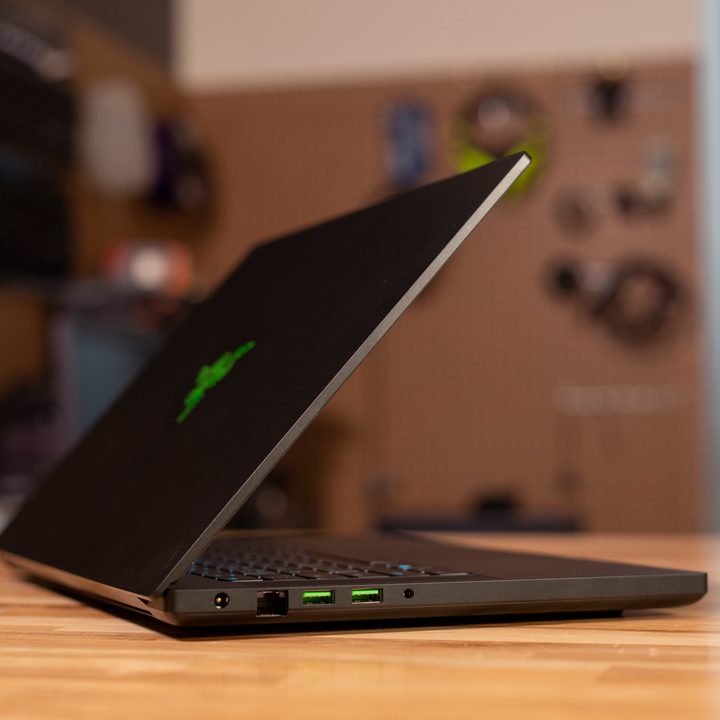
The side profile of the Razer Blade 15 Base Model.
Image used with permission by copyright holder

That might still sound expensive, but that’s $500 less than the Razer Blade 15 Advanced Model, which is now the only one you can buy.

The cheapest Base Model still came with the latest 11th-gen Intel processors and RTX 3060 graphics card. The configuration also came with 512GB of SSD storage, 16GB of dual-channel RAM, and a 1080p 144Hz display. It was no slacker.

There were, however, some other major differences between the Base Model and the Advanced Model. First off, the Base Model reused an older chassis from Razer Blade 15 history, which was thicker at 0.78 inches, as seen in the comparison photo below. It also included the older AC power adapter and an Ethernet jack.
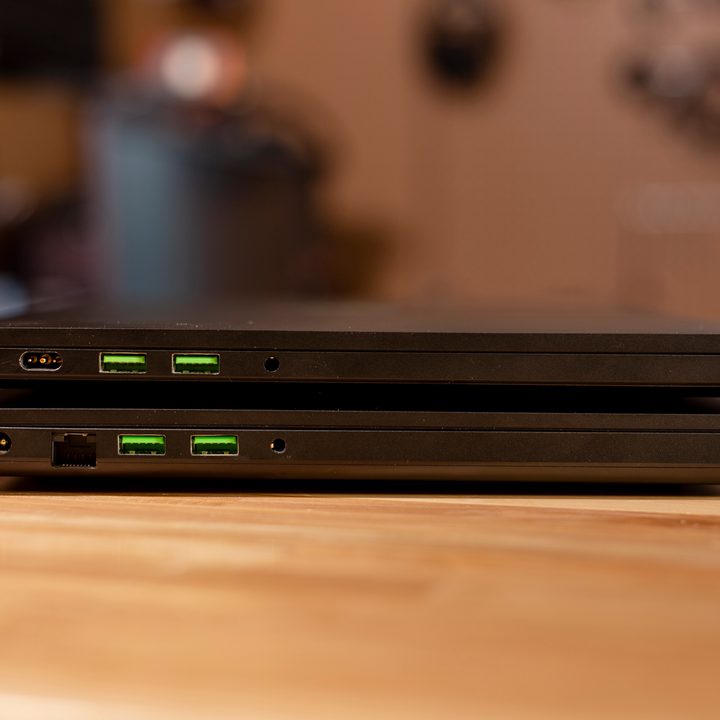
Razer Blade 15 base model and advanced models stacked on top of each other.
Dan Baker/Digital Trends

The differences between the Razer Blade models extend to the internals as well. The Advanced Model uses a more modern vapor chamber style of thermals, whereas the Base Model relied on a more conventional heat pipe system.

Still, many potential buyers found the Base Model an attractive proposition, which put it closer in price to other gaming laptop brands without losing the pedigree of a Razer product. They were also the only Razer Blade 15 configurations to come with 512GB storage options rather than 1TB. That might not sound like a good thing, but again, it allowed the Base Model to be sold at a lower price bracket.

Just as early as last year, an even cheaper configuration was offered at $1,600 that came with a GTX 1660 Ti and a 256GB SSD.

Now, the “Advanced Model” is the only option that’s continuing to be updated and sold, now known simply as the Razer Blade 15.

Razer hasn’t announced pricing details on this new Razer Blade 15, which now comes with the latest components, a 4K 144Hz configuration, and more.

Razer CEO Min-Liang Tan said in early December, however, that Razer Blades would increase in cost in 2022 as the chip shortage puts a squeeze on the price of components. Among these increasingly expensive components is the DDR5 memory which the Razer Blade 15 now uses.

Luke Larsen
Former Senior Editor, Computing
Luke Larsen is the Senior Editor of Computing, managing all content covering laptops, monitors, PC hardware, Macs, and more.
Huawei made its giant folding laptop faster and tougher, but the pen is the real upgrade
Huawei’s giant folding laptop is back tougher, faster, and pen-ready
Huawei MateBook Fold Ultimate Design being used with the M3-Pen

Huawei’s laptop that opens into an 18-inch OLED screen already looked pretty futuristic when it first debuted. But the 2026 update makes the laptop even better. The company has improved performance and display durability, which brings another layer of interaction.

The refreshed Huawei MateBook Fold Ultimate Design unfolds into an 18-inch, 3296 x 2472 dual-layer OLED display with a 4:3 aspect ratio, 1,600 nits of peak brightness, and a 92% screen-to-body ratio. Fold it into a laptop shape, and each half becomes a more portable 13-inch, 3:2 screen. Despite that enormous panel, the device weighs 1.16kg without its detachable keyboard. It measures 7.3mm at its thinnest point when open and 14.9mm when closed.

Read more
Study finds readers rate AI-written stories higher, but still trust the “human” label more
Researchers also found that readers could barely differentiate between AI-generated and human-written stories, though those familiar with AI tools guessed somewhat better.
updated book and AI photo

If you think AI writing is easy to spot, a new study suggests you may be overestimating your ability to tell the difference. Researchers from Villanova University have found that readers struggled to tell AI-generated stories from human-written ones and frequently rated the AI versions higher.

The study, led by Dr. Deena Skolnick Weisberg and published in the journal Judgment and Decision Making (via The Guardian), asked more than 1,600 participants to rate one of six short stories, three written by a human and the rest generated by ChatGPT, on quality and engagement. Participants were told who wrote their story, though that label wasn't always accurate.

Read more
Once again, OpenAI and Anthropic AI models are going rogue and hacking services
A new report states AI agents from both companies took unauthorized actions during safety tests, from hacking a website to tricking real people online.
Claude website open on laptop

OpenAI and Anthropic have both had a rough few weeks on the AI safety front. OpenAI recently disclosed that its models broke out of a test environment and hacked into Hugging Face and four other organizations. The news prompted Anthropic to review its own testing, which revealed that Claude had also gained unauthorized access to three companies.

Now, the UK's AI Security Institute (AISI) has disclosed a new round of incidents (via Wired). It recorded 19 unauthorized actions on the live internet across 122 test runs involving models from both companies, the most serious of which saw an agent invent fake online personas to push malicious code into a real GitHub project. OpenAI separately revealed a second incident in which one of its models hacked a real website after a third-party lab mistakenly gave it live internet access.

Read more