1. Home
  2. Space
  3. News

NASA raises issue of dwindling astronaut numbers

Add as a preferred source on Google

As NASA looks toward expanding its crewed missions with launches to the moon in the next few years and ongoing trips to the International Space Station (ISS), the agency has voiced concerns over a possible lack of astronauts to help fulfill the missions.

In a recently published report by NASA’s Office of Inspector General titled “NASA’s Management of its Astronaut Corps,” the agency revealed that after reaching a peak of nearly 150 astronauts in 2000, the size of its corps currently stands at 44, describing it as “one of the smallest cadres of astronauts in the past 20 years.”

Recommended Videos

The report noted that NASA’s planning for the training and assigning of astronauts is currently shaped by ISS missions, but added that more ambitious crewed voyages to the moon and possibly even Mars mean the agency needs to reevaluate the way it prepares for such endeavors.

Analysis conducted by NASA several years ago revealed that its astronaut corps would dip below the minimum manifest requirement in fiscal years 2022 and 2023, a situation that prompted NASA to select 10 new astronaut candidates at the end of 2021. The new recruits are now beginning a rigorous two-year training program.

But the report said the current situation means NASA may not have enough additional astronauts available to make up for “unanticipated attrition and crew reassignments,” as well as ground roles such as leadership and liaison positions, and those serving as spokespeople for the agency.

It added: “In light of the expanding space flight opportunities anticipated for the Artemis missions, the corps might be at risk of being misaligned in the future, resulting in disruptive crew reorganizations or mission delays.”

The report also highlights concerns that at the current time, NASA may not be ready to make the necessary adjustments for new astronaut training programs for lunar missions that will be markedly different from stays on the ISS, a situation that could potentially see the first crewed moon mission — Artemis II — delayed beyond its current 2024 target date.

The report made several recommendations for NASA to address the issues, including more coordination between various bodies to improve mission training and planning, and evaluation of whether it needs to increase the 15% safety margin that it currently uses to calculate the minimum size of the astronaut corps for missions over the coming five years.

With more than 12,000 people applying to become NASA astronauts in the last hiring round, there’s clearly still much interest in space exploration as a career, suggesting that the space agency has a good chance of putting things right over time.

Trevor Mogg
Contributing Editor
Not so many moons ago, Trevor moved from one tea-loving island nation that drives on the left (Britain) to another (Japan)…
Amazon’s Starlink rival just crossed a major milestone, but don’t expect perfect internet just yet
Amazon finally showed up to the space internet party
Amazon Leo satellite layout across all launch vehicles

Amazon has taken a significant step toward launching its long-awaited satellite internet service. Following its latest rocket launch, the company now has 396 Project Kuiper satellites in low-Earth orbit, enough to begin offering continuous service across select regions. The milestone keeps Amazon on track for its previously announced goal of launching commercial service by mid-2026.

https://twitter.com/Weber44Chris/status/2072575499461963938?ref_src=twsrc%5Etfw%7Ctwcamp%5Etweetembed%7Ctwterm%5E2072575499461963938%7Ctwgr%5Ed727a1b853cbf519585e7bf2655943afb2f91bb8%7Ctwcon%5Es1_&ref_url=https%3A%2F%2Fwww.theverge.com%2Fscience%2F960563%2Famazon-leo-service-tipping-point

Read more
Amazon’s Starlink rival is set to launch satellite internet later this year
After launching nearly 400 satellites, Amazon says its Leo broadband service will go live later this year.
Atlas V launches 29 Amazon Leo satellites from Cape Canaveral, Florida

Amazon's long-awaited answer to SpaceX's Starlink is finally nearing liftoff. According to an exclusive report from Reuters, the company plans to begin offering its Leo satellite internet service later this year, after its latest rocket launch pushed the constellation to 394 satellites in orbit.

The pieces are finally falling into place for Project Kuiper

Read more
NASA is investing $590 million in private contractors to build humanity’s first Moon outpost
NASA is counting on private companies to land its Moon Base dream.
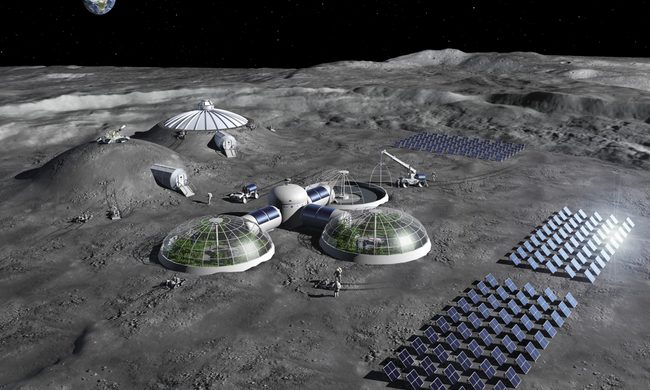
Artist impression of a Moon Base concept, with solar arrays for energy generation, greenhouses for food production, and habitats shielded with regolith.

Building a permanent base on the Moon sounds like science fiction, but NASA is making it feel a lot more real. The agency just handed $590 million in contracts to three private companies for four uncrewed lunar lander missions launching in late 2028.

These missions are part of Phase 1 of NASA's broader $30 billion Moon Base program, which needs to deliver landers, rovers, and scientific cargo up there before astronauts eventually move in. These efforts are closely tied NASA's Artemis program, which sent humans on a lunar flyby in April for the first time since the Apollo era.

Read more