1. Home
  2. Computing
  3. News

Digital Trends may earn a commission when you buy through links on our site. Why trust us?

DisplayPort cable labels just changed, but there’s good news

Add as a preferred source on Google

The Video Electronics Standards Association (VESA) has recently announced plans to standardize its DisplayPort UHBR (Ultra-high Bit Rate) support with a certification program, which will enable video source, display, and cable products to use properly labeled cables in their intended fashion.

This update from VESA comes after confusion arose from the release of the new HDMI 2.1 specification, which is not entirely compatible with some HDMI 2.0 cables that have since been retired, and certain new features, such as 4K 120Hz video, might not function.
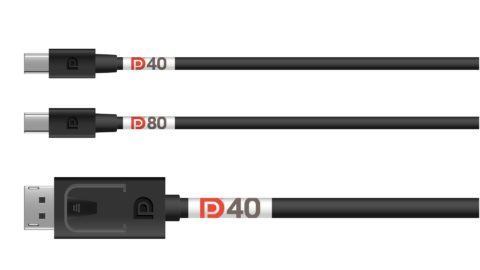
DisplayPort UHBR (Ultra-high Bit Rate) cables, VESA
DisplayPort UHBR (Ultra-high Bit Rate) cables, VESA Image used with permission by copyright holder

With the Ultra-High Bit Rate (UHBR) certification, the cables will be labeled according to their transfer rates of “DP40” for 10 gigabits per second per lane or “DP80” for 20 gigabits per second per lane. The 40 and 80 represent the maximum bandwidth of the cables using all four lanes of the DisplayPort.

Recommended Videos

Vendors including Accell, BizLink, and Wizen are already offering the new DP40 and DP80 DisplayPort cables that adhere to the new UHBR standard, with cables by other brands currently being tested for certification and expected to be released to the market soon.

The certification protocol will also take into consideration the UHBR latest highlight features, which VESA claims at higher bandwidth can support 8K 60Hz HDR, 4K 240Hz HDR, two 4K 120Hz HDR, or four 4K 60Hz HDR displays through a single cable.

As the Ultra-High Bit Rate certification will also apply to the current DisplayPort 2.0 standard, PCWorld noted at maximum capacity a single DisplayPort 2.0 DP80 cable can power a single display at 16K resolution and 60Hz, two displays at 8K and 120Hz, or three 4K displays at 90Hz.

DP40 and DP80 cables come in full-size and Mini DisplayPort options and are backward compatible with devices featuring DisplayPort link and the proper support standards. They also support DisplayPort Alt Mode, using the DisplayPort over the USB Type-C connector.

Fionna Agomuoh
Fionna Agomuoh is a Computing Writer at Digital Trends. She covers a range of topics in the computing space, including…
macOS clipboard app Maccy has a fake out there stealing passwords
PamStealer malware is disguising itself as Maccy to target Mac users
Depicting of the Maccy clipboard app for macOS on a laptop with letters inb the background.

A fake version of Maccy, a popular clipboard manager for macOS, is being used to deliver a newly discovered Mac malware strain called PamStealer. Researchers at Jamf say the malware impersonates the real open-source app, but its actual purpose is to steal data and capture a victim’s login password.

PamStealer arrives as a disk image containing an AppleScript file that impersonates Maccy. Once the user opens that file, macOS launches it in Script Editor, where the on-screen instructions tell them to press Command-R. To someone expecting a normal app installer, that may look like an odd setup step. In reality, that action runs hidden malware code and starts the attack.

Read more
A new technology teaching drones to feel pain could stop your self-driving car from harming itself
Drones first, autonomous cars next. A pain-sensing system that detects failure before it happens has real stakes for self-driving vehicles.
Transportation, Vehicle, Car

When you sprain your ankle in the middle of a run, your body sends a pain signal to your brain, forcing you to stop. Essentially, the ability to sense pain stops you from pushing through the injury and causing further self-harm.

Researchers at Delft University of Technology and Wageningen University have applied this exact concept to drones, giving them a digital equivalent of a nervous system that recognizes a faulty part and triggers a pain-like warning signal. What's even more interesting is that the technology could find use in self-driving cars.

Read more
Claude Fable 5 is leaving subscriptions, but maybe not for good
High demand is pushing Claude Fable 5 out of subscriptions for now
Claude Fable 5 and Claude Mythos 5 Official Render

Anthropic’s most advanced publicly available Claude model is still leaving standard subscription access after July 7, but the company is now trying to calm fears that the move is permanent.

Fable 5 recently returned to Claude after drawing scrutiny from the U.S. government. Anthropic said it would be included on Pro, Max, Team, and select Enterprise plans for up to 50% of weekly usage limits through July 7. After that date, the model is set to move to usage-credit billing, meaning users will pay for access outside their regular plan limits.

Read more