1. Home
  2. Space
  3. News

Watch spacewalkers fiddling about with a cable 250 miles above Earth

Add as a preferred source on Google

Two astronauts successfully completed a spacewalk outside the International Space Station (ISS) on Wednesday, March 23.

NASA astronaut Raja Chari and ESA (European Space Agency) astronaut Matthias Maurer worked outside the orbiting outpost for 6 hours and 54 minutes before returning inside at 3:26 p.m. ET.

Recommended Videos

The entire spacewalk was livestreamed using cameras attached to the ISS as well as to the astronauts themselves. With the station orbiting Earth at 17,000 mph, the pair experienced around nine sunsets during their lengthy mission.

NASA tweeted a video clip showing Chari and Maurer fiddling with a cable as they worked together some 250 miles above Earth. The footage revealed the challenge of performing intricate tasks wearing bulky, pressurized gloves, and shows that astronauts need to have the patience of a saint in order to deal calmly with potentially frustrating situations.

Your task: cable management.
Your equipment: bulky, pressurized gloves.
Your location: space.

Could you do it? @Astro_Raja and @Astro_Matthias did, as they installed @Space_Station hardware upgrades during a spacewalk: https://t.co/9sOiBQsU2d pic.twitter.com/oE21KuIsEs

— NASA (@NASA) March 23, 2022

Below is another clip showing the kind of tricky tasks that crewmates sometimes have to take on during a spacewalk.

Astronauts Raja Chari & Matthias Maurer Spacewalk Outside the International Space Station

Maurer and Chari arrived at the ISS in November for what is their first space voyage. Wednesday’s spacewalk was Chari’s second having participated in one last week with NASA colleague Kayla Barron, while Maurer was stepping outside for the first time.

“Maurer and Chari completed their major objective for today to install hoses on a Radiator Beam Valve Module that routes ammonia through the station’s heat-rejecting radiators to keep systems at the proper temperature,” NASA said in a report on the spacewalk. “The crew members also installed a power and data cable on the Columbus module’s Bartolomeo science platform, replaced an external camera on the station’s truss, and conducted other upgrades to station hardware.”

The agency added that the two astronauts deferred a number of secondary tasks, such as torque resets and cable routing, to a future spacewalk.

Wednesday’s effort was the 248th spacewalk in support of space station assembly, upgrades, and maintenance. Following a short rest, Chari and Maurer will resume work on science research aboard the space station until their return home in April.

Trevor Mogg
Contributing Editor
Not so many moons ago, Trevor moved from one tea-loving island nation that drives on the left (Britain) to another (Japan)…
Space is becoming Bezos and Musk’s next data center site, and we have every reason to worry
The AI boom is coming for the night sky
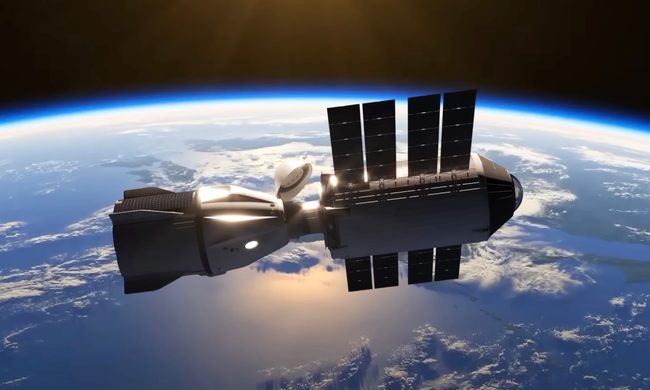
How Vast's space station will look in orbit.

AI data centers already consume vast amounts of electricity and water on Earth, so Silicon Valley has begun looking somewhere considerably more spacious... literally.

Elon Musk's SpaceX and Jeff Bezos' Blue Origin, along with several other companies, have proposed enormous constellations of satellites designed to operate as orbital data centers. However, environmental groups and former space officials are now warning that putting them into orbit at the proposed scale could have severe consequences for Earth's atmosphere and the night sky.

Read more
The first possible exomoon is here, and it makes our Moon look hilariously tiny
Scientists may have found the first exomoon, except this one is the size of Jupiter
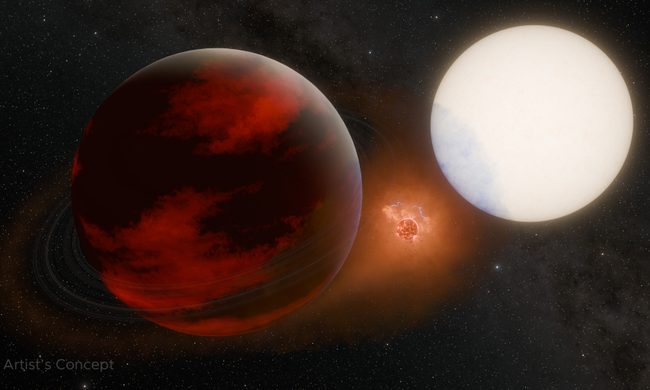
This artist’s concept depicts a potential volcanic moon between the exoplanet WASP-49 b, left, and its parent star. New evidence indicating that a massive sodium cloud observed near WASP-49 b is produced by neither the planet nor the star has prompted researchers to ask if its origin could be an exomoon.

We have already discovered more than 6,000 planets outside of our immediate neighborhood. Yet, finding a moon orbiting one of those distant worlds has proved considerably harder. Astronomers may finally have something close to the real deal, but this particular object stretches the word “moon” almost beyond recognition.

Using the European Southern Observatory’s Very Large Telescope in Chile, researchers detected strong evidence for a moon-like object in the CD-35 2722 system. Further observations are still necessary to confirm the discovery, but it could become the first confidently detected natural satellite outside our solar system. There is still one tiny complication though. This moon is apparently massive.

Read more
China’s answer to SpaceX’s reusable rockets literally catches boosters in a net
SpaceX catches boosters on legs. China just used a net.
Ammunition, Missile, Weapon

SpaceX's playbook for recovering a rocket booster generally involves legs, a precisely controlled vertical landing, and either a concrete pad or a drone ship. 

China just managed to pull off something similar, but in a slightly different way, and on July 10, it tested the method as well.

Read more