1. Home
  2. Space
  3. News

James Webb’s MIRI instrument has both a heater and a cooler

Add as a preferred source on Google

The long process of getting the James Webb Space Telescope ready for science operations continues, with the ongoing alignment of three of its instruments.

Webb recently reached the major milestone of aligning its mirrors with its NIRCam instrument, in a successful step that promises great results to come. “Webb’s alignment at the NIRCam field showed some spectacular diffraction-limited images, producing a tantalizing glimpse of the capabilities this observatory will carry for its science program,” wrote two Webb researchers, Michael McElwain, Webb observatory project scientist, and Charles Bowers, Webb deputy observatory project scientist, both at NASA Goddard, in a recent blog post. “This was a major milestone because it required nearly all of the observatory systems to be functioning as designed. It all worked as well as we dared to hope, and it was certainly a moment to celebrate.”

Recommended Videos

Now, the Webb team is working on aligning two more of the instruments — the Near-Infrared Slitless Spectrograph (NIRISS) and Near-Infrared Spectrometer (NIRSpec) — as well as the guider, called the Fine Guidance Sensor (FGS). This process is expected to take around six weeks and will ensure that all of the instruments can work together. Along with NIRCam, these comprise Webb’s near-infrared instruments.

While the three near-infrared instruments are passively cooled — meaning that heat is dispersed from the telescope and into space using design elements like heat sinks which require no power — the fourth instrument, MIRI, works in the mid-infrared wavelength and requires active cooling. Because MIRI uses a different type of detector than the other instruments, and these detectors need to be at an extremely low temperature of less than 7 kelvin to work properly, the instrument needs to be fitted with a cryocooler. This refrigeration system uses helium gas and includes pumps that require power but must produce very little vibration to avoid interfering with instrument readings.

In addition to this cooling system, MIRI is also fitted with heaters so that the cooldown process can be carefully managed to prevent ice from forming on the components. The heaters will shortly be turned off, allowing the cooling system to bring the instrument down to its operating temperature.

With the cooling of MIRI underway, it will take a few weeks until the final instrument gets cool enough to be ready for alignment. Then, with all four of the instruments aligned, the Webb team can move onto the next phase of commissioning — optical stability tests and instrument performance measurement — to get the telescope ready for science operations this summer.

Georgina Torbet
Georgina has been the space writer at Digital Trends space writer for six years, covering human space exploration, planetary…
Space is becoming Bezos and Musk’s next data center site, and we have every reason to worry
The AI boom is coming for the night sky
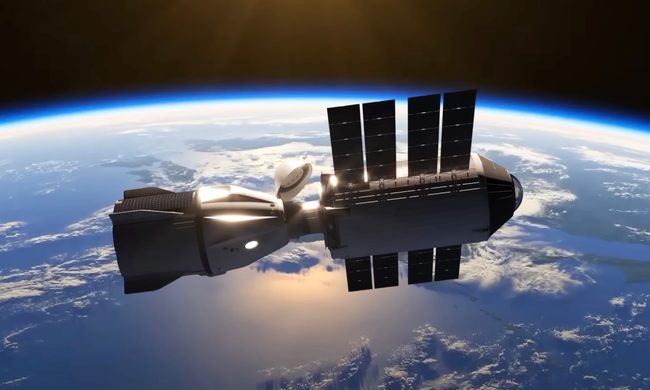
How Vast's space station will look in orbit.

AI data centers already consume vast amounts of electricity and water on Earth, so Silicon Valley has begun looking somewhere considerably more spacious... literally.

Elon Musk's SpaceX and Jeff Bezos' Blue Origin, along with several other companies, have proposed enormous constellations of satellites designed to operate as orbital data centers. However, environmental groups and former space officials are now warning that putting them into orbit at the proposed scale could have severe consequences for Earth's atmosphere and the night sky.

Read more
The first possible exomoon is here, and it makes our Moon look hilariously tiny
Scientists may have found the first exomoon, except this one is the size of Jupiter
This artist’s concept depicts a potential volcanic moon between the exoplanet WASP-49 b, left, and its parent star. New evidence indicating that a massive sodium cloud observed near WASP-49 b is produced by neither the planet nor the star has prompted researchers to ask if its origin could be an exomoon.

We have already discovered more than 6,000 planets outside of our immediate neighborhood. Yet, finding a moon orbiting one of those distant worlds has proved considerably harder. Astronomers may finally have something close to the real deal, but this particular object stretches the word “moon” almost beyond recognition.

Using the European Southern Observatory’s Very Large Telescope in Chile, researchers detected strong evidence for a moon-like object in the CD-35 2722 system. Further observations are still necessary to confirm the discovery, but it could become the first confidently detected natural satellite outside our solar system. There is still one tiny complication though. This moon is apparently massive.

Read more
China’s answer to SpaceX’s reusable rockets literally catches boosters in a net
SpaceX catches boosters on legs. China just used a net.
Ammunition, Missile, Weapon

SpaceX's playbook for recovering a rocket booster generally involves legs, a precisely controlled vertical landing, and either a concrete pad or a drone ship. 

China just managed to pull off something similar, but in a slightly different way, and on July 10, it tested the method as well.

Read more